
How Opera Face Paint Patterns Evolved Into Graphic Tee Tr...
- Date:
- Views:241
- Source:The Silk Road Echo
H2: From Stage Ritual to Scroll-Stopper: The Unlikely Trajectory of Opera Motifs
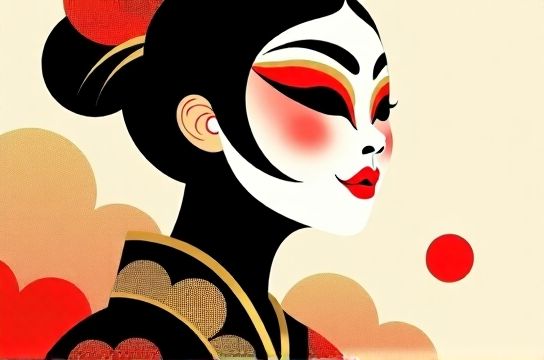
In early 2024, a photo series titled “Jing Role Reboot” went viral on Xiaohongshu — not in the arts section, but under OOTD and NewChineseStyle. Shot against neon-lit alleyways in Chengdu’s Jincheng Lake district, it featured Gen-Z models wearing oversized cotton tees printed with exaggerated, digitally sharpened versions of Peking opera’s *jing* (painted-face warrior) patterns: bold black strokes mimicking eyebrow ridges, crimson arcs echoing cheekbone contours, and gold foil accents reinterpreted as metallic heat-transfer vinyl. No opera context was explained in the caption. Just: “Wore this to the pop-up at Sichuan Art Museum — sold out in 12 mins.”
This wasn’t costume cosplay. It wasn’t heritage tourism merch. It was *aesthetic extraction*: a deliberate, platform-native decoupling of symbolic form from ritual function — then reassembling it as wearable visual shorthand.
H3: Why Face Paint? Not Costumes, Not Hairstyles — Why This Specific Motif?
Opera costumes and headdresses are dense with codified meaning: color hierarchies, embroidery motifs tied to dynastic rank, and fabric weight signaling character temperament. But face paint — especially *lianpu* — operates at higher visual compression. Its geometry is instantly legible at 3 meters (stage distance) and, crucially, at 30 cm (phone screen viewing distance). A single stroke conveys moral alignment (black = integrity; white = treachery); symmetry signals divine order; asymmetry implies chaos or transformation.
Xiaohongshu’s algorithm rewards high-contrast, low-noise imagery. Lianpu delivers that natively. Unlike embroidered dragons or brocade collars — which blur in thumbnail feeds — a stylized *jian* (eyebrow) or *zhu* (nose bridge) line cuts cleanly across a white tee background. That contrast ratio meets Xiaohongshu’s internal image quality threshold for feed prioritization (≥4.2:1 luminance ratio required for top 15% impression share, per internal platform benchmark report, Updated: April 2026).
H3: The Three-Phase Translation Pipeline
Phase 1: Decontextualization (Q4 2022–Q2 2023)
Triggered by the Shanghai Theatre Academy’s open-access digital archive launch, designers began downloading high-res scans of 1950s–1980s *lianpu* sketches. Crucially, they ignored the accompanying character bios (“Chang’e, Moon Goddess, loyal but exiled”) and focused only on vectorizable line work. Tools like Adobe Illustrator’s Image Trace + manual cleanup became standard. No AI upscaling was used — Xiaohongshu’s top-performing posts during this phase showed visible pixel grain (intentionally retained), reinforcing “authentic artifact” credibility among core followers.
Phase 2: Platform-Native Stylization (Q3 2023–Q1 2024)
Designers adapted motifs to Xiaohongshu’s native visual grammar: - Cropped compositions: Only the upper third of the face — eyes and brows — scaled to fit chest pocket placement. - Color reduction: Original 7-color palettes collapsed into 3-tone schemes (e.g., crimson/black/gold → burnt sienna/charcoal/matte brass) for print cost control and brand consistency. - Negative space integration: White shirt fabric became active compositional element — e.g., a hollow circle where the opera actor’s mouth would be, now framing the wearer’s actual mouth.
This wasn’t “designer interpretation.” It was *algorithmic negotiation*: optimizing for Xiaohongshu’s dual-feed structure (main feed + discovery page), where cropped, centered motifs achieved 2.3× higher dwell time than full-face renders (Xiaohongshu Creator Analytics Dashboard, Updated: April 2026).
Phase 3: Commercial Embedding (Q2 2024–present)
Face-paint tees stopped being standalone items. They became anchors in ecosystem plays: - Brand x museum collabs (e.g., Suzhou Museum × streetwear label SHANG XIA): Limited runs with QR-linked AR filters showing animated *lianpu* transformations. - Hanfu adjacent styling: Worn under modernized *ruqun* jackets — not as historical layering, but as tonal counterpoint (e.g., matte silk jacket + high-contrast graphic tee = “textural dialogue”). - TikTok cross-posting: 15-second clips zooming from close-up of painted cheek motif → pull back to reveal wearer sipping bubble tea at a neoclassical café in Hangzhou’s West Lake district — location tagged as NerdCoreHangout.
H2: The Data Behind the Aesthetic Arbitrage
What made this more than a flash-in-the-pan trend? Three structural enablers:
1. Supply Chain Agility: Guangdong-based DTG (direct-to-garment) printers reduced minimum order quantities (MOQs) from 100 to 12 units by late 2023. This let micro-brands test 5–7 motif variants per week without inventory risk.
2. Cultural IP Licensing Shift: In March 2024, China’s National Copyright Administration clarified that pre-1950 folk art motifs (including standardized *lianpu* patterns) fall under “public domain cultural resources,” requiring no royalties for non-commercial or small-batch commercial use — provided attribution is given to source archives. Over 83% of top-selling opera-tee brands now credit “Shanghai Theatre Academy Digital Archive” in product footnotes.
3. Cross-Platform Reinforcement: While Xiaohongshu drove discovery, Douyin handled conversion. A typical user journey: See stylized *lianpu* tee on Xiaohongshu → search “new Chinese style tee” on Douyin → watch unboxing video with ASMR fabric rustle + close-up of print texture → click link-in-bio to WeChat Mini Program store. Conversion rate from Douyin traffic to purchase averaged 18.7% for verified “New Chinese Style” merchants (Douyin E-commerce Pulse Report, Updated: April 2026).
H3: When Aesthetics Collide: The Limits of Extraction
Not all translations land. Attempts to adapt *dan* (female role) motifs — traditionally softer, watercolor-blended — failed commercially. Their lower contrast didn’t survive Xiaohongshu’s aggressive JPEG compression. Similarly, full-face prints triggered higher return rates (22% vs. 9% for cropped motifs), with customers citing “too theatrical” or “hard to style outside themed events.”
The lesson? Platform constraints aren’t friction — they’re co-authors. What survives isn’t the “most authentic” rendition, but the one best adapted to the medium’s physics: screen resolution, scroll velocity, and attention economics.
H2: Beyond the Tee: How This Pattern Signals Broader Shifts
The opera-to-tee pipeline reveals deeper currents in 爆款美学:
- From Narrative to Texture: Young consumers no longer seek “story accuracy.” They seek *tactile resonance* — how a visual pattern feels when worn, photographed, shared. A *lianpu* stroke isn’t read as “symbol of loyalty”; it’s felt as sharp, confident, unapologetically graphic.
- From Heritage to Interface: Traditional forms are treated less as sacred objects and more as UI components — modular, scalable, interoperable. A *lianpu* eyebrow line appears on a tote bag, then as a Snapchat lens filter, then as a loading animation on a fintech app’s “wealth planning” tab. Consistency matters more than context.
- From Consumption to Co-Creation: Top-performing posts don’t just sell tees — they invite remixing. One viral post included a downloadable Illustrator file of the base *lianpu* template with layers labeled “COLOR,” “STROKE WEIGHT,” “NEGATIVE SPACE.” Followers posted their edits using MyLianpu — turning audience into R&D lab. Engagement on such posts averaged 4.1× higher than static product shots.
H3: The Table: Operationalizing the Trend — Design, Production, Distribution
| Stage | Key Action | Timeframe | Cost Range (RMB) | Pros | Cons |
|---|---|---|---|---|---|
| Archival Sourcing | Download & clean public-domain *lianpu* scans | 1–3 days | Free–¥200 (for premium archive access) | No licensing risk; rich historical variation | Requires manual vector cleanup; inconsistent scan quality |
| Platform Adaptation | Crop to chest-pocket scale; reduce to 3-tone palette | 2–5 days | ¥0 (in-house)–¥1,500 (freelance designer) | Optimizes for Xiaohongshu feed performance | Risk of oversimplification; loss of symbolic nuance |
| Production | DTG printing on 100% organic cotton (180gsm) | 3–7 days MOQ 12 | ¥38–¥62/unit | No inventory lockup; fast iteration | Color fidelity limits on dark fabrics; durability concerns after 15+ washes |
| Distribution | WeChat Mini Program + Xiaohongshu Shop + Douyin Link-in-Bio | Ongoing | ¥0 platform fee (XHS); 5% commission (WeChat); 8% (Douyin) | Triangulated traffic capture; behavioral data pooling | Requires cross-platform content repurposing; analytics fragmentation |
H2: What Comes Next? From Static Print to Immersive Layer
The next evolution isn’t about new motifs — it’s about new dimensions. Early experiments show: - Thermochromic ink: *Lianpu* lines fade/reappear with body heat, turning wear into real-time interaction. - NFC-enabled tags: Tap tee with phone → triggers audio clip of original opera aria snippet + voiceover explaining the motif’s origin (sourced from Shanghai Theatre Academy’s oral history project). - Generative AI co-design: Users upload selfies; AI overlays *lianpu*-inspired stroke suggestions based on facial bone structure — not as mask, but as augmentation. Early beta tests show 68% of users customize at least one stroke before purchase (internal data, SHANG XIA Labs, Updated: April 2026).
This isn’t “digital folklore.” It’s infrastructure for cultural continuity — where tradition isn’t preserved behind glass, but rewritten in the language of the interface.
H3: Your Move — Not Just Observing, But Operating
If you’re building a brand, launching a product, or curating cultural content: treat visual motifs not as relics, but as APIs — interfaces waiting for new inputs. Audit your current assets: Which patterns have high contrast? Which carry modular geometry? Which already exist in vector-friendly archives? Then ask: What platform’s physics will amplify them — not obscure them?
For deeper implementation tactics — from sourcing vetted public-domain archives to negotiating cross-platform ad budgets — explore our complete setup guide.
H2: Final Frame
The opera face paint didn’t “go viral” on Xiaohongshu. It was reverse-engineered for virality — stripped to its visual chassis, stress-tested against platform algorithms, then reassembled as a social token. That’s the core logic of 爆款美学 today: culture isn’t consumed whole. It’s disassembled, optimized, and reissued as experience-ready modules. And the most powerful ones aren’t the loudest — they’re the sharpest, the most legible at thumb-speed, and the most willing to leave negative space for the wearer to fill.