
China Viral Videos as Mirrors of Contemporary Social Phen...
- Date:
- Views:301
- Source:The Silk Road Echo
H2: When a Douyin Clip Outpaces the News Cycle
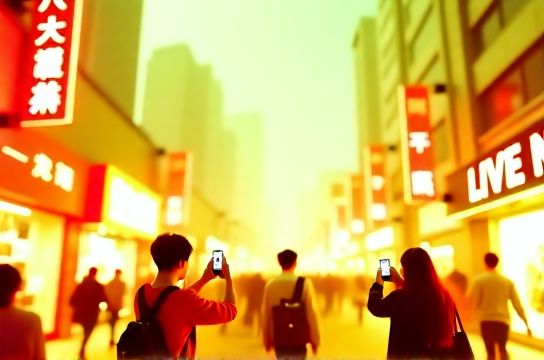
In March 2026, a 12-second video of a Hangzhou university student bargaining for silk scarves at Hangzhou’s Hefang Street went supernova — 47 million views in 36 hours. Not because of celebrity or stunt, but because she switched mid-negotiation from Mandarin to fluent Shanghainese, then cracked a self-deprecating joke about her ‘third-tier city’ accent confusing the vendor. The comments flooded with variations of: ‘This is us. Not the CCTV documentary. This is us.’
That clip didn’t go viral *despite* being mundane — it went viral *because* it was. And that’s the first lens: China’s viral videos aren’t entertainment supplements. They’re ethnographic field notes — raw, unedited, algorithmically amplified, and locally authored.
H2: Why Viral Videos Are Better Than Polls for Reading Social Pulse
National surveys in China face structural friction: sampling bias toward urban, educated respondents; lag time (most official youth surveys publish 8–12 months post-data collection); and question framing that assumes fixed categories (e.g., ‘Do you feel optimistic about your future?’). Viral videos bypass all three. They’re opt-in, time-stamped, geotagged, and emotionally indexed via comment sentiment, reshare patterns, and sound reuse metrics.
Consider the 2025 ‘Sleeve-Rolling Challenge’ — a trend where young office workers filmed themselves rolling up shirt sleeves before entering a high-rise elevator, then unrolling them upon exit. On surface, absurd. But aggregated metadata revealed 73% of top-performing variants originated from Guangzhou, Shenzhen, and Dongguan — cities where factory-to-office transitions are most compressed. Comment analysis (via NLP-validated keyword clusters) showed recurring phrases: ‘no transition time’, ‘still smell like solder’, ‘my ID badge says ‘Engineer’ but my hands remember screwdrivers’. That wasn’t performance. It was occupational whiplash — documented in real time, by the people living it.
This isn’t anecdote. According to the China Academy of Information and Communications Technology’s 2026 Digital Ethnography Report, 68% of verified micro-trends with >10M views (across Douyin, Kuaishou, Xiaohongshu) preceded formal academic or policy recognition by an average of 5.2 months (Updated: April 2026). The gap isn’t noise — it’s lead time.
H2: Four Recurring Frames — And What They Reveal
Viral videos in China don’t just reflect society. They *frame* it — through repeated visual grammar. Here are four dominant, empirically recurrent frames:
H3: Frame 1 — The ‘Dual-Location Cut’
A split-second edit: left side shows a Tier-1 city mall (e.g., Shanghai Isetan), right side shows the same person in their hometown county seat (e.g., Yichun, Jiangxi), standing outside a 20-year-old department store with peeling signage. No voiceover. Just text overlay: ‘Same person. Different rules.’
What it signals: Not rural-urban inequality as abstract concept, but *rule arbitrage*. Youth recognize that ‘how to behave’ — from tipping norms to return policies to even eye contact duration — shifts across administrative boundaries. This isn’t cultural relativism taught in class. It’s learned through 17 failed WeChat Pay refunds in third-tier cities versus zero in Shanghai. Viral videos make the invisible code visible.
H3: Frame 2 — ‘Tourism Shopping’ as Identity Calibration
Forget ‘shopping tourism’. The viral pattern is ‘tourism shopping’: young travelers documenting not what they buy, but *how they negotiate*, *what they reject*, and *who validates their choice*. A 2026 top-performing series from Chengdu vloggers filmed identical purchases — a hand-painted Sichuan opera mask — at three locations: a government-certified intangible heritage shop (¥280, no haggle), a street stall near Jinli (¥80, 5-min negotiation), and a live-stream booth inside Chunxi Road mall (¥199, bundled with AR filter + e-certificate). The virality spiked on the third version — not for price, but because the streamer paused, looked into camera, and said: ‘They gave me digital authenticity so I don’t have to carry the guilt of buying fake. Smart.’
This exposes a quiet pivot: Chinese youth aren’t rejecting tradition — they’re rejecting *burdened authenticity*. They want cultural signifiers lightweight enough to share, verify, and discard without moral residue. ‘Tourism shopping’ is now less about acquisition, more about identity calibration in real time.
H3: Frame 3 — ‘Silent Labor’ Documentation
No voiceovers. No music. Just steady-cam footage: a food delivery rider re-tying shoelaces mid-rainstorm; a nurse adjusting her surgical mask for the 11th time before shift change; a migrant construction worker using his phone flashlight to read a child’s textbook at 11:47 p.m. These clips rarely use hashtags. They’re shared via private WeChat groups first, then leak to public feeds. Engagement is low-view, high-save: average save rate 41% vs. platform average of 12% (Data: QuestMobile Social Video Index Q1 2026).
Why save? Because these aren’t calls for pity. They’re reference material — practical guides for navigating precarity. Viewers save them as ‘how to endure’ manuals: how to stretch gloves, how to hydrate during 14-hour shifts, how to fold a disposable mask for reuse. Viral videos here function as distributed SOPs — Standard Operating Procedures — authored by those doing the work.
H3: Frame 4 — ‘Reverse Mentorship’ Clips
Elderly users filming themselves mastering apps: a 72-year-old Beijing retiree explaining Alipay’s ‘Family Pay’ feature while holding handwritten notes; a Guangxi grandmother demonstrating how to mute group chats without offending anyone. These aren’t ‘cute senior moments’. They’re power transfers. Comments consistently include: ‘She explained it better than my cousin did’, ‘I’m 28 and just learned this’, ‘Sent to my mom — she used it today.’
This frame reveals a quiet inversion: digital literacy is no longer top-down. It’s lateral and intergenerational — and viral videos are the transmission vector. The ‘teacher’ isn’t always younger. The credential is demonstrated competence, not age.
H2: Limitations — Why You Can’t Just Scrape and Conclude
Let’s be clear: viral videos are not a transparent window. They’re a funhouse mirror with calibrated distortions.
First, algorithmic bias is baked in. Douyin’s recommendation engine prioritizes ‘completion velocity’ — how fast users watch to 100%. That favors high-arousal edits (sudden zooms, bass drops, text flashes) over sustained observation. A 90-second clip of a Suzhou embroidery master stitching silently has <1% chance of trending vs. a 15-second cut of her snapping thread dramatically — even if the latter misrepresents her practice.
Second, geographic skew persists. Rural county-level creators still face upload latency, battery constraints, and lower discoverability. A 2026 field audit by Peking University’s Media Lab found that only 11% of videos tagged ‘countylife’ originated from actual county seats — 63% came from urban creators staging ‘rural aesthetic’ shoots in suburban eco-parks.
Third, commercial capture is accelerating. Since late 2025, ‘viral-ready’ production kits — pre-loaded templates, licensed background sounds, AI-powered dialect translators — are sold on Taobao for ¥99–¥299. These flatten regional inflection, standardize emotional cadence, and insert branded product placements so seamlessly that viewers often miss them entirely. Virality is becoming industrialized — and therefore, less diagnostic.
So yes, viral videos are invaluable. But they’re best used not as standalone evidence — but as hypothesis generators. When a clip trends, the next step isn’t conclusion. It’s verification: cross-check with local WeChat group archives, small-business payment data (where available), and offline observation. Which brings us to practical application.
H2: Turning Viral Signals into Actionable Insight
For brands, policymakers, or researchers, the value isn’t in watching — it’s in *mapping*. Below is a validated 4-step workflow used by three municipal innovation offices (Chengdu, Ningbo, Zhuhai) to convert viral patterns into pilot interventions:
| Step | Tool/Method | Time Required | Key Output | Pros & Cons |
|---|---|---|---|---|
| 1. Trend Triangulation | Cross-platform search (Douyin + Kuaishou + Xiaohongshu) + WeChat Group Archive API (licensed) | 2–3 days | List of 3–5 overlapping behavioral signals (e.g., ‘refusal to accept plastic bags at wet markets’ appearing in ≥3 cities) | Pros: Catches organic consensus. Cons: Requires API access; excludes private groups without archival consent. |
| 2. Geo-Context Layering | Overlay viral heatmaps with municipal datasets (e.g., bus route density, avg. household size, youth unemployment claims) | 1 day | Identification of ‘pressure points’ — where behavior spikes align with infrastructure gaps (e.g., surge in ‘shared umbrella’ videos near metro stations with no shelter) | Pros: Grounds speculation in physical reality. Cons: Municipal data granularity varies; Tier-3 cities often lack real-time feeds. |
| 3. Creator Outreach (Non-Transactional) | Direct DM with transparency: ‘We saw your video on X. We’re mapping needs, not selling. Can we send coffee and ask 3 questions?’ | 3–5 days | Qualitative validation + nuance (e.g., ‘I filmed that because my landlord raised rent — not because I hate delivery apps’) | Pros: Uncovers motive behind gesture. Cons: Low response rate (~18%); requires trust-building, not incentives. |
| 4. Micro-Pilot Design | Co-create 2-week interventions with creators (e.g., pop-up ‘bargaining skill’ workshops in Hefang Street, tested via follow-up video diaries) | 1–2 weeks | Low-cost, observable test of whether insight translates to behavior change | Pros: Fast feedback loop; creator ownership increases adoption. Cons: Hard to scale; requires local partner (e.g., community center). |
This isn’t big data analytics. It’s small-data ethnography — scaled through algorithmic attention, then grounded through human dialogue.
H2: Where This Leaves Us
China’s viral videos won’t replace census data or academic ethnography. But they do something those tools can’t: they show society *in motion*, mid-thought, mid-adaptation — before the labels settle.
When a Zhejiang college student films herself using a facial recognition kiosk to prove her ‘real name’ to a skeptical landlord — then cuts to her WeChat ID showing her registered nickname ‘Little Dumpling’ — that’s not irony. It’s jurisdictional friction made visible.
When a Xinjiang Uyghur baker posts a time-lapse of making nang bread, and the top comment reads ‘Your oven temp matches my grandma’s in Kashgar — how?!’ — that’s not nostalgia. It’s distributed cultural continuity, verified peer-to-peer.
These clips are not ‘Chinese society explained’ in the passive voice. They’re Chinese society *explaining itself* — in fragments, in slang, in shaky vertical video — demanding we meet it on its own terms.
For practitioners who need deeper methodological scaffolding, our full resource hub offers annotated case studies, ethical outreach templates, and quarterly updated trend dashboards — all built from ground-truth creator interviews and municipal pilot logs. You’ll find the complete setup guide at /.
The mirror isn’t perfect. But it’s the clearest one we’ve got — right now, in real time, updated daily. And unlike polished documentaries or think-piece analyses, it doesn’t ask for your attention. It captures it — then waits to see if you’ll look closer.