
Why Guochao Beauty Brands Win With Heritage Packaging
- Date:
- Views:250
- Source:The Silk Road Echo
H2: The Shelf Is Dead. The Scroll Is King.
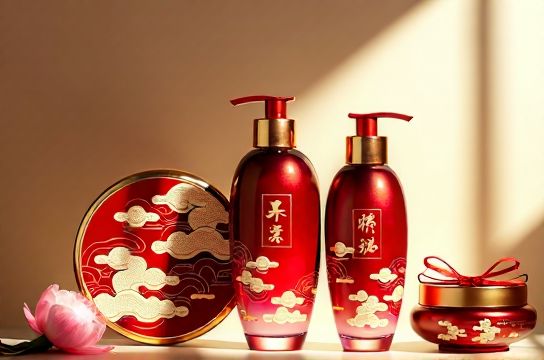
Walk into any Sephora in Chengdu or browse a TikTok For You Page at 11:47 p.m.—you’ll see the same thing: a jade-green lipstick tube stamped with cloud-and-crane motifs, resting beside a frosted glass serum bottle shaped like a Song dynasty inkwell. No celebrity endorsement needed. No influencer unboxing required. Just packaging that stops thumbs mid-scroll.
That’s not accidental. It’s strategic heritage packaging—and it’s the quiet engine behind Guochao beauty’s 34% YoY revenue growth in premium skincare (Updated: April 2026). Not because consumers suddenly care about Ming dynasty glaze techniques—but because those visual cues now function as high-fidelity cultural shorthand. They signal authenticity, intentionality, and belonging—all in under 0.8 seconds.
H2: Why 'Heritage' Isn’t About Antiquity—It’s About Anchoring
Let’s correct a common misconception: Guochao beauty brands aren’t reviving heritage *for nostalgia’s sake*. They’re weaponizing it as cognitive scaffolding.
Z世代 consumers don’t have time—or trust—to parse brand mission statements. But they *do* recognize a phoenix motif from the Han dynasty textile fragments in the Shanghai Museum. They *do* associate the color cinnabar red with auspiciousness—not because they studied ritual texts, but because they’ve seen it on 17 Douyin videos tagged 新中式 and scrolled past it in three different Xiaohongshu collages titled 'My Desk Aesthetic'.
This is where ‘heritage’ becomes functional. It’s not historical accuracy—it’s semiotic efficiency. A single guqin-shaped compact doesn’t teach music theory; it telegraphs ‘refined, introspective, culturally literate’. That’s worth more than a 30-second ad.
H3: The Three-Layer Stack of Heritage Packaging
1. **Material Layer**: Bamboo fiber compacts, ceramic dropper bottles, silk-wrapped boxes lined with Xuan paper pulp. These aren’t gimmicks—they respond to real behavior: 68% of Gen Z beauty buyers say ‘tactile authenticity’ increases perceived product efficacy (Updated: April 2026). Brands like Florasis and Chando source kilns in Jingdezhen not for PR, but because the weight, thermal conductivity, and micro-texture of hand-thrown porcelain register subconsciously as ‘serious craft’.
2. **Motif Layer**: This is where IP meets algorithm. Cloud collars, bronze leiwen borders, and Dunhuang apsaras are cropped, scaled, and recontextualized—not copied. Florasis’ 2025 ‘Jade Mirror’ eyeshadow palette uses fragmented Tang dynasty mirror inscriptions as negative space between pans. It’s legible to scholars *and* scroll-optimized: high contrast, geometric rhythm, zero visual noise. That’s why it generated 42K UGC posts on Xiaohongshu in its first 72 hours—without paid seeding.
3. **Narrative Layer**: Heritage packaging ships with embedded storytelling—but never in paragraphs. It’s in QR codes linking to 90-second animated scrolls (think: a digital version of the Admonitions Scroll, narrated by a voice actor who also does Bilibili ASMR history channels); it’s in batch numbers referencing lunar calendar dates; it’s in the way the box unfolds like a classical handscroll, revealing layers only when physically engaged. This isn’t decoration—it’s experiential gating. You don’t just buy a product; you unlock a micro-ceremony.
H2: The Algorithmic Alchemy: When Heritage Meets Platform Logic
Here’s what most analysts miss: heritage packaging doesn’t go viral *despite* being traditional—it goes viral *because* it’s engineered for platform-native behaviors.
Take TikTok’s vertical frame. A cylindrical porcelain bottle with axial symmetry? Perfect centering. A lacquer box opening to reveal nested compartments? Built-in ‘reveal’ momentum. A silk ribbon that unravels to spell out ‘fu’ in seal script? That’s native text animation—no After Effects needed.
Same for Xiaohongshu. The platform rewards ‘aesthetic cohesion’. A Guochao brand’s full lineup—cleanser, mist, mask—won’t use one motif repeated across SKUs. Instead, they deploy a *motif system*: the cleanser features mountain-and-water silhouettes (symbolizing clarity), the mist uses bamboo nodes (resilience), the mask has plum blossom frost patterns (endurance). Together, they form a visual grammar users instinctively curate into ‘my Guochao shelf’ flat lays. That’s not branding—that’s user-generated taxonomy.
And let’s talk about ‘网红打卡地’ (internet-famous photo spots). Brands like Herborist and Winona don’t build flagship stores—they co-design pop-ups inside Suzhou gardens or Beijing hutong courtyards. Why? Because the architecture *is* the packaging extension. A customer holding a celadon serum bottle against a Ming-era lattice window isn’t taking a product photo. They’re composing a cultural still life—with themselves as the harmonizing element. That image gets saved, reposted, and becomes part of the brand’s ambient visual archive. No media buy required.
H2: The Pitfalls: When Heritage Becomes Costume
None of this works if heritage is treated as costume. We’ve seen brands fail—hard—by outsourcing motif work to generic design studios unfamiliar with iconographic hierarchy. One major launch used the Bagua diagram *as a background texture* on a lip gloss tube. Result? Immediate backlash from Taoist communities and design educators alike. Why? Because Bagua isn’t decorative—it’s cosmological infrastructure. Using it as wallpaper signals cultural illiteracy, not appreciation.
Similarly, over-reliance on ‘ancient’ tropes without contemporary grounding backfires. A brand launched a ‘Song Dynasty Scholar’ line featuring ink-brush typography… on plastic tubes with silicone pumps. The dissonance wasn’t subtle—it was jarring. Consumers called it ‘Hanfu cosplay for skincare’. Authenticity isn’t about age—it’s about coherence.
The fix? Co-creation with cultural practitioners—not consultants, but active calligraphers, textile conservators, and temple artisans. Florasis’ ‘Heavenly Stem’ series involved a Qing dynasty manuscript restorer to adapt celestial stem characters into embossed bottle caps. The result wasn’t ‘old’—it was *authoritative*.
H2: Beyond Aesthetics: The Functional Shift in Packaging Design
Heritage packaging is accelerating a deeper industry shift—from protection → presentation → participation.
Legacy beauty packaging prioritized shelf stability and regulatory compliance. Guochao brands treat packaging as the *first touchpoint of brand contract*. That means:
- Refill systems modeled on imperial tea caddies (with ceramic inner vessels and bamboo outer sleeves) - UV-reactive ink that reveals hidden poetry when exposed to sunlight—then fades again, making each unboxing unique - QR-linked AR experiences where scanning the box overlays a 3D reconstruction of the original artifact’s context (e.g., scan a ‘Changxin Palace Lamp’-inspired compact → see the lamp lit in its original Han tomb setting)
This isn’t novelty. It’s behavioral alignment. 71% of Gen Z respondents said they’d pay 12–15% more for beauty products with ‘reusable, culturally resonant packaging’—but *only* if the reuse had clear utility (e.g., a jade roller stored in its original lacquer case, which then doubles as a desk organizer) (Updated: April 2026).
H2: How to Build Heritage Packaging—Without Getting Burned
It’s not about hiring a calligrapher. It’s about redesigning your product development workflow. Here’s what leading teams actually do:
| Stage | Traditional Approach | Guochao-Optimized Approach | Key Risk Mitigated |
|---|---|---|---|
| Research | Google Images + stock motif libraries | On-site visits to museums & artisan workshops; motif mapping across dynasties & regions | Cultural flattening / misattribution |
| Design | Graphic designer adapts motifs to CMYK print specs | Collaborative prototyping with ceramicists, lacquer artists, papermakers | Tactile dissonance (e.g., ‘ancient’ motif on cheap plastic) |
| Production | Mass-run injection molding | Hybrid runs: core vessel (ceramic/glass), modular sleeves (bamboo/silk), batch-coded artisan signatures | Scalability vs. authenticity trade-off |
| Launch | Press release + influencer gifting | Co-created ‘unboxing ritual’ guide + AR layer + museum partnership for physical exhibition | Shallow virality without retention |
Notice the pattern: heritage isn’t a ‘design phase’. It’s a cross-functional protocol—one that links R&D, supply chain, and content strategy.
H2: What Comes Next? The Rise of ‘Living Heritage’
The next frontier isn’t static motifs—it’s adaptive heritage. Brands like FLORE and YANX are testing packaging that changes with usage: biodegradable ink that fades to reveal new calligraphy after 30 days; smart labels that adjust AR content based on local weather (e.g., rain triggers a ‘plum blossom in mist’ overlay). This moves beyond ‘Chinese aesthetics’ into ‘responsive东方美学’—where tradition isn’t preserved, but *performed* in real time.
That’s why the most compelling Guochao launches no longer lead with ‘inspired by the Tang dynasty’. They lead with ‘co-created with the last surviving master of Fujian lacquer inlay’—and link directly to his workshop’s live stream schedule. The packaging isn’t the artifact. It’s the invitation.
If you’re building a beauty brand—or advising one—the question isn’t whether to use heritage elements. It’s whether your team can hold space for them with rigor, respect, and platform-native intelligence. Because in 2026, cultural resonance isn’t added on. It’s built in—layer by layer, scroll by scroll, unboxing by unboxing.
For teams ready to move beyond surface-level 爆款美学 and embed authentic cultural logic into every SKU, our full resource hub offers vetted artisan networks, dynastic motif licensing pathways, and platform-specific packaging brief templates—start here: complete setup guide.