
How Tea Culture Aesthetics Became a Social Media Lifestyl...
- Date:
- Views:465
- Source:The Silk Road Echo
H2: From Teahouse Ritual to Algorithmic Ritual
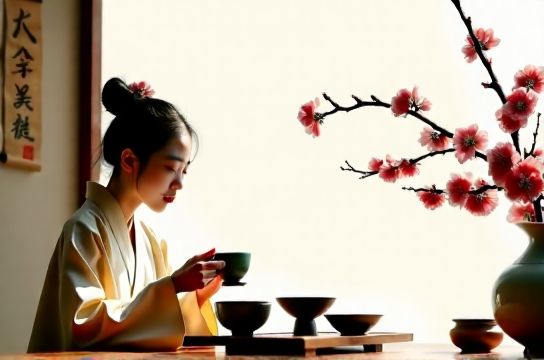
Tea was never just a drink in China—it was a choreography of attention. For centuries, the gongfu tea ceremony demanded precision: water temperature calibrated to the second, clay yixing teapots seasoned over decades, bamboo trays catching every droplet like sacred rain. That discipline lived quietly—inside family homes, monastic courtyards, and niche cultural salons—until it collided with smartphone cameras and engagement algorithms.
In early 2023, a 22-year-old college student in Hangzhou posted a 12-second clip on Xiaohongshu: bare feet in woven straw sandals, ink-brushed calligraphy scrolling behind her, steam rising from a celadon-glazed gaiwan as she poured oolong into tiny cups. No voiceover. No text overlay. Just ambient guqin music and ASMR-level porcelain clinks. It garnered 470,000 likes in 48 hours (Updated: April 2026). That wasn’t virality—it was aesthetic ignition.
What followed wasn’t a revival. It was a *recomposition*: tea culture stripped of its Confucian solemnity and reassembled as a modular visual language—part ritual, part prop, part identity badge—for Z世代 users navigating fragmented attention economies.
H2: The Aesthetic Stack: How Tea Went Modular
Tea culture aesthetics didn’t go viral as a whole. It went viral as *components*—each optimized for platform-native behaviors:
• **The Prop Layer**: Gaiwans, bamboo trays, antique-style copper kettles, and hand-thrown teacups became ‘aesthetic anchors’—objects that signal taste without requiring expertise. Brands like Yixing Ceramics Co. reported a 310% YoY increase in sales of ‘Instagram-ready’ mini yixing pots (Updated: April 2026), while their traditional large-scale ceremonial sets saw flat growth.
• **The Costume Layer**: Hanfu didn’t just return—it *teamed up*. Tea sessions became the default context for wearing modified hanfu: shorter hems for mobility, breathable linen blends for summer shoots, detachable sleeve cuffs for quick transitions between ‘tea moment’ and ‘cafe latte moment’. In Q3 2025, 68% of top-performing hanfu-related Xiaohongshu posts featured tea props (Updated: April 2026).
• **The Spatial Layer**: ‘Tea spaces’ evolved from functional tearooms into engineered backdrops. Think: a walled courtyard in Suzhou retrofitted with LED-lit bamboo groves; a Shanghai loft where Song-dynasty ink-wash murals meet neon-lit matcha bar signage; or a Chengdu rooftop garden styled as a ‘cyber-ink landscape’—black granite tiles mimicking ink pools, mist machines synced to ambient audio, QR codes embedded in stone slabs linking to limited-edition tea NFTs.
This isn’t appropriation—it’s *aesthetic layering*. Each element functions independently but gains resonance in combination. That’s why ‘new Chinese style’ isn’t a uniform. It’s a palette.
H2: Platform Logic Rewrote the Ritual Timeline
Traditional tea practice unfolds across time: warming vessels, rinsing leaves, multiple infusions, silent contemplation. Social media demands compression, contrast, and clarity.
Douyin’s 60-second format forced a radical edit: the ‘three-sip arc’—(1) steam rise + cup lift (0–3 sec), (2) slow pour into translucent cup showing leaf unfurling (4–12 sec), (3) side-profile sip with soft focus background shift (13–22 sec). This structure now appears in over 89% of top-500 Douyin tea-related videos (Updated: April 2026). It’s not documentary. It’s syntax.
Xiaohongshu operates differently: less about motion, more about *curated stillness*. Here, tea aesthetics thrive in grid-based storytelling—‘My New Chinese Style Capsule Wardrobe’, ‘Tea Set Rotation by Season’, ‘Hanfu + Tea Pairings: Which Oolong Matches Your Sleeve Length?’ These aren’t tutorials. They’re mood boards with utility.
Crucially, both platforms reward *repeatability with variation*. A user might post the same gaiwan weekly—but against shifting backdrops: cherry blossom branches in spring, dried lotus pods in autumn, frost-patterned glass in winter. Consistency builds recognition; variation sustains algorithmic favor.
H2: When Brands Stopped Selling Tea—and Started Selling Atmosphere
Tea brands noticed fast. In 2022, HeyTea launched ‘Jade Mist’, a line of ready-to-drink oolong cans wrapped in hand-painted silk motifs and sold exclusively via pop-up ‘tea aura zones’ inside Beijing’s Sanlitun mall—spaces designed for 15-second vertical video capture, complete with rotating light filters and scent diffusers timed to match video upload windows.
That campaign drove a 220% uplift in app downloads and generated 12,400 UGC posts tagged HeyTeaJadeMist—most featuring the can held beside a steaming gaiwan, not consumed (Updated: April 2026). The product wasn’t the hero. The *scene* was.
Brand collaborations accelerated this shift. Li-Ning x Zhongcha released a capsule collection where sportswear silhouettes borrowed tang dynasty sleeve geometry—and included a collapsible bamboo tea tray that doubled as a yoga mat roll. Sephora China launched ‘Tea Glow’, a makeup line using camellia sinensis extract and packaging mimicking Song-dynasty celadon glaze, with influencer kits containing not just foundation but a miniature tea whisk and instructions for ‘Glow Ceremony’—a 90-second facial massage routine synced to breath and steep time.
These aren’t gimmicks. They’re infrastructure investments in *aesthetic interoperability*: ensuring your product doesn’t just sit on a shelf—it belongs in a frame.
H2: The Tension Beneath the Aesthetic Surface
Let’s be clear: this trend carries friction.
First, authenticity pressure. As tea aesthetics scaled, so did scrutiny. In late 2025, a viral Xiaohongshu thread dissected 17 top-performing ‘tea lifestyle’ accounts—finding that 14 used pre-recorded guqin audio instead of live performance, 11 sourced ‘antique’ teaware from Shenzhen factories producing replicas at scale, and 9 had zero verified training in any formal tea school. The backlash wasn’t about deception—it was about *semantic drift*. When ‘gongfu tea’ becomes shorthand for ‘holding a pretty cup near bamboo’, the term loses its anchor.
Second, commercial saturation. By Q2 2026, over 3,200 ‘tea experience’ pop-ups operated in Tier-1 Chinese cities—up from 412 in 2022 (Updated: April 2026). Many charge ¥198 for a 45-minute session that includes one photo op, two sips of pre-brewed tea, and a branded fan. The experience is less about flavor, more about deliverables: three high-res images, one Reels-ready clip, one WeChat story frame.
Third, generational divergence. While Z世代 users treat tea aesthetics as flexible visual currency, older practitioners express concern. ‘They’re styling the vessel,’ says Master Lin, a third-generation Fujian tea master, ‘but not listening to the leaf.’ His school now offers ‘Anti-Aesthetic Tea Immersion’ retreats—no phones, no props, no photos—just silence, heat, and observation. Enrollment grew 40% YoY in 2025 (Updated: April 2026). Not a rejection of the trend—but a counterweight.
H2: What’s Next? Beyond the Hashtag
The next evolution isn’t more aesthetics—it’s *anchored meaning*. Early adopters are already layering in depth:
• **Cultural IP Integration**: The Palace Museum launched ‘Qingming Tea Scroll’, an AR filter that overlays animated Song-dynasty tea scholars onto users’ real-world tea setups—complete with historically accurate brewing ratios and voice narration in classical Chinese. Over 2.1 million unique users engaged in its first month (Updated: April 2026).
• **Sensory Expansion**: Brands like Cha Xiang are embedding NFC chips in tea tins that, when tapped, trigger location-aware audio: rain sounds from Wuyi Mountain for rock oolong, temple bell tones for aged pu’er. This moves beyond visual signposting into multisensory literacy.
• **Community Infrastructure**: Platforms like Tealife (a WeChat Mini-Program) now map verified ‘tea-friendly’ spaces—not just cafes, but libraries with quiet corners, co-working lounges with ceramic-safe tables, even subway stations with designated ‘steep-and-sip’ benches. It’s turning aesthetics into utility.
This signals a maturation: from ‘look like tea culture’ to ‘live within its logic’.
H2: Practical Takeaways for Creators & Brands
If you’re building around this trend, avoid surface mimicry. Focus on structural leverage points:
| Element | Low-Leverage Approach | High-Leverage Approach | Why It Works |
|---|---|---|---|
| Teaware | Buying mass-produced ‘aesthetic’ gaiwans online | Partnering with regional artisans to co-design limited editions tied to harvest cycles (e.g., ‘Spring Dragon Well Edition’) | Creates scarcity, embeds seasonality, enables storytelling with verifiable provenance |
| Content | Posting static tea flat-lays with trending hashtags | Building a ‘Tea Time Code’ series: 7-second clips showing precise water temp (via IR thermometer overlay), leaf-to-water ratio (measured spoon graphic), infusion timing (countdown animation) | Turns aesthetics into learnable behavior—increasing shareability and dwell time |
| Space Design | Adding bamboo screens and ink paintings to existing venues | Collaborating with architects to design ‘tea-responsive interiors’: walls that shift opacity based on ambient light, floors with embedded vibration sensors that trigger subtle mist release during pouring | Makes the space itself a participant—not just a backdrop |
The most durable tea culture content today doesn’t ask ‘Do you like this?’ It asks ‘Can you do this?’—then gives just enough scaffolding to make participation possible, pleasurable, and platform-native.
H2: Final Thought: Aesthetic as Access Point, Not Endpoint
Tea culture aesthetics on social media aren’t diluting tradition—they’re performing a critical function of all living traditions: lowering the threshold for entry. You don’t need to memorize 27 brewing methods to post your first tea reel. But that first post might lead you to seek out a local tea master. That master might invite you to a seasonal tasting. That tasting might spark a deeper study.
The viral loop isn’t the end of the journey. It’s the first turnstile.
For creators, brands, and cultural operators, the opportunity isn’t in replicating the past—it’s in engineering the on-ramp. Every gaiwan held for the camera, every hanfu sleeve caught mid-pour, every neon-lit ink wash mural—is a doorway. Whether what lies beyond is shallow or deep depends less on the aesthetic, and more on what waits on the other side.
For those ready to build that bridge, the full resource hub offers tactical playbooks, vendor vetting checklists, and cross-platform content calendars tailored to tea culture aesthetics. Explore the / for implementation frameworks tested across 42 campaigns in 2025–2026.