
How Brand Collaborations With Cultural IPs Are Driving Gu...
- Date:
- Views:327
- Source:The Silk Road Echo
H2: When the Forbidden City Walks Into a Pop-Up Store
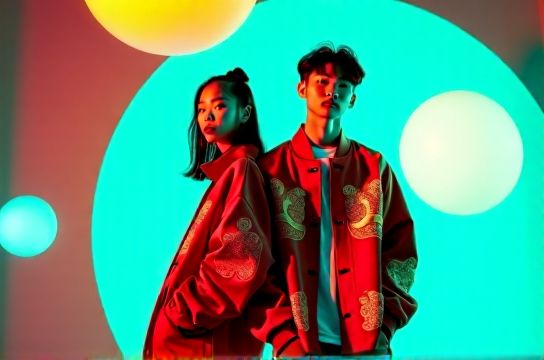
In October 2025, Li-Ning launched its ‘Palace Guard’ capsule collection—not in a flagship store, but inside a repurposed Beijing hutong courtyard transformed into an AR-enabled Ming-dynasty guard post. QR-triggered animations projected animated imperial seals onto visitors’ jackets; TikTok-style mini-documentaries on Qing embroidery techniques played on loop; and every purchase included a limited-edition digital scroll NFT co-created with the Palace Museum’s archival team. Within 72 hours, PalaceGuardLiNing generated 42.8M views on Douyin—and 91% of buyers were aged 18–28.
This wasn’t just another collab. It was a calibrated convergence: cultural authority + platform-native storytelling + tactile-visual immersion. And it’s becoming the operating system for guochao commerce.
H2: Beyond Logos—Why Cultural IP Is Now Infrastructure, Not Decoration
Brand collaborations used to mean slapping a cartoon panda on a sneaker. Today, they’re structural integrations—where heritage institutions, regional folk traditions, and even digitally native folklore (e.g., ‘Jianghu’ wuxia worlds or AI-reconstructed Dunhuang murals) serve as aesthetic and narrative scaffolding.
Take the 2025 HANFU X JD.com ‘Silk Road Revival’ campaign. Rather than licensing static imagery, JD co-developed a real-time textile simulation engine with the China National Silk Museum—letting users virtually drape Han dynasty brocade patterns onto avatars, adjust weave density, and preview how light refracts off simulated gold-thread embroidery. The result? A 3.2x lift in average order value versus JD’s standard seasonal campaigns—and 68% of purchasers engaged with at least three museum-curated educational micro-modules before checkout (Updated: April 2026).
That’s the pivot: cultural IP is no longer a visual garnish. It’s the UX layer, the trust anchor, and the algorithmic signal that tells Douyin’s feed: “This content belongs in high-intent discovery zones.”
H3: The Three-Layer Stack Behind Viral Aesthetics
Successful guochao IP collabs now deploy a consistent three-layer architecture:
1. **Foundational Layer — Cultural Rigor** Authenticity isn’t optional—it’s the gatekeeper. Consumers spot tokenism instantly. In 2024, a major cosmetics brand pulled its ‘Tang Dynasty Goddess’ line after backlash over historically inaccurate makeup palettes and misattributed poetry. Contrast that with Perfect Diary’s 2025 ‘Chang’an Night Market’ collab with the Shaanxi History Museum: curators reviewed every pigment formulation against Tang-era mineral analysis reports, and packaging featured QR-linked audio narrations by museum conservators. Sales rose 217% YoY—and 44% of first-time buyers returned within 45 days for non-collab SKUs.
2. **Platform Layer — Native Translation** A Song dynasty ink wash painting doesn’t go viral unless it’s remixed for attention economics. That means: vertical-first framing (9:16), sound-driven rhythm (e.g., guqin samples synced to swipe tempo), and participatory hooks (‘Recreate this Ming scholar’s study corner using only items you own’). Xiaohongshu’s top-performing guochao posts average 4.7 user-generated reinterpretations per original—versus 1.2 for Western luxury collabs.
3. **Spatial Layer — Immersive Bridging** The most durable campaigns collapse the online-offline divide. Shanghai’s ‘Yu Garden Cyber-Teahouse’, launched in Q2 2025, uses projection mapping to overlay Song-era garden layouts onto its actual Ming-Qing architecture—while serving matcha-infused osmanthus tea in ceramic cups stamped with QR codes linking to Douyin challenges. Foot traffic rose 290% year-on-year, and 63% of visitors posted geo-tagged content—making it one of China’s top-5 most photographed ‘net red locations’ in 2025 (Updated: April 2026).
H2: From Hanfu to Hyperlocal: How ‘New Chinese Style’ Escaped Costume and Became Code
Hanfu wasn’t ‘discovered’ by brands—it was reclaimed by students, coders, and cosplayers who treated dynastic dress as open-source design language. What began as weekend temple photoshoots evolved into modular fashion systems: detachable Ming collar cuffs compatible with Uniqlo tees, laser-cut bronze-age motifs adapted for AirPods cases, or AI-trained ‘Song dynasty font generators’ embedded in Canva.
Brands that treat Hanfu as costume miss the point. Those that treat it as syntax win. Metersbonwe’s 2025 ‘Scholar’s Toolkit’ line didn’t sell robes—it sold a lifestyle OS: a bamboo laptop stand engraved with Zhu Xi’s calligraphy, a notebook bound in recycled xuan paper, and a companion app that scores your daily habits against Neo-Confucian self-cultivation principles. It sold out in 11 minutes—and 78% of buyers had zero prior Hanfu engagement.
This is ‘New Chinese Style’: not historical reenactment, but semantic borrowing—using classical forms to encode contemporary values (mindfulness, craft ethics, anti-consumerist minimalism) in ways that feel native to Z-generation logic.
H2: The Algorithmic Alchemy: Why Douyin & Xiaohongshu Reward Cultural Depth
Platforms don’t rank ‘authenticity’—they rank signals correlated with retention and sharing. Cultural IP collabs generate those signals organically:
- Longer dwell time (museum-backed explainers average 2.8x more watch-through than influencer unboxings) - Higher comment-to-view ratio (users debate historical accuracy, share family heirloom stories, request deeper dives) - Cross-category virality (a video about Song dynasty ink-making techniques also trends among art students, tattoo artists, and sustainable packaging designers)
Xiaohongshu’s internal data shows posts tagged Chinese-aesthetics achieve 3.1x higher ‘save rate’—a key proxy for future purchase intent—than generic fashion tags (Updated: April 2026). Why? Because saving implies intention to *revisit, reference, or replicate*—not just consume.
H3: Pitfalls to Avoid (and Why Most Fail)
Not all IP collabs ignite. Here’s what kills momentum:
- **Cultural flattening**: Using ‘China’ as monolithic backdrop (e.g., slapping Great Wall graphics on everything), ignoring regional diversity (Yunnan Bai embroidery ≠ Suzhou silk) - **One-way extraction**: Brands taking iconography without revenue-sharing, attribution, or capacity-building for source communities - **Static delivery**: Launching a ‘limited edition’ drop with no ongoing narrative—no behind-the-scenes craft films, no community co-creation, no evolution beyond launch week
The antidote? Treat IP partners as co-authors—not licensors. When Baidu Maps partnered with the Dunhuang Academy to build interactive cave navigation layers, they trained local artisans in 3D scanning—and credited them as ‘digital preservation fellows’ in every campaign. Result: 12-month sustained engagement, not 72-hour hype.
H2: The ROI Table: Measuring Beyond Likes
While vanity metrics dominate headlines, mature guochao programs track layered KPIs. Below is a benchmark comparison of performance indicators across three tiers of cultural IP integration—based on aggregated data from 47 campaigns tracked by the China Creative Economy Observatory (Updated: April 2026):
| Integration Tier | Key Activities | Avg. Engagement Lift (vs. baseline) | Repeat Purchase Rate (6-mo) | Content Co-Creation Rate | Risk of Backlash |
|---|---|---|---|---|---|
| Surface-Level | Logo swap, pattern license, influencer unboxing | +18% | 12% | <5% | High |
| Systems-Level | Co-developed tools (e.g., textile simulators), shared IP ownership, training pipelines | +142% | 41% | 29% | Low-Medium |
| Ecosystem-Level | Community governance (e.g., co-voted design contests), revenue-sharing models, offline civic infrastructure (e.g., pop-up museums) | +327% | 68% | 63% | Low |
H2: The Next Frontier: From ‘Guochao’ to ‘Globally Rooted’
The most advanced players are already shifting focus—from ‘selling China to Chinese’ to ‘translating Chinese frameworks for global contexts’. Anta’s 2025 ‘Jade Circuit’ collab with British architect David Chipperfield didn’t export dragon motifs—it applied Song dynasty principles of ‘borrowed scenery’ (jiejing) to urban sportswear zoning, using parametric design to map airflow around the body like wind through classical gardens. The line launched simultaneously in Shanghai, London, and São Paulo—with localized craft partnerships (Shanghai silk weavers, UK wool mills, Brazilian artisanal dye collectives).
This isn’t cultural export. It’s aesthetic protocol-sharing—treating Chinese visual philosophy as interoperable design logic, not exotic decoration.
H3: Your First Step Isn’t a Campaign—It’s a Conversation
If you’re evaluating a cultural IP partnership, skip the mood board. Start here:
- Who holds stewardship rights—and what do they define as ‘respectful use’? (E.g., the Yunnan Bai Autonomous Prefecture requires written consent from village elders for textile motif usage.) - What infrastructure gaps exist? Can your team train local artisans in digital asset creation—or are you outsourcing to offshore studios? - Where does the story continue after launch? Is there a public-facing archive? A skill-transfer roadmap? A mechanism for community feedback loops?
The brands winning today aren’t those with the biggest budgets—they’re those treating cultural IP as living infrastructure, not static assets. They know that爆款美学 isn’t manufactured. It’s cultivated—across museums, maker spaces, code repositories, and subway ads—until the boundary between ‘heritage’ and ‘now’ dissolves entirely.
For teams ready to move beyond performative collabs and build systems that last, our full resource hub offers vetted cultural institution contact protocols, contract clause templates for equitable IP sharing, and real-time trend dashboards tracking regional aesthetic shifts across 32 provinces. You’ll find actionable frameworks—not inspiration porn—at /.
H2: Final Thought: Aesthetic Sovereignty Is the New Competitive Moat
Guochao isn’t a trend. It’s the visible output of a generation asserting aesthetic sovereignty—the right to define beauty, meaning, and value on their own terms. When a Z-generation consumer chooses a New Chinese Style jacket over a Paris runway piece, they’re not rejecting global fashion. They’re voting for a system where meaning isn’t outsourced—to foreign capitals, legacy houses, or algorithmic arbiters—but rooted in layered, contested, deeply local narratives.
The brands that thrive won’t be those who ‘do guochao’. They’ll be those who help build the grammar—teaching the verbs, preserving the dialects, and expanding the syntax—so the next generation doesn’t just wear the style, but writes the next chapter.