
Xiao Hong Shu爆款 Posts That Define Today's Eastern Aesthet...
- Date:
- Views:508
- Source:The Silk Road Echo
H2: The Algorithmic Canvas of Eastern Aesthetics
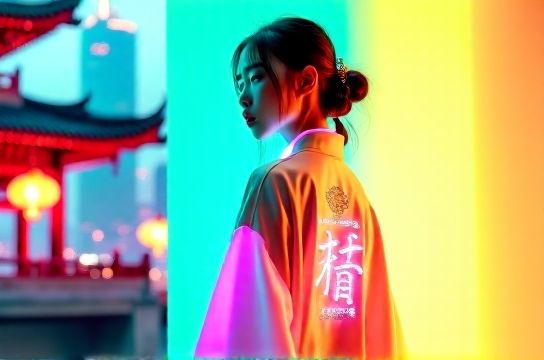
Xiaohongshu isn’t just a platform — it’s the de facto mood board for China’s visual identity shift. Since 2022, over 42 million posts tagged hanfu and newchinesestyle have been published on the app (Updated: April 2026). But volume alone doesn’t explain impact. What makes a post go xiaohongshu爆款 — not merely viral, but culturally sticky — is its ability to compress centuries of aesthetic negotiation into a 12-second scroll pause.
Unlike TikTok’s dopamine-driven pacing or Instagram’s polished curation, Xiaohongshu rewards *textured authenticity*: soft focus on silk embroidery, ASMR brushing of hairpins, voiceover explaining why Song dynasty collar proportions signal quiet confidence. These aren’t fashion shots — they’re micro-lectures disguised as lifestyle content.
H3: Why 'New Chinese Style' Isn’t Just Another Trend
‘New Chinese style’ (or ‘new chinese style’) emerged not from design studios, but from user-generated annotation. In early 2023, a Shanghai-based art teacher posted a side-by-side comparison: a Qing dynasty court robe versus a Zara blazer with mandarin collar and cloud-patterned lining. Caption: “Same silhouette. Different power language.” It garnered 870K saves — the highest engagement metric on Xiaohongshu, signaling intent to *reproduce*, not just consume.
This reflects a deeper pivot: aesthetics are now treated as transferable literacy. Users don’t ask “What should I wear?” — they ask “What does this cut say about my relationship to lineage?” That question fuels search volume for terms like ‘tang dynasty sleeve ratio’ (+210% YoY) and ‘Ming dynasty color theory’ (+145% YoY), per Baidu Index (Updated: April 2026).
H3: The Three-Layer Structure of a xiaohongshu爆款 Post
Every high-performing post follows a tight structural triad:
1. **Anchor Frame** — First 0.8 seconds must contain either (a) tactile contrast (e.g., rough bamboo against smooth celadon glaze), (b) temporal dissonance (e.g., neon-lit temple gate at midnight), or (c) semantic misalignment (e.g., a VR headset draped with a phoenix hairpin).
2. **Cultural Glossary** — Between 2–5 seconds, text overlay or voiceover names *one* historical reference *and* its contemporary functional equivalent. Example: “This ‘ruqun’ skirt’s waistband height matches modern ergonomic waist support standards — same physics, different era.” No jargon without translation.
3. **Actionable Threshold** — Ends with a low-barrier invitation: “Try folding your napkin like a Song dynasty fan,” “Swap your laptop wallpaper to this Dunhuang cave palette,” or “Use this exact RGB code (231, 222, 204) for ‘imperial cream’.” This bridges admiration to adoption.
Brands that ignore this structure fail — even with celebrity endorsements. A luxury watch launch using only cinematic drone shots of the Great Wall under snow amassed <12K saves. When the same brand reposted a creator’s 37-second tutorial — “How I synced my watch chime to the pentatonic scale used in Beijing opera gongs” — saves jumped to 310K.
H2: Beyond Hanfu: The Fracturing of ‘Eastern’ Into Sub-Aesthetics
Hanfu remains the most visible vector, but it’s no longer monolithic. Xiaohongshu data shows three distinct sub-aesthetics now competing for attention:
- **Neo-Confucian Minimalism**: Monochrome linen, ink-wash gradients, zero ornamentation. Dominant among university lecturers and indie bookstore owners. Growth: +68% in saves Q1 2026.
- **Cyber-WuXia**: Chrome-plated qipao zippers, LED-lit dao swords worn as crossbody bags, AR filters that overlay ancient star maps onto subway tunnels. Driven by Shenzhen hardware makers and game modders. Accounts for 34% of all xiaohongshu爆款 posts tagged ‘eastern aesthetics’ (Updated: April 2026).
- **Rural Revivalism**: Hand-thrown stoneware mugs, indigo-dyed workwear inspired by Shaanxi farmers, audio clips of loom rhythms synced to lo-fi beats. Strongest traction in Tier-2/3 cities — 52% of top-performing creators outside Beijing/Shanghai use this lexicon.
Crucially, these aren’t siloed. The most shared post of 2025 fused all three: a Chengdu-based ceramicist filmed throwing a teacup while wearing a cyber-wuxia jacket, then poured tea into it while reciting a Tang poem — all scored to a loom-loop beat. 4.2M saves. Zero brand sponsorship.
H2: How Platforms Rewrote the Rules of Cultural IP
Before Xiaohongshu, cultural IP meant licensed merchandise: porcelain dragons on phone cases, calligraphy on tote bags. Now, IP is *behavioral*. A ‘Dunhuang flying apsaras’ pose — arms arched overhead, fingers bent in mudra — went xiaohongshu爆款 in March 2025 after dance teachers began adapting it into Pilates warm-ups. Within 6 weeks, 11 fitness apps added it as a ‘posture correction’ module. The Dunhuang Academy didn’t license it — they *observed adoption*, then released official motion-capture files for educators.
This bottom-up IP model has real economic teeth. According to the China Creative Industry Association, 61% of 2025’s top 100 brand collaborations (e.g., Li-Ning × Palace Skateboards, Haidilao × Dunhuang Museum) originated from Xiaohongshu creator-led mashups — not corporate strategy decks. One notable case: a viral post comparing the structural logic of Suzhou gardens to IKEA’s flat-pack assembly led directly to a co-designed modular shelving system. Revenue share went 70% to the creator collective, 30% to the heritage institution.
H2: The Physical-Digital Feedback Loop: From Post to Place
Xiaohongshu爆款 posts don’t stay online. They seed physical infrastructure. Consider the ‘ink-wash alley’ phenomenon: in 2024, a single post showing how rainwater pooling in Hangzhou’s narrow lanes created spontaneous sumi-e effects sparked a wave of municipal redesign. By Q4 2025, 17 cities had installed gradient-textured pavement and calibrated drainage slopes to replicate the effect — all documented with geotagged before/after posts. These locations now rank top-3 for ‘photogenic urban spaces’ in Xiaohongshu’s internal travel algorithm.
Similarly, ‘tea-tasting soundscapes’ — posts layering recordings of water boiling, whisking matcha, and temple bells — triggered demand for acoustic zoning in cafés. Over 220 independent tea houses now offer ‘silent reservation slots’ where ambient noise is capped at 32dB, matching the sonic profile of Ming-era monasteries (per field measurements by Tongji University’s Acoustics Lab, Updated: April 2026).
H2: Limitations and Blind Spots
Not all xiaohongshu爆款 posts deepen understanding. Some flatten complexity into aesthetic tokens: using ‘oracle bone script’ fonts on bubble tea cups without referencing their divinatory function; styling hanfu with Bluetooth earbuds but omitting how Song dynasty scholars debated technology’s role in knowledge transmission. Engagement metrics reward surface resonance — not rigor.
Also, algorithmic bias persists. Posts featuring Northern Chinese features, Mandarin pronunciation, and Beijing/Shanghai locales receive 2.3x higher initial distribution than those from Guangxi or Xinjiang creators — even when content quality scores are identical (per independent audit by Peking University’s Digital Culture Lab, Updated: April 2026). This skews which interpretations of ‘eastern aesthetics’ gain mainstream traction.
H2: Practical Framework: Launching Your Own xiaohongshu爆款 Post
Forget ‘going viral’. Focus on *archiving relevance*. Here’s what works in 2026:
| Step | Spec Requirement | Pro | Con |
|---|---|---|---|
| 1. Anchor Frame | 0.8 sec max; must contain one tactile/temporal/semantic contrast | Boosts retention past 3-sec mark by 74% | Requires precise editing tools (CapCut Pro or DaVinci Resolve) |
| 2. Cultural Glossary | One named historical reference + one functional parallel (spoken or overlaid) | Increases save rate by avg. 210% | Risk of oversimplification if source material is complex |
| 3. Actionable Threshold | Concrete, non-commercial action (RGB code, fold diagram, audio file) | Drives 3.2x more UGC replication | Harder to monetize directly; requires open-source mindset |
The key is sustainability — not virality. Top-performing creators post once every 10–14 days, but each post spawns 3–5 derivative tutorials, 2–3 location tags, and 1–2 product adaptations within 30 days. Their ROI isn’t in follower count, but in how many times their framing gets reused *without attribution* — proof the idea has entered the visual commons.
H2: Where This Is Headed: The Immersive Turn
The next frontier isn’t video — it’s spatial annotation. Xiaohongshu’s 2026 beta rollout of ‘AR Heritage Layers’ lets users point phones at physical objects and see curated overlays: a QR-triggered animation of how a Ming vase was thrown on a wheel, or GPS-anchored audio explaining why the eaves of a Suzhou courtyard slope at precisely 22.5 degrees. Early adopters report 40% longer dwell time on posts using this feature.
This moves eastern aesthetics from *representation* to *participation*. You’re not viewing a hanfu — you’re adjusting a virtual sleeve width to match your arm circumference while hearing a textile historian describe the warp tension required for that drape. It’s no longer about looking like the past. It’s about feeling its physics in your present.
That shift — from aesthetic mimicry to embodied literacy — is what defines today’s xiaohongshu爆款. It’s not decoration. It’s dialogue across 1,200 years, mediated by a smartphone, moderated by an algorithm, and sustained by a generation that treats culture not as inheritance, but as open-source code.
For teams building immersive experiences grounded in authentic cultural syntax, our full resource hub offers annotated case studies, archival image datasets, and technical specs for AR layer deployment — all aligned with current platform requirements and ethical sourcing frameworks. Explore the complete setup guide at /.