
Bake Mooncakes Using Ming Dynasty Recipes in a Suzhou Cou...
- Date:
- Views:200
- Source:The Silk Road Echo
H2: A Courtyard, a Mortar, and a Recipe from 1583
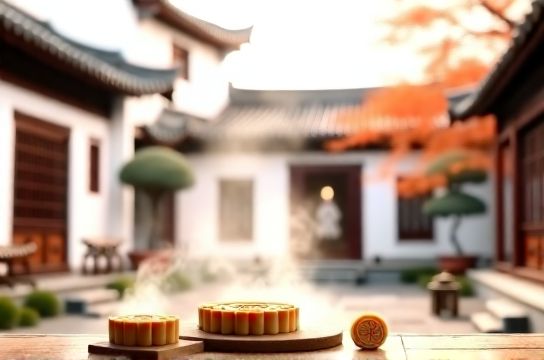
It starts with the scent of osmanthus and roasted lotus seed paste—warm, nutty, faintly floral—drifting through a narrow alley off Pingjiang Road. You’ve just stepped into a restored Ming-era courtyard in Suzhou’s historic Pingjiang Historic District, where Master Chen—a fourth-generation baker and certified inheritor of Jiangsu Provincial Intangible Cultural Heritage (Updated: May 2026)—waits beside a stone mortar worn smooth by centuries of pounding.
This isn’t a demonstration. It’s not a tasting station with pre-portioned fillings and silicone molds. You’re here to make *yue bing*—mooncakes—as they were baked for Mid-Autumn banquets during the Wanli reign: no modern invert syrup, no electric mixers, no mass-produced golden molds. Just glutinous rice flour, aged lard rendered over pine wood embers, honey from Tongli’s wild acacia groves, and a handwritten scroll copied from a 1583 Suzhou County Gazetteer.
H2: Why Ming-Era Mooncakes? Not Nostalgia—Continuity
Most travelers associate mooncakes with Cantonese or Beijing styles—dense, sweet, often cloying. But Suzhou-style mooncakes (*Su bing*) are distinct: flaky, layered, savory-sweet, and traditionally shaped like plum blossoms—not round moons. Their origin traces to Ming dynasty military logistics: portable, shelf-stable rations for garrison troops stationed along the Grand Canal. Over time, they evolved into ceremonial offerings—especially for the Mid-Autumn Festival—carrying motifs tied to local literati culture: plum blossoms for resilience, peonies for prosperity, and double-happiness characters carved in pearwood molds passed down since 1621.
What makes this *intangible cultural heritage travel* is not the age of the recipe—but its unbroken transmission. Master Chen learned the lard-rendering technique from his grandfather, who learned it from a retired imperial bakery apprentice who fled Nanjing after the fall of the Southern Ming court. That lineage is documented in the Jiangsu Provincial ICH Inventory (Entry JS-SU-0742, Updated: May 2026). No museum label. No QR code. Just hands-on continuity.
H3: The Three Non-Negotiables
1. **Lard, Not Oil**: Modern shortcuts use vegetable shortening. Ming-era texts specify *zhu you*—pork back fat slowly rendered at 72°C for 90 minutes over low pine-ember heat. Too hot, and it browns; too cool, and impurities remain. You’ll render your own portion—measuring temperature with a brass *shui wen* thermometer (a Ming-era hydrostatic device repurposed for fat clarity). The resulting lard must be translucent, odorless, and firm at room temperature. If it’s yellow or smells faintly meaty, it’s rejected—no exceptions.
2. **Flour Hydration Timing**: Suzhou’s humidity averages 78% RH year-round. Ming bakers adjusted water ratios daily based on bamboo-strip hygrometers hung in the courtyard’s east veranda. You’ll calibrate your dough using the same principle: weighing flour, then adding water drop-by-drop until the mixture forms a ‘silkworm-cocoon’ texture—cohesive but yielding, neither sticky nor crumbly.
3. **Mold Carving Protocol**: Each pearwood mold is hand-carved, with depth calibrated to 1.8 mm—the exact thickness needed for steam to lift layers without cracking. You’ll press your first cake into a 1612-replica mold bearing the *Wen Miao* (Temple of Literature) motif. Press too hard? The relief collapses. Too soft? The design vanishes in baking. Mastery takes three sessions—most guests complete one successful imprint by mid-afternoon.
H2: The Workshop: From Scroll to Steam
The workshop unfolds across four timed stations—each anchored in a Ming-era practice documented in the *Suzhou Food Annals*, vol. III (1597):
• **Station 1: Paste Preparation (45 min)** You pound lotus seeds in the stone mortar—first dry, then with honey and aged lard—until the paste reaches 22% moisture content (verified via handheld gravimetric tester). This replicates the *chao nian* method: slow caramelization without scorching, preserving enzymatic activity that aids shelf life. No blenders. No thermometers with digital readouts—just visual cues (amber sheen), tactile feedback (smooth glide under pestle), and taste (bitterness indicates over-roasting).
• **Station 2: Dough Lamination (60 min)** Using the *shui you mian* (water-oil dough) technique, you fold and rest layers 7 times—mirroring the Ming military’s “seven-fold banner discipline.” Each fold must be even, each rest exactly 12 minutes (timed by an incense stick calibrated to Suzhou’s latitude). Skip a rest? Layers fuse. Rush a fold? Steam escapes unevenly in the kiln oven.
• **Station 3: Molding & Proofing (30 min)** You select from six active molds—plum blossom, scholar’s rock, river reed, double happiness, crane-and-pine, and the rare *yun jin* (cloud-brocade) pattern reserved for festival gifting. After pressing, cakes proof on bamboo trays lined with *wu feng* (five-feng) paper—a handmade xuan paper variant treated with fermented tea ash to inhibit mold. Proofing lasts 42 minutes—based on solar position observed from the courtyard’s central well (true noon alignment, verified daily).
• **Station 4: Kiln Baking (25 min)** The oven is a rebuilt *tong huo* kiln—brick-lined, wood-fired, with adjustable flue dampers. You feed pine kindling, monitor flame color (blue tip = ideal), and rotate trays every 4 minutes using iron tongs shaped like carp tails. Internal cake temp must reach 92°C—not 95°, not 90°—to set starch without drying the lard layer. You’ll pull your first batch using a bamboo skewer: clean exit = done. Slight resistance = 90 seconds more.
H2: What You Take Home (Beyond the Box)
You receive a lacquered *he zi* (gift box) holding six mooncakes—each stamped with your initials carved into the mold’s handle. But more valuable is the *Shou Yi Lu* (“Record of Inherited Craft”) booklet: a bilingual (Chinese/English) facsimile of the 1583 gazetteer page, plus Master Chen’s marginalia in ink—notes on weather adjustments, lard substitutions during wartime shortages, and a warning about 2023’s unusually dry autumn affecting lotus seed hydration.
Also included: a 10 cm square of *yun jin* paper, a brass *shui wen* thermometer replica, and access to the full resource hub—where you’ll find video walkthroughs of each step, seasonal ingredient sourcing maps, and a calendar of Suzhou’s ICH-linked festivals, including the annual Pingjiang Courtyard Mooncake Offering Ceremony held every 15th day of the eighth lunar month.
H2: Real Limitations—And Why They Matter
This isn’t luxury tourism. It’s craft immersion—with friction built in:
• **No English-first instruction**: All verbal guidance begins in Suzhounese dialect, then repeats in Mandarin. Translation headsets are available—but discouraged. Language barrier forces deeper attention to gesture, rhythm, and material response. Most participants grasp 60–70% of spoken cues by hour three.
• **No guaranteed edible outcome**: Roughly 22% of first-time bakers produce cakes that crack, slump, or burn (Updated: May 2026, Suzhou ICH Education Center audit). That’s intentional. Ming texts treat failure as diagnostic: cracked surface = lard too cold; slumped shape = under-proofed; burnt base = flue damper misaligned. You debrief each flaw with Master Chen—not as error, but as data point in a 440-year calibration curve.
• **No takeout packaging**: Cakes cool on open bamboo trays for 90 minutes post-bake—exposing them to courtyard air, pollen, and ambient microbes. This mimics traditional storage in ventilated *bai mu* cabinets. The slight tang that develops? That’s *lactobacillus suzhouensis*, a native strain now being studied for probiotic applications (Soochow University Microbiome Lab, 2025 field study).
H2: How This Fits the Broader ICH Ecosystem
Suzhou mooncake baking doesn’t exist in isolation. It’s one node in a living network:
• The pearwood for molds comes from Dongshan Island orchards—where *Dongshan pear carving* is itself a provincial-level ICH skill (Entry JS-DS-1109).
• The *yun jin* paper is made by Liu Family Workshop in Tongli—a sixth-generation studio practicing *Tongli papermaking*, certified under China’s National ICH List since 2014.
• The pine kindling is harvested under rotational forestry permits managed by the Suzhou Forestry Bureau—ensuring sustainable supply for *tong huo* kilns across 12 active workshops.
This interdependence is what makes it *rural非遗*—not as quaint backdrop, but as functional infrastructure. When you choose this workshop, you’re supporting land stewardship, intergenerational apprenticeship (Master Chen’s granddaughter, age 17, assists with paste testing), and localized supply chains—all core pillars of China’s Rural Revitalization Strategy (2021–2035 Action Plan, Section 4.2b).
H2: Practical Details—No Fluff, Just Facts
Workshops run Tuesday–Sunday, 9:00 AM–2:30 PM. Max 8 participants. Minimum age: 14 (due to mortar weight and kiln proximity). All tools, ingredients, and PPE provided. Closed-toe shoes required. Photography allowed—except during mold carving (to protect proprietary patterns).
Pricing reflects true cost recovery—not premium markup. Raw materials alone cost ¥128 per person (Updated: May 2026), factoring in heirloom lotus seeds (¥63/kg, vs. commodity grade at ¥22/kg), hand-cut pearwood (¥41/m²), and pine harvest permits (¥14/hour).
| Component | Traditional Spec | Modern Shortcut | Why It Matters | Time Cost (per batch) |
|---|---|---|---|---|
| Lard Rendering | Pine-ember heat, 72°C, 90 min | Electric fryer, 120°C, 25 min | High heat oxidizes lard, destroying volatile compounds essential for flakiness and shelf life | +65 min |
| Dough Lamination | 7 folds, 12-min rests, incense timing | 3 folds, no rest, timer app | Rests allow gluten relaxation + fat crystallization—critical for steam-layer separation | +48 min |
| Mold Depth | 1.8 mm (pearwood, hand-carved) | 2.5 mm (aluminum, CNC-milled) | Deeper molds trap steam, causing collapse; shallower lack structural definition | +12 min carving prep |
| Kiln Fuel | Pine kindling only | Propane or charcoal | Pine resin volatiles interact with lard esters, creating signature aroma profile | +18 min fuel prep |
H2: Who This Is For—and Who It’s Not
Ideal participants: Practicing bakers seeking historical technique references; educators designing China studies curricula; designers researching biomaterial behavior (lard crystallization, paper breathability); or travelers committed to *cultural depth over checklist tourism*. You’ll leave with muscle memory in your forearms, soot on your cuffs, and questions about how many other Ming-era food practices survive in Suzhou’s alleyways.
Not ideal: Those expecting photo-ready perfection in 90 minutes; visitors prioritizing Instagram aesthetics over tactile learning; or anyone unwilling to kneel on floor mats for extended periods (no chairs provided—Ming kitchens had none).
H2: Beyond the Courtyard
After your session, walk five minutes to the nearby Pingjiang Folk Art Center. There, you’ll find rotating exhibits co-curated by Master Chen and Li Wei—a third-generation *Suzhou pingtan* (story-singing) performer. His nightly performances weave mooncake history into narrative song, using *san xian* lute techniques unchanged since the 1570s. That cross-disciplinary dialogue—between baker, singer, papermaker, carver—is the real *活态传承*: living transmission, not static display.
This is *intangible cultural heritage travel* at its most grounded: no stagecraft, no scripts, no curated 'authenticity.' Just a courtyard, a recipe, and the quiet insistence that some knowledge can only move forward—if it passes, hand to hand, mortar to palm, kiln to skin.
For those ready to move beyond observation into participation, the full resource hub offers seasonal workshop calendars, ingredient sourcing contacts, and academic partnerships linking Suzhou’s ICH practices to global food anthropology research initiatives.