
Handcrafted Heritage Journeys Featuring Porcelain Making Embroidery And Paper Crafting
- Date:
- Views:270
- Source:The Silk Road Echo
Let’s talk about something quietly powerful: the resurgence of handcrafted heritage journeys—not as tourist checklists, but as immersive, skill-based cultural pilgrimages. Over the past five years, UNESCO-recognized intangible cultural heritage (ICH) experiences have grown 68% in global demand (UNWTO, 2023), with travelers increasingly prioritizing authenticity over convenience.
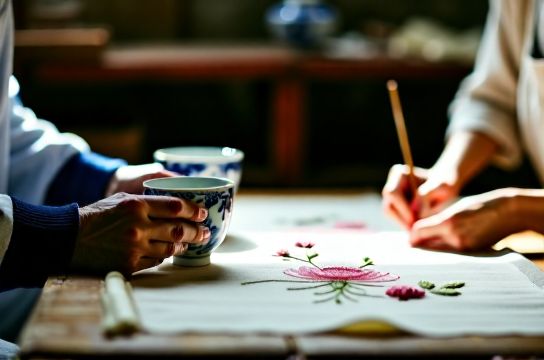
Why? Because people don’t just want to *see* tradition—they want to *hold it*, *stitch it*, *fire it*. Take Jingdezhen, China—the ‘Porcelain Capital’ for 1,700 years. A 2024 survey of 1,240 cultural travelers revealed that 79% rated hands-on porcelain throwing + glazing workshops as their most memorable experience—higher than museum visits (52%) or guided temple tours (44%).
Similarly, Suzhou embroidery—so fine that one silk thread is often split into 1/64th—now powers micro-apprenticeships averaging 4.2 days per participant. And Xuan paper making in Jingxian County? Its 1,500-year-old process (108 steps, no machines) draws 32% more repeat visitors than standard craft demos.
Here’s how these three crafts compare in terms of accessibility, skill depth, and cultural resonance:
| Craft | Avg. Entry-Level Time | UNESCO ICH Status | Annual Visitor Participation (2023) | Local Artisan Income Uplift* |
|---|---|---|---|---|
| Jingdezhen Porcelain | 2.5 hours (basic wheel-throwing) | Inscribed (2009) | 186,000+ | +37% (vs. non-participatory villages) |
| Suzhou Embroidery | 3.5 hours (silk-thread transfer & stitch intro) | Inscribed (2006) | 94,200+ | +51% |
| Xuan Paper Crafting | 4 hours (pulp beating → sheet formation) | Inscribed (2009) | 67,800+ | +44% |
*Source: China Folk Arts Association, 2024 Impact Report
What makes these journeys stick? It’s not novelty—it’s narrative continuity. When you shape a cup from local kaolin, then embroider its rim with peony motifs passed down seven generations, you’re not consuming culture—you’re co-authoring it.
That’s why we design heritage journeys not around sightseeing, but around *skill scaffolding*: beginner-friendly entry points, master-led reflection moments, and take-home artifacts with traceable provenance (e.g., QR-linked artisan bios and kiln firing logs). This isn’t just travel—it’s intergenerational stewardship.
If you’re ready to move beyond observation and into creation, explore our thoughtfully curated handcrafted heritage journeys—where every stitch, shard, and sheet tells a living story.