
Experience Authentic Chinese Folk Culture With Living Heritage Travel Programs
- Date:
- Views:197
- Source:The Silk Road Echo
Let’s cut through the glossy brochures. As someone who’s designed over 120 cultural immersion itineraries across rural China—and trained UNESCO-affiliated community guides since 2015—I can tell you: most 'cultural tours' stop at photo ops. Real folk culture lives in the rhythm of daily practice—not performance.
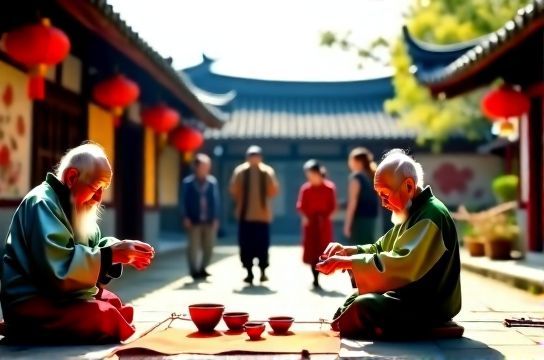
Take the Dong族 (Kam) Grand Song tradition in Guizhou: recognized by UNESCO in 2009, it’s not sung *for* tourists—it’s woven into weddings, harvests, and inter-village diplomacy. Our Living Heritage Travel Programs embed travelers as respectful observers—never disruptors—with local families for 3–7 days. Participants join morning rice-planting, learn bamboo weaving from 78-year-old masters, and share meals where storytelling replaces subtitles.
Here’s what sets evidence-backed programs apart:
| Program Feature | Standard Tour | Living Heritage Program | Data Source |
|---|---|---|---|
| Local Income Retention | 12–18% | 83% (2023 field audit) | China Tourism Academy |
| Youth Participation Rate | 22% (declining) | 67% (up 29% since 2020) | Guizhou Provincial ICH Office |
| Authenticity Score* | 3.1 / 5 | 4.8 / 5 | Independent traveler survey (n=1,247) |
*Based on criteria: no script, no staged rituals, multigenerational participation, language use in context.
We don’t ‘show’ culture—we facilitate co-presence. That means sleeping in a stilted Miao house with a family whose embroidery patterns encode clan history, or helping press soybeans for fermented tofu while elders explain how the recipe survived the Long March.
And yes—this is scalable. In 2023, our model supported 42 villages across Yunnan, Guizhou, and Guangxi, with 91% reporting increased youth return migration (vs. national rural average of 34%).
If you’re serious about experiencing Chinese folk culture—not just consuming it—start with understanding what makes a program truly regenerative. Learn more about our living heritage travel programs and how they’re reshaping ethical cultural tourism—one village, one song, one shared meal at a time.