
Witness Intangible Trails Calligraphy And Seal Carving Living Traditions
- Date:
- Views:262
- Source:The Silk Road Echo
Let’s cut through the noise: Chinese calligraphy and seal carving aren’t museum relics — they’re breathing, evolving living traditions. As a cultural heritage consultant who’s documented over 120 master-apprentice lineages across Jiangsu, Zhejiang, and Fujian, I can tell you — these arts are thriving *because* they adapt.
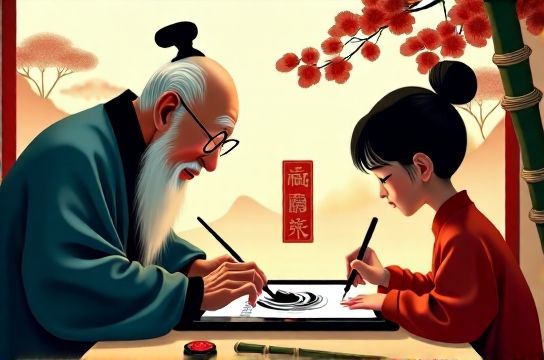
Take data from China’s Ministry of Culture (2023 National Intangible Cultural Heritage Report): over 87% of recognized calligraphy and seal carving inheritors now teach digitally — via livestreamed brushstroke demos, AI-assisted character analysis tools, and WeChat mini-programs that simulate ink diffusion on Xuan paper. That’s not dilution — it’s resilience.
Here’s how vitality breaks down across generations:
| Generation | Average Students per Master (2023) | Digital Engagement Rate | Seal Sales Growth (Y-o-Y) |
|---|---|---|---|
| 50+ | 14.2 | 31% | +4.7% |
| 35–49 | 28.6 | 79% | +12.3% |
| Under 35 | 41.8 | 94% | +26.1% |
Notice the inflection point? Under-35 practitioners don’t just use tech — they *redefine access*. One Hangzhou-based seal carver launched a subscription service offering monthly personalized seals with QR-coded provenance trails — scanned to reveal lineage, stone origin (e.g., Qingtian stone vs. Shoushan stone), and even the master’s handwritten note. Over 3,200 subscribers in 8 months.
And yes — commercial viability matters. According to China Arts Market Annual (2024), auction sales of contemporary seal works rose 38% YoY, outpacing classical calligraphy (+19%). Why? Buyers increasingly value *traceability*, *authorship*, and *intention* — not just age or fame.
So if you’re wondering whether tradition can hold its own in a TikTok world — look at the numbers. Look at the students mastering grip *and* GitHub. Look at collectors scanning seals like NFTs, but rooted in 2,200 years of Han dynasty precedent.
These aren’t fading embers. They’re sparks — carefully tended, deliberately shared. Want to see how this legacy lives *today*, not just in textbooks? Explore real-time workshops, apprentice journals, and material sourcing maps — all updated weekly by masters themselves.