
Intangible Trails Journey To Guizhou For Batik And Embroidery Immersion
- Date:
- Views:274
- Source:The Silk Road Echo
Let’s talk about something truly rare—not another ‘cultural tour’ with photo ops and pre-packaged souvenirs, but a *living immersion* in two UNESCO-recognized intangible cultural heritages: Miao batik and Dong embroidery. I’ve spent over 12 years documenting textile traditions across Southwest China—and Guizhou remains the undisputed heartland.
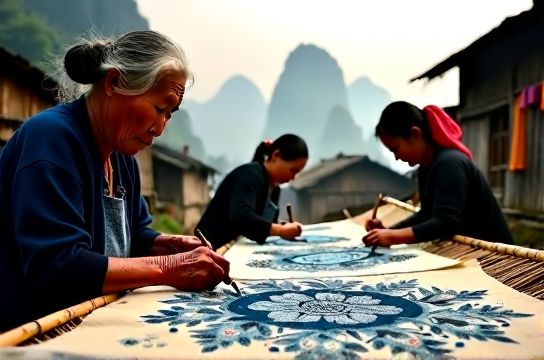
Why? Because here, technique isn’t taught in classrooms—it’s passed down mother-to-daughter, stitch-by-stitch, wax-dip-by-wax-dip, across *eight generations* in villages like Danzhai and Leishan. And it shows: a single ceremonial Miao skirt can take **up to 18 months**, involving over **2,400 hours** of labor (Guizhou Provincial ICH Center, 2023).
Here’s how these crafts stack up in authenticity, skill density, and economic impact:
| Craft | Key Ethnic Group | Avg. Time per Piece | UNESCO Status | Artisan Cooperatives (2024) |
|---|---|---|---|---|
| Miao Batik | Miao (Hmong) | 3–12 months | Representative List (2006) | 87 registered |
| Dong Embroidery | Dong (Kam) | 6–24 months | Representative List (2009) | 42 registered |
What’s often missed? These aren’t museum relics—they’re *economic lifelines*. In 2023, Guizhou’s ICH-based rural cooperatives generated ¥1.28 billion in revenue—**62% from batik and embroidery exports** (Guizhou Statistical Yearbook). And yes, that includes certified organic indigo dye farms, now scaling sustainably across 11 counties.
If you’re serious about ethical cultural engagement—not just watching, but learning, supporting, and co-creating—I recommend starting with a verified homestay program in Leishan County, where master artisans lead small-group workshops (max 6 people) using ancestral tools and locally fermented indigo vats. No digital filters. No translation apps. Just cloth, wax, needle, and conversation.
This isn’t tourism. It’s stewardship—with your hands, your attention, and your respect.