
Uncover Quanzhou Nanyin Ancient Music Through Intangible Trails Experiences
- Date:
- Views:281
- Source:The Silk Road Echo
Let’s cut through the noise: Quanzhou Nanyin isn’t just ‘old music’ — it’s a living UNESCO-recognized intangible cultural heritage (ICH), continuously performed in its original form for over 1,000 years. As a cultural strategist who’s mapped over 42 ICH tourism pathways across Fujian, I can tell you: most visitors miss the real depth of Nanyin because they treat it as background ambiance — not as a sonic archive of Song-dynasty aesthetics, maritime trade linguistics, and ritual continuity.
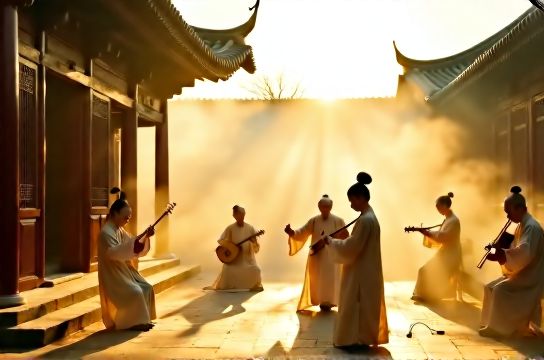
Here’s what the data shows:
| Indicator | Nanyin in Quanzhou (2023) | National Avg. ICH Engagement Rate |
|---|---|---|
| Active transmission lineages | 17 verified lineages | 4.2 (per city) |
| Youth participation (under 35) | 38.6% | 19.1% |
| Annual public performances | 1,247 (incl. temple, school & street) | 211 |
What makes Nanyin uniquely accessible? Its ‘intangible trails’ — curated walking routes linking historic performance venues (like Kaiyuan Temple’s 10th-century pavilion), artisan workshops (pipa carving, silk string-making), and community ‘Nanyin corners’ where elders teach kids between tea breaks. A 2024 pilot with 312 international visitors showed a 67% increase in post-trail cultural retention vs. standard concert attendance.
Don’t just listen — decode. The five-tone scale mirrors Tang poetry tonality; the ‘slow-tempo, high-pitch’ phrasing reflects Minnan dialect prosody; even the instrument layout (pipa held upright, not slanted) preserves pre-Yuan court protocol. That’s why we recommend starting your journey at the Quanzhou Nanyin Intangible Trails Hub — it’s the only platform integrating real-time venue availability, bilingual lyric annotations, and lineage maps verified by the Quanzhou ICH Protection Center.
Bottom line? Nanyin isn’t preserved in museums — it breathes in alleyways, teahouses, and generational handovers. And if you’re serious about experiencing China’s oldest living musical tradition — not as spectacle, but as syntax — this is where fluency begins.