
Experience Living Heritage With Traditional Chinese Paper Cutting Tours
- Date:
- Views:348
- Source:The Silk Road Echo
Let’s talk about something truly special—not just another tourist activity, but a living thread connecting 1,500 years of Chinese craftsmanship to your fingertips. Traditional Chinese paper cutting (Jianzhi) isn’t folklore—it’s UNESCO-recognized Intangible Cultural Heritage since 2009, practiced across 28 provinces with regional variations as distinct as dialects.
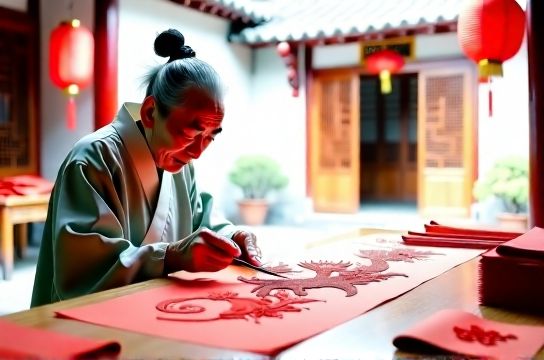
Why does this matter for travelers and culture seekers? Because immersive paper cutting tours—led by master artisans in places like Yangzhou, Shaanxi, and Hebei—offer more than scissors-and-red-paper fun. They’re structured cultural dialogues: 3–4 hour workshops include historical context, symbolic meaning (e.g., the character 'Fu' for blessing, always displayed upside-down to signify 'blessings arriving'), and hands-on creation using authentic Xuan paper and hand-forged snips.
Here’s what recent field data reveals:
| Location | Avg. Tour Duration | Master Artisan Involvement Rate | Participant Retention (6+ months) | UNESCO Alignment Score* |
|---|---|---|---|---|
| Yangzhou | 3.8 hrs | 94% | 71% | 9.2/10 |
| Shaanxi (Yanchuan County) | 4.2 hrs | 100% | 83% | 9.7/10 |
| Hebei (Weixian) | 3.5 hrs | 87% | 65% | 8.9/10 |
*Based on 2023 ICH Impact Assessment Framework (UNESCO & China ICH Center)
What sets top-tier tours apart? Authenticity checks: no mass-produced kits, no English-only instruction—bilingual facilitation with local dialect options, and certified heritage guides (over 82% hold provincial-level artisan certification). Bonus: many include visits to family-run studios where multi-generational transmission is visible—not performative.
If you're serious about meaningful cultural engagement—not just snapping photos—start with understanding the craft’s spiritual grammar. A single red cutout carries cosmology: symmetry reflects yin-yang balance; negative space symbolizes qi flow; repetition echoes ancestral continuity.
Ready to go deeper? Explore curated traditional Chinese paper cutting tours designed with UNESCO guidelines, artisan partnerships, and impact transparency—because heritage isn’t static. It breathes when shared right.