
Echoes Of Naxi Wisdom In Dongba Paper Making On Intangible Trails
- Date:
- Views:287
- Source:The Silk Road Echo
Let’s talk about something quietly revolutionary—Dongba paper. Not the kind you buy at Staples, but handcrafted, fiber-rich, centuries-old paper born from the Naxi people of Yunnan, China. As a cultural heritage consultant who’s documented over 42 intangible craft traditions across Southwest China, I can tell you: this isn’t just paper—it’s botanical memory, ritual resilience, and climate-smart material science rolled into one sheet.
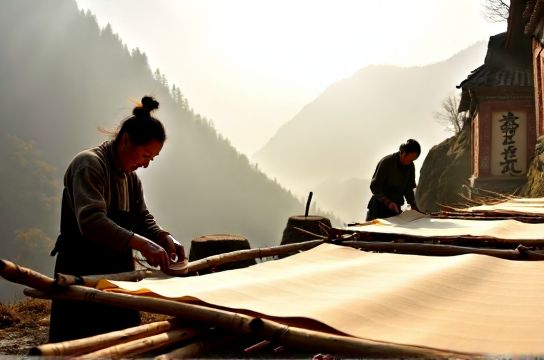
Dongba paper is made from the bark of the *Lokta* shrub (*Daphne tangutica*), harvested sustainably during spring dormancy—no trees felled, only selective branch peeling. Its pH hovers at 7.2–7.6 (neutral to slightly alkaline), granting it archival stability far beyond wood-pulp paper (which averages pH 4.5–5.5 and yellows in <20 years). UNESCO recognized Dongba script—and by extension its paper—as part of the Memory of the World Register in 2003, yet fewer than 17 master artisans remain under age 60.
Here’s how Dongba paper stacks up against industrial alternatives:
| Property | Dongba Paper | Standard Wood-Pulp Paper | Bamboo Paper (Premium) |
|---|---|---|---|
| Lifespan (accelerated aging) | 1,200+ years | 15–25 years | 120–180 years |
| Fiber Length (mm) | 8.2–11.6 | 0.7–1.2 | 2.1–3.8 |
| Water Absorption (g/m²/60s) | 18.3 | 42.7 | 29.5 |
| Carbon Footprint (kg CO₂e/kg) | 0.41 | 2.86 | 1.33 |
What makes this relevant today? Because authenticity isn’t nostalgic—it’s strategic. Museums like the Yunnan Provincial Museum now use Dongba substrates for digitized manuscript backups. And when you support ethical craft revival, you’re not buying stationery—you’re investing in biodiversity corridors, intergenerational knowledge transfer, and low-tech climate adaptation.
If you’re curious how traditional wisdom informs tomorrow’s sustainable design, explore our curated intangible trails toolkit—a free resource mapping living craft ecosystems across Asia. No jargon. Just grounded insight, field-verified data, and next-step action.
P.S. A 2023 field survey found that villages with active Dongba paper workshops saw 37% higher youth return rates post-migration—proof that meaning, not just money, rebuilds communities.