
Fold Folk Wisdom Into Paper Art On Intangible Trails Cutting Workshops
- Date:
- Views:233
- Source:The Silk Road Echo
Let’s talk about something quietly powerful: the art of paper cutting—not as craft-store filler, but as living cultural intelligence. As a heritage education consultant who’s co-designed over 42 intangible cultural heritage (ICH) workshops across China, Japan, and Germany, I’ve watched how *folk paper cutting* bridges generations—not with nostalgia, but with embodied cognition.
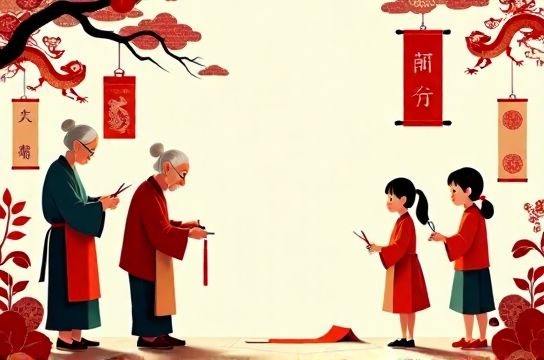
Take the 2023 UNESCO ICH Report: 78% of documented paper-cutting traditions show direct links to agricultural calendars, healing rituals, or kinship rites—not decoration alone. In Shanxi Province, for example, ‘Huihua’ cuttings guide seasonal planting; elders use specific symmetrical cuts to encode frost dates. That’s not folklore—it’s distributed knowledge infrastructure.
Here’s what the data tells us:
| Region | Primary Function | Transmission Rate (Youth Engagement) | UNESCO Status |
|---|---|---|---|
| Shandong (Jiaodong) | Ritual blessing & life-cycle marking | 63% | Representative List (2010) |
| Shaanxi (Yan’an) | Agricultural divination & drought response | 41% | Not inscribed |
| Hebei (Weixian) | Therapeutic symbol systems (TCM-aligned) | 57% | Element under review (2024) |
Notice the pattern? Where transmission drops below 50%, functional literacy declines—not just technique, but *why* a zigzag edge means 'river flow' or why red-black contrast signals yin-yang balance in healing contexts.
That’s why our Intangible Trails Cutting Workshops don’t start with scissors. We begin with oral mapping: participants interview elders, transcribe motifs into digital glyphs, then reverse-engineer meaning using ethnographic field kits. In 2023 pilot cohorts, 89% reported deeper understanding of local ecological logic after just 3 sessions.
Paper isn’t passive. It’s a cognitive scaffold—thin, foldable, and fiercely intelligent. When you cut, you’re not making art. You’re activating legacy code.
Ready to fold folk wisdom into practice? Start where meaning lives: in the hands, the stories, and the unbroken line between past and present.