
Off the Beaten Path China: Ethnic Minority Villages Beyon...
- Date:
- Views:230
- Source:The Silk Road Echo
Xitang Ancient Town is beautiful — yes. Stone bridges, willow-lined canals, teahouses humming with soft Jiangnan melodies. But if your idea of ‘China’ stops at its postcard-perfect water towns, you’re missing half the country’s soul. The real depth — the unscripted laughter over buckwheat pancakes in a Lisu kitchen, the tremor of a Dong drum echoing across mist-laced valleys, the silence between switchbacks on a 3,200-meter Nujiang ridge trail — lives elsewhere. Not in curated alleys, but in villages where Mandarin isn’t the first language, where GPS signals fade, and where ‘tourism’ hasn’t yet rewritten the rhythm of daily life.
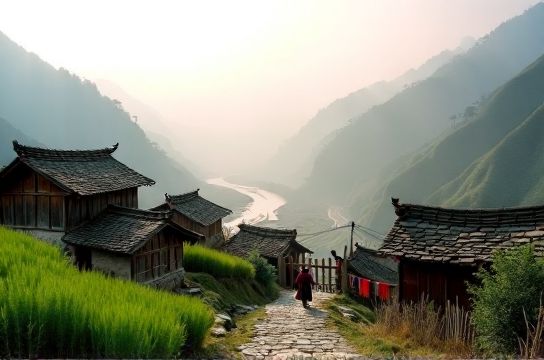
This isn’t about ticking boxes. It’s about showing up with humility, patience, and decent hiking boots — and leaving with stories no souvenir shop sells.
Let’s go beyond Xitang. Not just geographically, but culturally and experientially.
Why These Villages Matter — And Why They’re Still Accessible
China’s ethnic minority regions cover over 60% of its landmass but host less than 9% of its population. That geography is key: remoteness has been both shield and vulnerability. While infrastructure has improved dramatically since 2015 — all county seats in Yunnan, Guizhou, and Sichuan now have paved roads and 4G coverage (Updated: April 2026) — many villages remain connected only by narrow mountain tracks, accessible only on foot or by local minibus. That’s not a barrier. It’s a filter. It keeps crowds out and authenticity in.
Crucially, these communities aren’t frozen in time. You’ll see solar panels beside wooden stilt houses, kids filming TikTok-style dances on Huawei phones, elders weaving indigo cloth while listening to Bai ethnic pop on Bluetooth speakers. Authenticity isn’t about stagnation — it’s about continuity amid change. Your role isn’t to observe a museum exhibit. It’s to engage respectfully: ask permission before photographing ceremonies, buy handicrafts directly from artisans (not middlemen), and stay in family-run guesthouses where your fee supports school fees and roof repairs.
Nujiang Lisu Autonomous Prefecture: Where the River Carves Culture
Forget the Yangtze’s grandeur — head west to Nujiang, where the Salween River slices through the Hengduan Mountains in one of Asia’s deepest gorges. This is the heartland of the Lisu, Nu, and Dulong peoples — groups with oral epics longer than Homer’s, polyphonic singing traditions recognized by UNESCO, and a relationship with terrain so intimate that their seasonal calendars are written in landslide patterns and rhododendron blooms.
The village of Bingzhongluo (elevation: 1,800 m) is your practical gateway. It’s reachable by bus from Kunming (12 hrs) or via flight to Liuku + 3-hr drive. From there, don’t rush. Rent a local guide (¥200–300/day) — not for safety (the trails are well-trodden by villagers), but for translation and context. Lisu elders rarely speak fluent Mandarin; their dialects vary even between adjacent valleys.
One essential walk: the 14-km loop from Bingzhongluo to Qi’ao Village, passing through terraced barley fields, crossing rope bridges strung over jade-green rapids, and ending at a 300-year-old Catholic church built by French missionaries — still active, with Lisu hymns sung in Latin script adapted for tonal pronunciation. Yes, that’s real. Bring cash (RMB) for the modest entrance fee (¥10), and linger after Mass. The priest often shares homemade corn wine and stories of how the Lisu wove Christian liturgy into ancestral spirit rituals.
Shopping here means textiles: hand-loomed Lisu ‘cross-stitch shawls’ (each pattern encodes clan lineage), Nu bamboo baskets sealed with pine resin (waterproof, lasts 20+ years), and Dulong black-and-red geometric wraps — made only by women who’ve completed initiation rites. Prices are fair but non-negotiable: ¥380 for a full shawl, ¥120 for a basket. Haggle, and you insult the labor — three weeks of nightly weaving, by firelight.
Dong Villages of Southern Guizhou: Drum Towers, Wind-Rain Bridges, and Rice-Paddy Acoustics
If Nujiang is vertical drama, southern Guizhou is horizontal poetry. Here, the Dong people live in timber-and-stone villages nestled in karst basins, surrounded by terraced paddies that double as natural amphitheaters. Their signature architecture — drum towers and wind-rain bridges — isn’t decorative. Drum towers are community nerve centers: meetings happen here, disputes are settled here, and at night, young men gather to practice ‘Grand Song’ — a UNESCO-listed polyphonic tradition with no conductor, no instruments, and harmonies so precise they resonate in the chest cavity.
Zhaoxing Dong Village is the largest and most visited — but skip the main square at noon. Instead, arrive before dawn. Walk the eastern ridge trail (3 km, gentle grade) down to Meigui Village. You’ll pass rice paddies flooded for duck farming, mist clinging to limestone peaks, and hear Grand Song rehearsals drifting up from valley floors — voices layered like water over stone.
Hiking options range from easy to demanding. The ‘Three Villages Loop’ (Zhaoxing → Panzhai → Yandong, 18 km, 6–7 hrs) follows ancient stone-paved trade paths used for moving silver and salt. You’ll pass abandoned watchtowers, moss-covered boundary stones carved with Dong glyphs, and a working rice-wine distillery where the owner lets visitors stir fermenting glutinous rice (¥50 tasting includes lunch).
Tourism shopping here is ethical by default — almost everything sold is made onsite. Look for hand-carved wooden flutes (‘lusheng’), indigo-dyed hemp cloth (dye vats use fermented Strobilanthes cusia leaves — a 3-month process), and silver hairpins shaped like carp (symbolizing abundance). Avoid mass-produced ‘Dong souvenirs’ sold near Zhaoxing’s main gate — those come from factories in Dongguan. Go deeper: ask your homestay host to introduce you to Auntie Yang in Panzhai. She sells only what she weaves, and her prices include tea and a 20-minute lesson on warp tension.
The Hidden Valleys of Lijiang: Beyond the Naxi Facade
Lijiang Old Town? Overrun. Its Naxi Dongba script signs, crowded bar streets, and packaged ‘ethnic dance shows’ tell a polished, tourist-ready story. But 90 minutes south — past Jade Dragon Snow Mountain’s western flank — lies the Baishui River Valley, home to Yi and Mosuo communities living in deliberate quiet.
This is slow travel lijiang at its most uncompromising. No ATMs. No English menus. One guesthouse per village — family-run, with shared bathrooms and meals cooked over wood fires. The reward? Unmediated access to Yi textile rituals: girls begin learning batik at age 7, using beeswax applied with copper-tipped sticks to create geometric patterns symbolizing mountain ridges and river currents. A single blouse takes 45 days. You can’t buy it off the rack — you commission it, pay 30% upfront, return in 6 weeks, and receive it with a small pouch of dried yarrow (for protection).
Hiking here is route-finding, not trail-following. There are no marked China hiking trails — just sheep paths, irrigation ditches, and old salt-road remnants. Your best bet: hire a Yi elder from Qiaotou Village (¥180/day) who’ll lead you along the ‘Five Springs Trail’, stopping at each spring to explain its medicinal use (spring 3 treats joint pain; 4 is for newborns’ first bath). He’ll also point out wild yam vines, show you how to identify edible fiddlehead ferns, and warn you which mushrooms glow faintly at dusk (and why you should never pick them).
Practical Realities: What You Need to Know Before You Go
Let’s be blunt: this isn’t Bali. Power cuts happen. Hot water is a luxury, not a guarantee. Some villages require permits — not for foreigners, but for *all* visitors — issued at county tourism offices (e.g., Nujiang Prefecture Tourism Bureau in Liuku). These cost ¥20 and take 20 minutes. Carry ID (passport + Chinese visa copy) at all times.
Transport remains the biggest friction point. Buses run twice daily from major hubs, but schedules shift with weather and landslides. Always confirm departure times the evening before — not online (schedules aren’t updated digitally), but by walking to the station and asking the ticket clerk. If a bus is canceled, shared jeeps fill the gap — negotiate flat rates (¥80–120 per seat, depending on distance), not per kilometer.
Accommodation is simple: dorm beds (¥60–90), private rooms (¥120–180), all including breakfast (corn porridge, pickled vegetables, boiled eggs). Dinner is ordered at 5 p.m. for 6:30 p.m. service — no room service, no late orders. This isn’t inconvenience. It’s alignment with village rhythms.
And yes — internet is spotty. WeChat Pay works in county towns, but villages operate on cash. Withdraw enough RMB in Kunming or Lijiang before heading deep. Credit cards? Not accepted anywhere outside five-star hotels in provincial capitals.
Comparative Snapshot: Key Villages at a Glance
| Village/Region | Primary Ethnic Group | Best Season | Key Hiking Route | Authentic Travel China Tip | Pros & Cons |
|---|---|---|---|---|---|
| Bingzhongluo, Nujiang | Lisu, Nu | May–June, Sept–Oct | Qi’ao Loop (14 km, 5–6 hrs) | Attend Sunday Mass at Cizhong Church — bring apples for the priest | Pros: Deep cultural immersion, UNESCO-recognized music. Cons: Limited medical facilities, 2-day minimum stay recommended |
| Zhaoxing & Panzhai, Guizhou | Dong | April–May (rice planting), Sept–Oct (harvest) | Three Villages Loop (18 km, 6–7 hrs) | Commission batik at Auntie Yang’s — expect 6-week turnaround | Pros: Well-established homestays, strong craft economy. Cons: Increasing day-tripper traffic near Zhaoxing center |
| Qiaotou Valley, Lijiang | Yi, Mosuo | June–July (wildflower bloom), Nov (clear skies) | Five Springs Trail (12 km, 4–5 hrs) | No photos during Yi coming-of-age ceremonies — ask first, wait for nod | Pros: Zero commercialization, profound silence. Cons: Requires local guide for navigation & translation |
What to Pack — And What to Leave Behind
Forget ‘adventure’ gear lists. Prioritize utility and respect:
• Sturdy, broken-in hiking shoes (trail conditions range from slick slate to ankle-deep mud) • A lightweight rain shell (Nujiang gets 200+ rainy days/year) • Small notebook + pen (many elders prefer sketching over typing — draw the pattern they describe, then ask what it means) • Reusable water bottle with filter (tap water is safe in towns but untreated in villages — use SteriPEN or LifeStraw) • Cash in ¥10, ¥20, ¥50 notes (no large bills — hard to break in remote shops)
Leave behind: drones (strictly prohibited without county-level permits), loud electronics, Western notions of ‘efficiency’, and the expectation that everything must be translated for you.
Your Next Step Isn’t Booking — It’s Preparing
These places don’t need more tourists. They need better-prepared ones. That starts with understanding that ‘authentic travel China’ isn’t about finding untouched places — it’s about showing up prepared to listen, learn, and contribute meaningfully. Whether you’re stitching a Lisu shawl under an elder’s guidance or sharing rice wine with Dong musicians after midnight, the value isn’t in the photo you post. It’s in the quiet realization that your presence, when done right, helps sustain something irreplaceable.
For detailed logistics — transport timetables, permit application templates, and verified local guide contacts — refer to our complete setup guide. All resources are crowd-sourced from travelers who’ve walked these paths and vetted by village cooperatives. It’s not a brochure. It’s a working toolkit.
We update every detail annually with on-the-ground partners — last verified field data confirmed in March 2026 (Updated: April 2026). Because when you’re standing on a Nujiang ridge at sunrise, phone dead, map faded, and a Lisu boy points silently toward the next bend in the trail — that’s when preparation meets grace. And that’s where off the beaten path China truly begins.