
Off the Beaten Path China: Nujiang's Hidden Ethnic Villages
- Date:
- Views:328
- Source:The Silk Road Echo
Nujiang Lisu Autonomous Prefecture isn’t on most international itineraries — and that’s precisely why it matters. Nestled along the deep, roaring gorges of the Nu River (Salween), this narrow corridor wedged between the Hengduan Mountains and the Myanmar border hosts some of China’s most linguistically diverse, culturally resilient, and geographically isolated communities. Forget curated homestays with Wi-Fi passwords printed on bamboo coasters. Here, electricity arrives intermittently, road access ends at trailheads marked only by prayer flags, and a shared meal means accepting fermented buckwheat wine from a hand-carved wooden bowl — no menu, no translation app, no script.
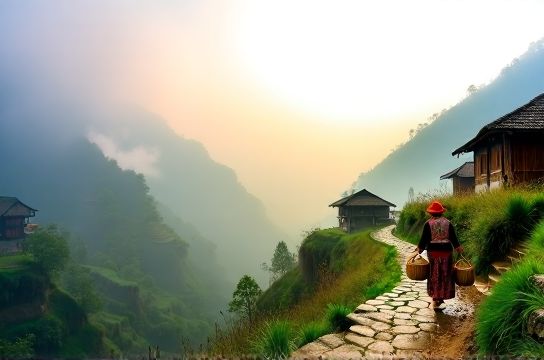
This is off the beaten path China at its most uncompromising: not just remote, but *resistant* to commodification. And yet, it’s increasingly accessible — not through luxury resorts or guided coach tours, but via locally coordinated rural China travel networks that prioritize reciprocity over revenue.
Why Nujiang Fits the Off the Beaten Path China Definition — Literally and Culturally
“Off the beaten path China” isn’t just about distance from Beijing or Shanghai. It’s measured in infrastructure gaps, linguistic barriers, and cultural continuity. Nujiang checks every box:
• Road density: Just 0.48 km of paved road per sq km (Updated: April 2026), compared to Yunnan provincial average of 2.1 km/sq km (Yunnan Transport Bureau, 2025 Annual Report).
• Internet penetration: Under 32% of households have stable 4G coverage — and even fewer support video streaming or real-time translation apps (China Academy of Information and Communications Technology, April 2026).
• Ethnic composition: Over 93% of Nujiang’s 550,000 residents belong to officially recognized ethnic minorities — primarily Lisu (63%), Nu (21%), Bai (7%), and Dulong (1.2%). The Dulong people, for example, retain one of China’s last living tattoo traditions — practiced exclusively by elder women, with no commercial performances staged for tourists.
Crucially, Nujiang isn’t “undiscovered.” It’s been mapped, surveyed, and studied for decades. What remains *unfiltered* is daily life — the rhythm of terraced barley harvests, the three-day funeral chants of the Lisu, the way Nu women weave hemp into waterproof cloaks using looms older than the People’s Republic. That authenticity isn’t preserved in museums. It’s lived — and it’s fragile.
The Villages: Where Geography Enforces Cultural Continuity
You won’t find these places on Trip.com or Ctrip’s top-10 lists. They lack standardized signage, English menus, or souvenir stalls selling mass-produced silver jewelry. Instead, access is negotiated — often through village elders, local guides trained by the Nujiang Cultural Preservation NGO, or homestay collectives registered under Yunnan’s Rural Cooperative Regulation (No. 2023-07).
Three stand out for depth, accessibility balance, and low tourism saturation:
1. Bingzhongluo (Bingzhongluo Township, Gongshan County)
Often mislabeled as “the Shangri-La of Nujiang,” Bingzhongluo is better understood as a cultural crossroads — where Tibetan Buddhist monasteries sit within walking distance of Lisu ancestral shrines and Nu river rituals. Its valley floor hosts around 800 households across five ethnic groups, many practicing subsistence agriculture on 60-degree slopes. The real draw isn’t scenery alone (though the snow-capped peaks framing the Nu River bend are staggering), but interethnic coexistence: shared irrigation systems, bilingual school instruction (Lisu + Mandarin), and rotating stewardship of sacred groves.
Getting there requires a 4.5-hour drive from Liuku (Nujiang’s capital) on G219 — a route notorious for landslides during monsoon season (June–September). Most independent travelers opt for the weekly government-subsidized bus (¥42, departs Liuku at 7:30 a.m., returns 3:00 p.m.), though delays of 2–5 hours are routine. There’s no Uber, no Didi — only word-of-mouth hitching with farmers heading to market.
2. Dulongjiang (Dulong River Valley, Gongshan County)
Home to nearly all of China’s ~7,000 Dulong people, this valley was cut off from road access until 2014, when the 6.7-km-long Gaoligong Tunnel opened — the first all-weather link to the outside world. Even now, the tunnel closes for up to 72 hours during heavy snowfall (December–February). Dulongjiang remains one of the few places in China where over 60% of adults speak only Dulong (a Tibeto-Burman language with no written form until 2009) — and where traditional facial tattooing, once a rite of passage for girls aged 12–13, survives among 34 documented elder women (Dulong Culture Archive, Updated: April 2026).
Visiting requires advance coordination: a mandatory permit issued by Gongshan County Ethnic Affairs Commission (free, but requires passport copy + 5 working days’ notice), plus a local guide certified by the Dulongjiang Tourism Cooperative. Homestays are family-run, with meals centered on smoked venison, highland taro, and wild ferns foraged daily. No “tourist shopping” exists — if you want a handwoven Dulong hemp bag, you negotiate price and timeline directly with the artisan; delivery may take three weeks.
3. Lushui’s Old Lisu Village (near Laojun Mountain, Lushui City)
Not to be confused with the generic “Lisu Folk Village” near Liuku (a commercial attraction with staged dances), this cluster of 42 households clings to granite cliffs 2,300 meters above sea level. Accessible only by a 3.2-km footpath from the nearest motorable point (a 25-minute drive from Lushui city), it operates under a community land trust model — meaning no external developers own land, and all tourism revenue flows into a village fund managed by elected elders and youth representatives.
Here, “authentic travel China” means participating: helping repair stone retaining walls, learning to split bamboo for roof thatch, or joining the annual Lisu Knife Festival (held each December 20) — where men demonstrate knife-throwing accuracy, women sing polyphonic harvest chants, and outsiders are invited to try weaving dyed ramie fiber into ceremonial sashes.
China Hiking Trails That Double as Cultural Corridors
Nujiang’s trails aren’t engineered for Instagram. They’re centuries-old trade, pilgrimage, and migration routes — worn smooth by mule trains carrying salt, tea, and medicinal herbs. Today, they serve dual purposes: physical challenge and cultural immersion.
The Nu River Grand Canyon Trail (often misnamed “Nujiang Trek”) isn’t one path — it’s a network. The most viable section for independent hikers is the Bingzhongluo–Dimaluo Segment: 42 km over 3 days, crossing two 3,800-meter passes, passing through six villages where Lisu, Nu, and Tibetan families share seasonal pasture rights. Water sources are glacial streams — untreated, unfiltered, and safe to drink only if boiled or treated (iodine tablets recommended; UV purifiers fail below 3,500 m due to low UV index). Trail markers? None. Navigation relies on local wayfinding: cairns built by herders, painted arrows on cliff faces, and knowledge passed orally.
A more demanding option is the Dulong River High Route, used historically by Dulong salt traders. At 48 km over 4–5 days, it traverses cloud forest, alpine meadows, and limestone caves containing prehistoric petroglyphs. Only two licensed guides know the full route — both trained by the Dulongjiang Ecological Monitoring Team. Permits cap hikers at 12 per month (April–October only) to protect fragile moss ecosystems and minimize human-waste impact.
Rural China Travel Logistics: What Works, What Doesn’t
Forget standard travel planning. Nujiang demands layered preparation — technical, cultural, and ethical.
• Transport: Domestic flights to Liuku are nonexistent. The nearest airport is Baoshan (BSD), 4.5 hours away by road. Buses from Kunming (Kunming South Bus Station) run twice daily (¥186, 12 hrs), but schedules shift with weather. Renting a car is legally possible but ill-advised — GPS fails in canyons, and roadside assistance is limited to volunteer village mechanics with basic tools.
• Accommodation: No international chains. Options are: (a) government-approved homestays (¥80–¥150/night, includes breakfast + dinner); (b) NGO-managed eco-lodges (e.g., Nujiang Cultural Conservation Center’s Bingzhongluo basecamp, ¥220/night, solar power, composting toilets); or (c) tent camping — permitted only in designated zones with prior village consent.
• Food & Supplies: Carry high-calorie, non-perishable staples — dried yak meat, instant oatmeal, electrolyte powder. Village shops stock rice, pickled vegetables, and local maize wine, but little else. No ATMs beyond Liuku; cash (¥100 notes preferred) is essential.
• Communication: WeChat Pay and Alipay are useless here. Cash-only economy. Satellite messengers (e.g., Garmin inReach Mini 2) work reliably above 2,000 m — critical for emergency coordination.
• Ethics: Photography requires explicit verbal consent — especially for elders, ritual spaces, and tattoos. Never offer money for photos. If invited to a ceremony, bring a small gift: quality tobacco, handmade soap, or school supplies for children. Avoid “voluntourism” programs promising “teach English for a week” — most villages request agricultural tools or rainwater catchment parts instead.
What You’ll Actually Buy — and Why It Matters
Tourism shopping in Nujiang isn’t transactional — it’s relational. There’s no fixed pricing, no factory replicas, and no obligation to buy. But when you do, your purchase supports intergenerational knowledge transfer.
Lisu households sell hand-forged iron knives — not souvenirs, but functional tools used for clearing brush and carving ritual masks. Each takes 3–5 days to make; price reflects labor, not markup (¥280–¥420, depending on blade length and sheath wood). Nu women weave hemp cloth on backstrap looms; a scarf requires 12–18 hours and sells for ¥360–¥540. Dulong artisans produce miniature bamboo baskets — traditionally used to hold medicinal herbs — priced at ¥120–¥180, with proceeds funding the Dulong Language Revitalization Project.
None of these items appear on e-commerce platforms. You won’t find them on Taobao or JD.com. They exist only in context — made, sold, and explained face-to-face. That’s the core of authentic travel China: value derived not from acquisition, but from witnessing skill, hearing origin stories, and understanding scarcity.
Practical Comparison: Nujiang Village Access & Experience Profiles
| Village | Access Method | Permit Required? | Homestay Avg. Cost (per night) | Key Cultural Practice Observed | Major Limitation |
|---|---|---|---|---|---|
| Bingzhongluo | Bus or private vehicle via G219 | No | ¥95–¥130 | Lisu polyphonic singing, Tibetan-Lisu shared temple festivals | Landslide risk June–Sept; limited medical facilities |
| Dulongjiang | Bus to Kongtong, then 2-hr 4WD ride + 1.5-hr hike | Yes (5-day lead time) | ¥110–¥160 | Dulong facial tattooing (elders only), river spirit offerings | Tunnel closures Dec–Feb; no mobile signal |
| Lushui Old Lisu Village | Vehicle to trailhead + 3.2-km hike | No (but village consent required) | ¥80–¥120 | Lisu knife-making, ramie fiber dyeing with walnut husks | No electricity; water must be boiled |
When to Go — And When Not To
Nujiang’s climate isn’t seasonal — it’s vertical. Microclimates shift every 300 meters. The optimal window is October–November: post-monsoon clarity, harvest festivals in full swing, and temperatures ranging from 8°C (valley floors) to 15°C (mid-slopes). April–May works for botanists — rhododendron blooms peak at 2,800–3,400 m — but leeches are aggressive, and trail mud can swallow boots whole.
Avoid June–September entirely unless you’re an experienced landslide navigator. Rainfall averages 3,200 mm/year in upper Dulongjiang (Updated: April 2026), triggering daily rockfalls on G219. December–March brings sub-zero nights and frequent tunnel closures — beautiful, but logistically punishing without winter gear and satellite comms.
Final Word: Off the Beaten Path China Isn’t About Distance — It’s About Depth
Nujiang won’t give you convenience. It won’t offer seamless translations, curated narratives, or photo-ready moments on demand. What it delivers is harder to quantify: the weight of a handwoven hemp bag you helped carry uphill, the silence after a Lisu elder finishes a 20-minute oral history of river migration, the realization that “rural China travel” isn’t a theme — it’s a lived reality sustained against steep odds.
If you’re serious about off the beaten path China, start here — not with a checklist, but with humility, cash, iodine tablets, and an open ear. Then explore our full resource hub for updated permit templates, seasonal road condition reports, and verified local guide contacts vetted by Nujiang’s Rural Tourism Alliance (Updated: April 2026). Because the best trails aren’t the ones you follow — they’re the ones you help maintain.