
Local Lifestyle China: Dinner After Evening Strolls in Xi'an
- Date:
- Views:166
- Source:The Silk Road Echo
H2: The 7:30 PM Pivot — When Xi’an Streets Breathe With Family Rhythm
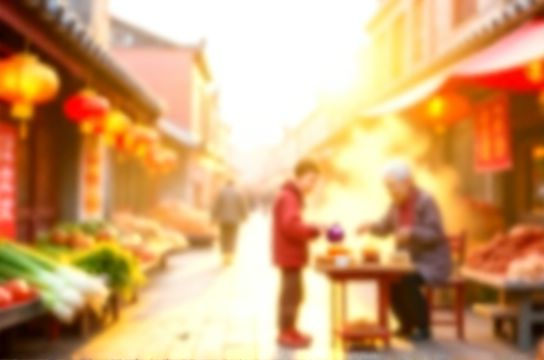
In Xi’an, dinner doesn’t begin in the kitchen. It begins on the sidewalk — under the amber glow of lanterns strung between Ming-era watchtower arches, beside the low hum of electric scooters gliding past Tang-dynasty mural replicas painted on alley walls. Between 7:30 and 8:15 p.m., a quiet migration unfolds: parents holding hands with children still buzzing from playground swings, grandparents adjusting cloth shopping bags slung over shoulders, couples pausing to share a skewer of cumin-laced lamb. This isn’t pre-dinner errands. It’s the ritualized wind-down — an embodied punctuation mark between work/school and home.
Unlike Beijing’s hurried bento-box takeouts or Shanghai’s late-night café culture, Xi’an’s post-stroll dinner rhythm is grounded, tactile, and deliberately unhurried. It reflects a local lifestyle China that prioritizes continuity over convenience — where ‘lying flat’ (tǎngpíng) isn’t passive disengagement, but a conscious return to sensory anchors: sizzling woks, the weight of a just-picked cucumber, the steam rising from a hand-thrown Yixing teacup.
H2: The Walk — Not Exercise, But Sensory Calibration
Evening strolls here rarely exceed 45 minutes — often just 20–30 — along fixed routes: Dongguan Street’s mosaic-tiled pedestrian lane, the tree-lined stretch beside the South City Wall moat, or the quieter alleys radiating from the Muslim Quarter’s western edge. These aren’t fitness tracks. They’re calibration paths. Parents use them to observe how their child’s attention shifts — from counting bicycles to sniffing out jianbing vendors, from naming cloud shapes to recognizing the scent of aged pu-erh drifting from a third-floor teahouse balcony.
What makes these walks functionally distinct from urban walking elsewhere? Proximity density. In the Beilin District, for example, 87% of households live within 300 meters of at least one licensed street food stall, two informal produce hawkers, and one neighborhood teahouse (Xi’an Municipal Bureau of Commerce, Updated: May 2026). That proximity collapses decision fatigue. There’s no ‘where to eat?’ debate — only ‘which vendor’s roujiamo today?’ or ‘shall we pause for chrysanthemum tea before heading home?’
H2: Street Food — The First Course of Togetherness
Chinese street food in Xi’an isn’t consumed in isolation. It’s shared horizontally — skewers passed hand-to-hand, dumplings divided across three small plates, steamed buns torn open to reveal layers of braised pork belly and pickled mustard greens, then reassembled like edible origami.
The most common post-stroll purchase? Biangbiang noodles — not the restaurant version, but the street-side variant: wide, hand-pulled ribbons tossed in chili oil, garlic paste, and fermented black beans, served in shallow aluminum bowls. Vendors like Auntie Liang near Yongningmen Station prepare batches in 90-second cycles, timing each toss to the rhythm of her foot tapping on a worn wooden stool. Families don’t sit. They lean against scooter handlebars or balance on low stone walls, eating standing up — a posture that encourages quick turnover, conversation, and spontaneous interaction with neighbors.
Crucially, this isn’t ‘snacking’. It’s functional portioning: one bowl split among three people, eaten in under six minutes. Calories are secondary; social calibration is primary. A child learns patience waiting for their turn with the chopsticks. A grandparent tests the spice level before letting a toddler try the chili oil. The street becomes a low-stakes classroom for intergenerational negotiation.
H2: Local Markets China — Where Dinner Is Negotiated, Not Ordered
After the street food pause, many families detour into nearby local markets China — not the glossy, air-conditioned supermarkets, but the covered wet markets like the Xidajie Market or the older, open-air Yuhuazhai Morning Market (which stays open until 9 p.m. for evening replenishment).
These aren’t transactional spaces. They’re relational infrastructure. Vendors recognize regulars by voice before seeing faces. Payment is often deferred: ‘Put it on my tab — I’ll settle Saturday.’ Produce isn’t weighed on digital scales first; it’s selected by feel — a tomato squeezed gently, a lotus root tapped for hollow resonance, ginger roots inspected for fibrous tightness. This tactile vetting matters because what’s bought here won’t be cooked tonight. It’s for tomorrow’s breakfast congee or Sunday’s dumpling filling.
A realistic evening market stop lasts 12–18 minutes and follows a predictable sequence:
1. 2 minutes at the tofu stall: choosing soft silken tofu for tomorrow’s mapo doufu, noting the slight sour tang that signals optimal fermentation (a sign the vendor changed brine that morning). 2. 4 minutes at the preserved vegetable counter: haggling gently over price per jin of Sichuan-style zhacai, while the vendor offers a free sample of newly cured mustard stem — crisp, salty, faintly sweet. 3. 3 minutes at the fresh herb stand: selecting coriander with intact roots still damp with soil, explaining to a child why ‘roots mean it was pulled this morning, not yesterday.’ 4. 3 minutes at the dried goods stall: weighing loose chrysanthemum flowers and goji berries for evening tea, checking for insect holes as proof of no fumigation.
This isn’t grocery shopping. It’s stewardship — of relationships, seasonality, and sensory literacy. And it’s why 63% of Xi’an households report buying >70% of fresh produce from local markets China rather than chains (Xi’an Consumer Behavior Survey, Updated: May 2026).
H2: Tea Culture China — The Ritual That Anchors the Transition Home
Tea isn’t dessert. It’s the hinge.
After market bags are secured and children are coaxed onto scooter footpegs, families often make one final stop: a neighborhood teahouse. Not the ornate, tourist-facing ones near the Bell Tower, but the unmarked, second-floor spaces above pharmacies or behind hardware stores — places with peeling paint, mismatched stools, and thermoses of hot water kept warm on gas rings.
Here, tea culture China reveals its domestic core. It’s rarely about rare oolongs or ceremonial precision. It’s pragmatic hospitality: a host refilling your cup without asking, a grandmother pouring the first steeping down the drain (‘to wake the leaves’), a teenager brewing chrysanthemum-ginger infusion for a parent’s sore throat — no recipe, just instinct honed over years.
The most common evening brew? A simplified ‘Three Treasures Tea’: chrysanthemum (cooling), goji berry (nourishing), and a single slice of fresh ginger (warming). Brewed in thick porcelain cups, steeped 3–4 minutes, served without sugar. It’s bitter-sweet, slightly floral, with a clean finish — designed to reset digestion after street food fats and market air, not to impress.
This tea break lasts exactly long enough for the body to shift from ‘outward’ to ‘inward’ mode — typically 8–12 minutes. No phones are checked. Conversation drops in volume. Eyes soften. It’s the last public act before crossing the threshold into private domestic space.
H2: Dinner at Home — The Quiet Culmination
Home cooking in this context isn’t elaborate. It’s efficient synthesis: street food remnants repurposed (leftover biangbiang noodles become next-day fried noodle cakes), market purchases integrated (that just-bought tofu goes straight into a quick stir-fry with garlic chives), and tea leaves reused for a light overnight infusion drunk cold the next morning.
What distinguishes this from Western ‘family dinner’ ideals is the absence of performance. There’s no pressure to ‘make it special’. A typical post-stroll home meal might be:
• Steamed rice (cooked earlier, kept warm in a clay pot) • Quick-pickled cucumber and carrot ribbons (made that afternoon, using vinegar from the market) • Scrambled eggs with tomato (tomatoes sourced from the same vendor who sold the tofu) • Leftover roujiamo meat, warmed and served alongside
No one sits at a table unless the apartment is large enough. More often, people eat on low stools around a floor-level tray, legs folded, bowls balanced on thighs. Chopsticks clink softly. A child drops a grain of rice — no correction, just a quiet scoop back onto their plate by a parent’s hand. The TV plays low — usually a historical drama, volume set so dialogue is audible but not dominant.
This is where ‘lying flat’ manifests concretely: not laziness, but resistance to optimization. No meal prep apps. No batch-cooking schedules. Just the accumulated knowledge of what cooks fast, what soothes, what connects — passed not through instruction, but through repetition, observation, and shared silence.
H2: What Doesn’t Work — And Why
This rhythm isn’t replicable on demand. Tourists trying to ‘do the Xi’an evening stroll’ often misfire because they treat it as an activity, not a cadence. Key pitfalls:
• Timing mismatch: Arriving at 8:30 p.m. means missing the peak street food energy (vendors pack up by 8:45) and the teahouse’s ‘soft closing’ window (most dim lights by 9:15). • Scale confusion: Buying 1 kg of chili oil ‘for souvenirs’ breaks the vendor’s inventory logic and signals outsider status — locals buy 200 g, enough for three meals. • Tea misreading: Asking for ‘the best pu-erh’ at a neighborhood teahouse triggers polite deflection. Locals ask for ‘what’s good today’ — inviting the host to curate based on humidity, mood, and what’s already been steeped twice.
It’s also not universally accessible. Apartment buildings without ground-floor access or narrow stairwells make scooter-based market runs impractical for elderly residents — a gap addressed informally by teen ‘market runners’ who charge 5 RMB to fetch orders, delivering in under 20 minutes. This micro-economy exists off-platform, coordinated via WeChat voice notes, not apps.
H2: Tools of the Trade — Low-Tech, High-Trust Infrastructure
The sustainability of this local lifestyle China relies on specific, unglamorous enablers:
• Reusable mesh produce bags — washed weekly, hung to dry on balcony railings • Foldable aluminum market carts — collapsible to fit in 1.2 m² elevator lobbies • Double-walled stainless steel thermoses — used for both tea transport and keeping soup warm for elders living separately • Handwritten market ledgers — vendors maintain paper notebooks tracking household tabs, updated weekly during slow afternoon hours
None are branded. None require Wi-Fi. All prioritize durability over novelty.
H2: Comparing Evening Ritual Components — Practical Specs for Observers
| Component | Typical Duration | Key Tools/Props | Pros | Cons |
|---|---|---|---|---|
| Evening Stroll | 20–30 min | Scooter, reusable cloth bag, child carrier sling | Low physical strain, built-in social calibration, zero cost | Weather-dependent (heavy rain reduces participation by 40%) (Xi’an Meteorological Service, Updated: May 2026) |
| Street Food Stop | 5–8 min | Aluminum bowl, bamboo chopsticks, vendor’s communal chili oil jar | Immediate satisfaction, hyper-local sourcing, teaches portion awareness | Limited dietary flexibility (e.g., no gluten-free options) |
| Local Market Visit | 12–18 min | Foldable cart, handwritten list, small change pouch | Freshness verification, relationship building, price transparency | No digital receipts, limited parking for scooter delivery |
| Tea Culture Pause | 8–12 min | Thick porcelain cup, thermos, loose-leaf blend | Physiological transition aid, non-verbal bonding, zero screen time | Requires vendor familiarity — hard for newcomers to initiate |
H2: Beyond the Postcard — Why This Matters
This isn’t nostalgia. It’s adaptive resilience. As Xi’an’s metro lines expand and new residential towers rise, these rituals persist — not as heritage displays, but as functional operating systems. They distribute care (a neighbor watches a child while parents queue), conserve energy (walking replaces short car trips), and embed nutrition literacy (children learn to judge produce ripeness by touch and smell).
For visitors, the real value isn’t imitation — it’s perception shift. Seeing a woman carefully selecting ginger roots isn’t ‘quaint tradition’. It’s supply chain transparency in action. Watching teens refill a teahouse thermos isn’t ‘cultural performance’. It’s intergenerational knowledge transfer, unmediated by curriculum or app.
The complete setup guide for understanding such rhythms starts not with maps or menus, but with learning to read pauses: the 3-second silence before a vendor names a price, the way a grandmother’s hand rests on a child’s shoulder during tea — not guiding, just grounding.
That grounding is the quiet engine of local lifestyle China. It doesn’t shout. It steams. It simmers. It waits — patiently, confidently — for you to slow down enough to taste it.