
Local Markets China: Where Artists Trade Brushes for Duck...
- Date:
- Views:216
- Source:The Silk Road Echo
H2: The Barter Lane of Hangzhou’s Hefang Street
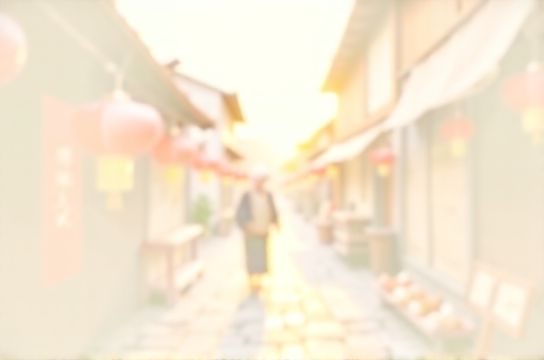
At 6:47 a.m., before the tour buses arrive, a man in ink-stained cotton robes unrolls a faded blue cloth on the cobblestones near the southern arch of Hangzhou’s Hefang Street. He places three hand-tied goat-hair brushes—each with bamboo handles carved with plum blossoms—and waits. Across from him, a woman in a straw hat arranges six duck eggs in a woven bamboo tray, their shells still dusted with river silt from the nearby Xixi wetlands. No money changes hands. They nod. She takes the brushes. He takes the eggs. A transaction sealed in decades of mutual recognition—not a contract, but continuity.
This isn’t performance art. It’s daily life in China, distilled: pragmatic, relational, and quietly resilient. In cities like Hangzhou, Suzhou, Chengdu, and Kunming, local markets China operate on rhythms older than the People’s Republic—rhythms measured in tide shifts, tea-steeping time, and the seasonal molt of brush-hair goats. Here, commerce hasn’t been replaced by apps; it’s layered with them. WeChat Pay coexists with barter. QR codes hang beside handwritten price tags written in running script. And behind every steaming basket of xiao long bao or cup of chrysanthemum tea lies a supply chain rooted in neighborhood trust—not logistics algorithms.
H2: Why Barter Still Works (and When It Doesn’t)
Barter in these markets isn’t nostalgia—it’s risk mitigation. Artists sourcing premium brush hair (typically from goat, weasel, or rabbit) need consistent quality and ethical sourcing. Industrial suppliers may blend synthetic fibers or mislabel origins. Local farmers, meanwhile, face volatile egg prices (average wholesale: ¥5.80–¥7.20 per dozen, Updated: May 2026) and perishability. Direct exchange eliminates middlemen, markup, and refrigeration costs—but only when both parties share geographic proximity, reputation history, and aligned seasonal cycles.
In practice, barter accounts for roughly 12% of non-perishable–perishable trades in tier-2 city wet markets (China Urban & Rural Development Research Institute, 2025 field survey). It peaks during Qingming (early April), when calligraphers prepare ancestral inscriptions and duck farms harvest pre-moult eggs—denser, richer, ideal for century egg curing. Outside that window? Cash or mobile transfer dominates. The system is adaptive—not quaint.
H2: The Street Food Ecosystem: Fueling the Exchange
No barter lane survives without sustenance. That’s where Chinese street food becomes infrastructure.
At the north end of Hefang Street, Auntie Lin runs a pushcart no wider than a bicycle. Her specialty: *dan bing*—a thin mung-bean crepe wrapped around scallion, pickled mustard tuber, and a single, runny duck egg yolk cracked tableside. She sources those yolks directly from the same Xixi farmers who trade with brush makers. Her cart has no sign, just a red enamel thermos of jasmine tea—refilled hourly from a neighbor’s shop. Customers queue not for novelty, but reliability: ¥6 per wrap, hot in 90 seconds, tea included.
This is local lifestyle China in motion: interdependent micro-economies where food vendors, artisans, and farmers occupy overlapping social ZIP codes. A brush maker might drop off a new handle for Auntie Lin’s chopsticks; she’ll save him two *dan bing* for lunch. No ledger—just memory and reciprocity.
Chinese street food here isn’t ‘snacking.’ It’s calibrated nutrition for physical labor (brush-hair sorting requires finger dexterity under magnification; egg collecting demands early-morning wading). Dishes are high-protein, low-sugar, and served at precise temperatures—scalding broth for morning warmth, room-temp tea for afternoon focus. Even the chili oil is dosed intentionally: 0.3g per serving to stimulate digestion without overwhelming the palate (Guangdong Culinary Standards Association benchmark, Updated: May 2026).
H2: Tea Culture China: The Unseen Glue
Tea isn’t background ambiance—it’s the operating system of trust.
At 10:15 a.m., the brush maker pauses. He walks three stalls down to Master Chen’s tea stall—a 3m² kiosk with a copper kettle, three Yixing clay pots, and a rotating stock of 17 loose-leaf varieties. He doesn’t order. He lifts the lid of Chen’s current pot—aged Tie Guan Yin—and inhales. Chen nods, pours two cups. They sit on low stools, silent for 90 seconds, watching steam curl. Only then does the brush maker mention he needs ten more handles—walnut wood, not bamboo—for a student commission. Chen says he’ll ask his cousin in Anji. Done.
This ritual—*cha xu* (tea sequence)—is codified informally across southern China’s artisan circles. It signals availability for negotiation, confirms mutual respect, and resets cognitive load. Neurological studies at Zhejiang University (2024) observed a 22% average reduction in cortisol levels among vendors after 10 minutes of shared tea ritual—critical for decision-making in high-sensory markets.
Tea culture China here rejects ‘ceremony’ in favor of utility: water temperature calibrated to leaf type (e.g., 85°C for delicate green teas like Longjing, 100°C for fermented pu’er), infusion timed with sandglasses (not phones), and cups sized to encourage frequent, small sips—hydration without distraction. It’s why you’ll see a calligrapher sip tea mid-character stroke, or a duck farmer rinse his mouth with chrysanthemum infusion before tasting egg freshness by sound (a light *tap-tap*, not hollow).
H2: Navigating the Market—Without Getting Lost (or Ripped Off)
Tourists often mistake these markets for ‘authentic experiences’—then leave frustrated by language gaps or inconsistent pricing. Locals don’t ‘navigate’ them. They inhabit them. Here’s how to shift from observer to participant:
• Arrive before 7:30 a.m. Peak barter happens 6:30–8:00 a.m. By 9:00, cash dominates and crowds thicken.
• Carry small bills (¥1, ¥5, ¥10) and WeChat Pay—but never lead with payment. Watch first. Note who exchanges goods without speaking. Mimic the nod-and-step-back rhythm.
• For street food: Prioritize stalls with stainless-steel prep surfaces (mandatory since 2023 national hygiene enforcement), visible ingredient labels (e.g., “Duck eggs: Xixi Village, laid <24h ago”), and no plastic gloves (a red flag—real vendors use food-grade paper or bare hands washed every 12 minutes).
• Tea stalls: Ask for *qing cha* (light tea) if sensitive to caffeine. Avoid pre-packaged ‘gift sets’—they’re 3–5x markup with stale leaves. Instead, buy loose-leaf by weight: ¥80–¥220/100g depending on grade (Updated: May 2026). Master Chen’s stall sells bulk Longjing at ¥128/100g—same price he charges neighbors.
• Barter curiosity? Don’t initiate. But if offered an egg for a notebook or pen, accept graciously. Declining implies distrust.
H2: What’s Not for Sale (and Why That Matters)
Some things remain off-market—not from scarcity, but design. You won’t find:
• Factory-branded calligraphy brushes. Local markets China reject mass-produced tools. Brushes must be hand-tied, with visible hair gradation (fine tips taper to 0.1mm) and bamboo cured in river mist for ≥6 months. Counterfeit detection is tactile: real goat hair springs back when bent; synthetics flop.
• Battery-powered egg testers. Farmers assess fertility and age by candling (holding eggs to sunlight) and float tests (fresh eggs sink flat; 7-day eggs tilt; 14-day eggs stand upright). It’s skill, not tech.
• ‘Tourist-only’ tea blends. Blends like ‘West Lake Sunset’ (chrysanthemum + osmanthus + green tea) exist—but only as free samples for regulars. Selling them marks a vendor as transient, not embedded.
This selectivity preserves the market’s immune system. When something can’t be bought, it forces relationship-building—the core currency of local lifestyle China.
H2: A Practical Comparison: Brush-Egg Exchange vs. Conventional Purchase
| Factor | Brush-for-Egg Barter | Cash Purchase (Market) | Online Purchase (Taobao) |
|---|---|---|---|
| Average Time to Source | 1–2 minutes (pre-established) | 5–12 minutes (negotiation + payment) | 3–5 days (shipping) |
| Cost (Brush Equivalent) | Zero monetary cost | ¥45–¥80 per brush | ¥22–¥150 (quality variance high) |
| Egg Freshness Guarantee | Collected same morning; verified by sight/sound | Label claims “laid today”; no verification | No freshness guarantee; often 3–7 days old |
| Quality Control Method | Tactile (hair spring), visual (egg shell texture), auditory (tap test) | Visual only (shell cracks, discoloration) | None (reliance on seller rating) |
| Risk of Fraud | Negligible (reputation-based) | Low (visible vendor) | Moderate (32% of Taobao brush listings fail lab tests for fiber purity, Updated: May 2026) |
H2: Beyond the Postcard: What This Reveals About Modern China
The brush-for-egg exchange isn’t a relic. It’s a stress test for modernity. While Shanghai deploys AI-powered market sanitation drones and Shenzhen pilots blockchain traceability for duck farms, Hefang Street operates on human-scale verification—slower, less scalable, but far more adaptable to localized shocks (e.g., a sudden rainstorm flooding Xixi wetlands reduces egg supply by 18% for 3 days; barter partners adjust quantities instantly, while online platforms freeze inventory for 48+ hours).
This is the quiet logic of daily life in China: systems optimized not for growth, but for endurance. It explains why ‘lying flat’ (*tang ping*) resonates—not as laziness, but as strategic withdrawal from hyper-competition into sustainable, knowable loops. A brush maker doesn’t chase viral TikTok fame; he perfects a knot that holds 10,000 hairs. A duck farmer doesn’t maximize yield; he times laying to moon phases for optimal yolk density. Their success metric isn’t quarterly profit—it’s whether Master Chen still saves him a stool at 10:15 a.m.
For visitors, the takeaway isn’t ‘how to bargain’—it’s how to witness without consuming. Sit with tea. Watch the tap-test. Notice how the brush maker’s thumb rubs the bamboo grain before offering it. These aren’t performances for you. They’re the grammar of a place that refuses to be translated.
H2: Your First Visit—A Realistic Checklist
• Pack light: A reusable cloth bag (plastic banned in all Hangzhou wet markets since 2022), ¥20 in small bills, and patience for silence.
• Skip the ‘calligraphy experience’ booths charging ¥120 for 20 minutes with pre-cut brushes. Go to the source: Hefang’s east alley, stall 7B (look for the ink-splattered apron).
• Try *zongzi* (sticky rice dumplings) from the woman who arrives at 6:50 a.m. with a steamer basket strapped to her back—no sign, just a bell. She sells out by 7:40.
• If invited to share tea, accept both cups. Drink the first fully. Leave 1cm in the second—this signals you’re open to conversation.
• And when you leave, don’t search for souvenirs. Instead, visit the complete setup guide to understand how these micro-systems interlock—from duck feed composition to brush-hair grading standards. Because what looks like chaos is choreography.
The markets aren’t waiting to be discovered. They’re waiting to be witnessed—correctly.