
Railway Themed China Travel Guide Featuring High Speed Train Journeys
- Date:
- Views:256
- Source:The Silk Road Echo
Let’s cut through the noise: if you’re planning a trip to China and care about efficiency, comfort, and authentic regional immersion — skip the domestic flights and rent a window seat on the bullet train instead.
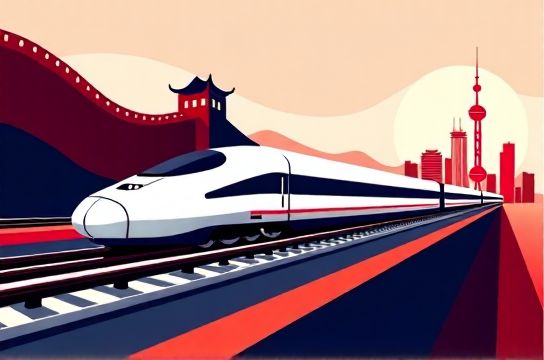
China’s high-speed rail (HSR) network isn’t just big — it’s the world’s largest *and* most used. As of 2024, it spans **45,000+ km**, carrying over **2.3 billion passengers annually** (National Railway Administration of China). That’s more than the entire population of Europe — *every year*.
Why does this matter for travelers? Because HSR connects 98% of Chinese cities with >500,000 residents — often faster door-to-door than flying, once you factor in airport transfers, security, and boarding.
Here’s how it stacks up:
| Route | Distance | HSR Time | Flight + Transit | Carbon Footprint (kg CO₂) |
|---|---|---|---|---|
| Beijing → Shanghai | 1,318 km | 4h 18m (G-series) | ~5h 40m avg | HSR: 12.6 | Flight: 112.3 |
| Shanghai → Guangzhou | 1,432 km | 7h 2m | ~8h 15m | HSR: 14.1 | Flight: 128.9 |
| Chengdu → Xi’an | 658 km | 3h 7m | ~5h 20m | HSR: 6.3 | Flight: 61.7 |
Pro tip: Book via the official 12306.cn app (English interface available) — tickets open 15 days ahead and sell out fast on weekends. Use your passport for registration; no third-party markups.
And don’t overlook the experience: Wi-Fi, power outlets, quiet carriages, and snack trolleys serving local delicacies (try the Sichuan spicy peanuts on Chengdu–Chongqing runs). It’s not transport — it’s cultural transit.
For deeper insights and curated rail-itineraries — including scenic non-HSR gems like the Yunnan–Tibet railway corridor — check our regularly updated resources. Because the best way to understand China isn’t from 35,000 feet. It’s from seat 12C, watching rice terraces blur past at 350 km/h.