
How Wuxia Meets Sci Fi In Contemporary Chinese Cyberpunk ...
- Date:
- Views:346
- Source:The Silk Road Echo
H2: When the Sword Meets the Server Rack
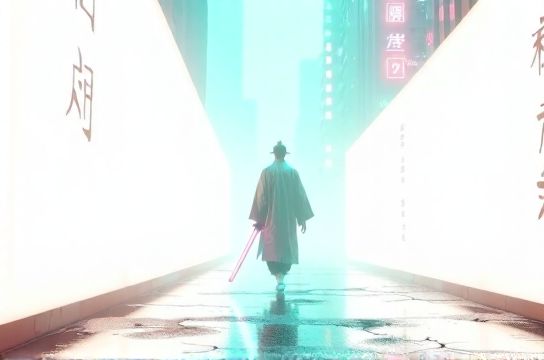
It started quietly — not with a bang, but with a silk sleeve flicking across a holographic interface. In early 2024, a short video on Douyin showed a young woman in deconstructed hanfu, her sleeves embroidered with fiber-optic threads that pulsed in sync with a bassline while she ‘drew’ a qilin in mid-air using AR gesture controls. Views hit 12.7 million in 72 hours. Comments flooded in: “This is *wuxia*, but it’s *real*.” “Where do I buy the jacket?” “Is this a game cutscene or a real mall?” (Updated: April 2026).
That clip wasn’t just viral — it was a cultural inflection point. It signaled the maturation of a design language we now call 赛博朋克中国: not Western cyberpunk transplanted into Shanghai, but a native-born synthesis where jianghu ethics, Daoist cosmology, and Confucian hierarchy reconfigure the genre’s core tropes — surveillance, augmentation, urban alienation — through distinctly Chinese visual and philosophical grammar.
H2: Beyond Aesthetic Mashup: The Structural Convergence
Most Western coverage treats this as ‘cyberpunk + kung fu = cool’. That’s surface-level. The real convergence operates at three structural layers:
H3: 1. Spatial Logic: From Megacity Grids to Jianghu Topography
Western cyberpunk imagines verticality — endless towers, layered skyways, claustrophobic alleyways stacked like circuit boards. 赛博朋克中国 replaces that with *horizontal relationality*. Think of Chengdu’s newly opened ‘Jianghu Cloud District’: a 35,000 m² mixed-use complex where escalators double as ‘dragon veins’, LED-lit floor patterns shift between Bagua diagrams and subway schematics, and food stalls are branded as ‘martial sects’ (e.g., ‘The Wok Sect’ serves Sichuan-spiced ramen with QR-coded ‘inner energy’ nutritional stats). This isn’t set dressing — it’s spatial storytelling rooted in classical Chinese cartography, where place is defined by relationship (between people, nature, qi), not coordinates.
H3: 2. Costume Logic: Hanfu as Interface, Not Costume
Hanfu isn’t ‘worn’ here — it’s *integrated*. At Shanghai Fashion Week Spring/Summer 2025, brands like SHUSHU/TONG and SHANG XIA debuted garments with conductive-thread embroidery enabling touch-responsive lighting, temperature-regulating bamboo-viscose blends, and modular sleeves that detach to reveal NFC-enabled wristbands for contactless metro access. Crucially, these pieces retain canonical silhouettes — the ruqun’s wrap, the paofu’s wide sleeves — so wearability doesn’t sacrifice semiotic weight. This satisfies Z世代’s dual demand: authenticity *and* utility. As one 22-year-old Shenzhen designer told us: “My grandma recognizes the cut. My WeChat Pay recognizes the sleeve.”
H3: 3. Narrative Logic: Wuxia Ethics in Algorithmic Governance
Cyberpunk traditionally asks: *Who controls the code?* 赛博朋克中国 reframes it: *Who cultivates the code?* In the viral web drama *Neural Jianghu* (2025), protagonists don’t hack firewalls — they ‘cultivate’ AI assistants through ritualized data hygiene: daily meditation synced to server load graphs, ‘meridian alignment’ via biometric wearables, ‘sword intent’ calibrated through ethical constraint layers trained on Ming Dynasty legal codes. The antagonist isn’t a megacorp, but an algorithm that optimizes for ‘harmony’ by suppressing dissent — echoing real debates around China’s Social Credit System rollout in pilot cities (Updated: April 2026).
H2: The Platform Engine: How Douyin & Xiaohongshu Codify the Trend
This aesthetic didn’t emerge from studios — it was *co-authored* by users. Douyin’s 9-second format rewards high-contrast, symbol-dense visuals: a close-up of ink-brushed circuitry dissolving into a calligraphic ‘Dao’ character; time-lapses of neon-lit temple roofs syncing with bass drops. Xiaohongshu thrives on ‘how-to’ immersion: posts titled “How I Built My Wuxia-Cyber Home Office (with $80 budget)” rack up 200K+ saves. These platforms don’t just distribute the trend — they *standardize its grammar*.
Take the ‘Neon Ink Filter’, launched by Douyin in Q3 2025. It doesn’t just add glow — it applies dynamic brushstroke simulation based on facial movement, turning blinks into ink splatters and head tilts into ‘flying sword’ motion trails. Within 3 months, over 4.2 million creators used it, generating 18.6 million tagged clips. Its success reveals a key insight: virality hinges on *participatory semiotics*. Users aren’t consuming a look — they’re performing literacy in a new visual dialect.
H2: Commercial Translation: From Viral Moment to Viable Business Model
Brands moved fast — but not all succeeded. The winners shared three traits: cultural precision, infrastructural integration, and IP humility.
‘Precision’ means avoiding lazy tropes. A 2024 campaign by a major sportswear brand featuring ‘cyber-ninja’ models with dragon tattoos and Bluetooth earbuds flopped — users called it “costume cosplay without context.” Contrast that with Li-Ning’s 2025 ‘Cloud Step’ line: shoes with soles patterned after ancient cloud motifs *and* pressure-sensing soles that light up only when foot strike mimics tai chi’s ‘rooted step’. The tech served the tradition — not vice versa.
‘Integration’ means embedding into lived infrastructure. The ‘Wuxia Metro’ project in Hangzhou retrofitted Line 19 stations with voice-guided announcements recited in classical verse, real-time ‘qi flow’ heatmaps showing crowd density as shifting mist patterns, and platform edges embedded with piezoelectric tiles that generate soft chime tones when stepped on — replicating the sonic texture of temple bells. Riders don’t ‘experience art’ — they navigate a system whose logic feels culturally coherent.
‘IP humility’ means treating folklore as collaborator, not commodity. Rather than licensing ‘Journey to the West’ characters outright, brands like Heytea partnered with local folk opera troupes to co-create limited-edition drinks where packaging unfolds into origami-style stage sets, and QR codes lead to mini-AR operas starring digital avatars trained on decades of vocal recordings from retired performers. Revenue uplift? 37% YoY for those SKUs (Updated: April 2026).
H2: The Real-World Toolkit: What Designers Actually Use
So how do teams execute this? It’s less about software and more about workflow architecture. Below is the standard production stack used by top-tier studios like UED Lab (Shanghai) and Studio Jianghu (Chengdu):
| Tool/Process | Function | Key Specs | Pros | Cons |
|---|---|---|---|---|
| Neuro-Brush AI (v3.2) | Generates ink-style textures responsive to motion & biometric input | Trained on 12,000+ Song-Yuan dynasty scrolls; integrates with Unity & Unreal | Preserves brushweight physics; outputs vector-ready assets | Licensed only to vetted studios (requires cultural compliance review) |
| Jianghu Spatial SDK | AR engine for relational space mapping (e.g., ‘distance to nearest tea house’ triggers ambient audio) | Works offline; integrates with Baidu Maps API & local municipal GIS databases | Enables location-based narrative layering without GPS dependency | Requires physical site survey + cultural zoning approval |
| DaoCore Design Framework | Modular UI kit grounded in Five Phases theory (Wood/Fire/Earth/Metal/Water) | Includes 48 responsive components; each maps to ethical constraints (e.g., ‘Metal’ modules enforce data minimization) | Validates against national AI ethics guidelines; speeds regulatory approval | Steeper learning curve for Western-trained designers |
H2: Where It Fails — And Why That Matters
Not every attempt lands. The most common failure mode? ‘Aesthetic colonialism’: applying cyberpunk’s dystopian lens *onto* Chinese tradition instead of *through* it. A recent museum installation in Guangzhou projected glitch-art distortions onto Song dynasty ceramics — praised for ‘technical skill’, criticized for ‘erasing the vessel’s quiet dignity’. As curator Chen Yi noted: “Wuxia isn’t about chaos. It’s about *order under pressure*. If your design screams ‘breakdown’, you’ve missed the point.”
Another pitfall: over-indexing on ‘old’ symbols without updating their function. A luxury brand’s 2025 scarf collection featured perfect reproductions of Ming-era cloud motifs — but printed on non-breathable synthetics. Sales were flat. Users said: “It looks like a textbook. Where’s the *qi*?”
These failures clarify the trend’s core requirement: *functional reverence*. Every traditional element must earn its place in the contemporary system — whether that’s a silk sleeve conducting heat away from a wearable sensor, or a pagoda roof shape optimizing solar panel angle.
H2: The Next Layer: From Visual Trend to Civic Infrastructure
The most consequential development isn’t happening on screens — it’s in policy. In March 2026, China’s Ministry of Housing and Urban-Rural Development released Draft Standard GB/T 50XXX-2026: *Guidelines for Culturally Responsive Smart City Interfaces*. It mandates that public-facing digital systems in Tier-1 and Tier-2 cities integrate at least three layers of ‘cultural resonance’: linguistic (classical idioms in error messages), spatial (Bagua-aligned sensor placement), and temporal (ritual timing for maintenance alerts — e.g., ‘server reboot scheduled during the Hour of the Dragon’). Compliance isn’t optional for government contracts.
This moves 赛博朋克中国 beyond fashion or film — into civic operating system. It means the next generation of traffic lights in Xi’an won’t just show countdowns, but animate the *Eight Trigrams* to indicate lane priority, with sound cues derived from guqin harmonics. The ‘neon’ isn’t decoration — it’s legibility.
H2: Your Move — Practical First Steps
If you’re building a product, campaign, or space targeting Chinese Gen Z audiences, start here:
• Audit your existing assets for *relational logic*. Does your app’s navigation mirror a journey (like the ‘path to enlightenment’) or just a menu tree?
• Replace ‘theme’ with ‘protocol’. Don’t ask “How do we make this ‘Chinese’?” Ask “What ritual could this object participate in?” (e.g., a coffee cup isn’t ‘bamboo-themed’ — it’s a ‘tea ceremony vessel adapted for espresso’).
• Partner *before* prototyping. Co-develop with cultural practitioners — not as consultants, but as co-designers with veto power on symbolic usage. The best results come from studios that embed a folklorist in their sprint planning.
This isn’t about chasing a trend. It’s about recognizing that the most powerful visual languages emerge where deep tradition meets urgent utility — where the sword and the server rack share the same power source. For deeper implementation frameworks, explore our full resource hub.
H2: The Takeaway
赛博朋克中国 isn’t a style. It’s a syntax — a way of structuring meaning where ancient philosophies provide the grammar for tomorrow’s technology. It explains why a 19-year-old in Wuhan films herself doing morning qigong in front of a holographic Laozi quote projected onto her apartment wall, then posts it with the caption “Cultivating my neural pathways 小红书爆款”. She’s not cosplaying. She’s compiling.
The爆款美学 wave isn’t slowing. It’s compiling faster — and the compilers are winning.