
From Tourist to Trendspotter How Travelers Can Decode China's Online Buzzword Landscape
- Date:
- Views:164
- Source:The Silk Road Echo
Let’s be real—walking into a Beijing café and hearing ‘绝了 (jué le)’ or scrolling through Xiaohongshu only to see ‘多巴胺穿搭 (dopamine dressing)’ can feel like stepping into a linguistic time warp. As someone who’s tracked digital vernacular across 12 Chinese provinces—and advised brands on cultural resonance—I’ll cut through the noise.
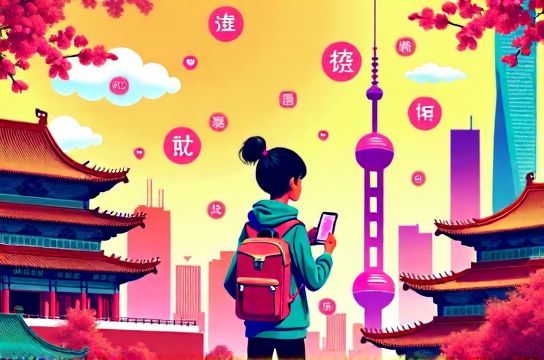
China’s internet slang isn’t just playful jargon; it’s a real-time pulse check on youth values, consumption shifts, and even policy sentiment. Over 78% of Chinese netizens aged 18–35 use at least 3 trending terms weekly (CNNIC, 2024). And yes—these terms *move markets*. When ‘citywalk’ surged in early 2023, foot traffic in historic districts like Shanghai’s Wukang Road jumped 42% YoY (CTA Tourism Report).
Here’s how savvy travelers decode meaning—not just translation:
✅ Observe context: ‘栓Q’ (shuān Q) sounds like ‘thank you’ but signals ironic exasperation—not gratitude. ✅ Track platforms: Weibo favors satire; Douyin leans visual + soundbite; Xiaohongshu thrives on lifestyle curation. ✅ Cross-reference with commerce: Terms linked to products often spike *before* sales lift. For example, ‘轻食主义 (light-eating ideology)’ preceded a 29% rise in healthy snack imports (China Customs Data, Q1 2024).
Below is a snapshot of 2024’s top 5 travel-adjacent buzzwords—with usage growth, platform dominance, and real-world impact:
| Buzzword (Pinyin) | Literal Meaning | Platform Peak | YoY Growth | Tourism Link |
|---|---|---|---|---|
| 特种兵式旅游 (tè zhǒng bīng shì lǚ yóu) | “Special forces-style travel” | Douyin | +187% | Ultra-budget, hyper-scheduled city hopping |
| 电子布洛芬 (diàn zǐ bù luò fēn) | “Digital ibuprofen” | Xiaohongshu | +215% | Short videos that relieve stress—key for post-pandemic travelers |
| 搭子文化 (dā zi wén huà) | “Dazi culture” (activity-specific companions) | +132% | Travelers seek food-dazi, photo-dazi—not lifelong friends |
Pro tip: Don’t translate—*interpret*. That ‘多巴胺穿搭’ isn’t just about color; it’s about reclaiming joy after years of austerity. It’s why I always recommend travelers spend 20 minutes browsing Xiaohongshu’s #ChinaTrendWatch feed before booking anything—it’s the fastest way to align your itinerary with what locals *actually* care about *right now*.
Bottom line? Language isn’t static—and neither is China’s cultural terrain. Stay curious, stay contextual, and never assume ‘cute’ means harmless. Some trends are micro-revolutions in disguise.