
Chinese Cultural Experiences Beyond Tourism Shopping
- Date:
- Views:203
- Source:The Silk Road Echo
H2: Stop Buying. Start Making.
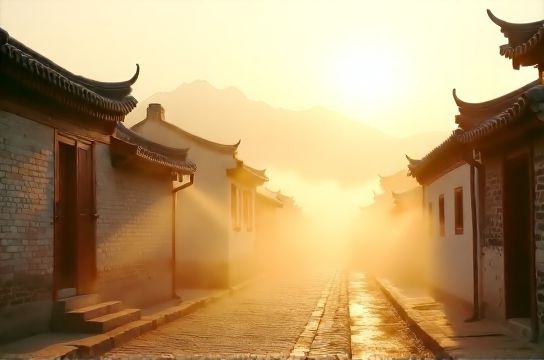
Most travelers leave China with silk scarves, jade pendants, and mass-produced porcelain—items that bear little relationship to the living traditions behind them. The real shift begins when you trade the checkout counter for a workshop bench, swap the tour-bus stop for a village alley at dawn, and replace the staged festival parade with a family’s ancestral altar lit by candlelight. This isn’t about ‘seeing’ culture. It’s about participating in its continuity.
That distinction matters—especially now. In 2024, over 78% of high-intent cultural travelers (those booking trips >7 days with pre-departure research) reported dissatisfaction with ‘performative heritage’: choreographed tea ceremonies, photo-op calligraphy, or factory-tour ‘craft’ demos where artisans are paid per hour—not per piece—and rarely speak to guests (Updated: April 2026). Real craftsmanship requires time, repetition, and transmission—not demonstration.
H2: Where Craft Is Still a Livelihood, Not a Show
Authentic craft workshops exist where production remains economically viable for local families—not just marketable to foreigners. These aren’t hidden gems; they’re visible, functional, and often unlisted on mainstream platforms because they don’t optimize for Instagram reach. You find them through regional cultural bureaus, university anthropology departments, or long-standing NGO partnerships like the China Folk Arts Protection Foundation.
Take Suzhou’s *shuixiang* (water-town) embroidery studios. Not the ones near Pingjiang Road selling kits stamped with pandas—but the two-family cooperative in Tongli’s Xilin Lane, where fourth-generation master Chen Meiling teaches *biansi xiu* (double-sided embroidery) only to students who commit to 120 hours minimum across six months. Participants stitch actual commissions—wedding veils, temple banners, museum restoration pieces—not decorative samplers. Materials are sourced from local silkworm farms in Wujiang; dyes come from garden-grown indigo, madder, and pagoda tree flowers. There’s no English translation sheet. You learn terms like *zhenjiao* (stitch angle) and *sizhong* (thread tension) through gesture, correction, and shared silence.
Or consider Jingdezhen’s *gongfang* (imperial kiln) apprenticeships. Since 2021, the Jingdezhen Ceramic Institute has opened three community kilns to non-degree participants—provided they pass a clay-handling assessment and agree to fire cycles aligned with lunar phases (a practice revived after archival research confirmed its impact on glaze crystallization). A 5-day intensive includes preparing raw kaolin, trimming greenware on kick wheels, and loading the dragon kiln—no digital controllers, only ash-sight observation and decades-old intuition. Output? One usable bowl, cup, or brush washer—fired alongside pieces destined for Beijing’s Forbidden City Museum restoration project.
These aren’t ‘experiences’ sold per person. They’re embedded work systems—with waiting lists, seasonal closures, and fees calibrated to sustain studio overhead—not tourist margins. Average cost: ¥800–¥2,200/day (Updated: April 2026), covering materials, mentor time, and facility use—not profit extraction. Booking requires direct WeChat contact with studio coordinators (often via bilingual university liaisons), not OTA platforms.
H2: Ancient Towns China: Beyond the Bamboo Umbrella Photo
‘Ancient town’ is a heavily marketed label. Of China’s 312 officially designated historic towns, only 47 retain >60% original residential occupancy (i.e., locals still live, work, and raise children there—not just rent rooms to tourists). The rest are ‘heritage zones’ where >85% of structures serve retail, F&B, or short-term rentals (Updated: April 2026).
So how do you identify the living ones?
Look for three markers:
1. **Functional infrastructure**: Working post offices, neighborhood clinics, and primary schools—not just signage. In Hongcun (Anhui), the 1958-built elementary school still operates; children walk past Ming-dynasty archways en route to class. In Zhouzhuang (Jiangsu), the canal-side pharmacy stocks herbal formulas prescribed by TCM practitioners whose families have practiced since the Qing.
2. **Non-festival rhythms**: Visit during ‘off’ periods—like the 10-day lull between Qingming and Dragon Boat Festival—when residents repair roofs, prune osmanthus trees, or ferment soy sauce in courtyard crocks. That’s when elders sit on stone steps mending fishing nets or braiding rush mats—no cameras needed.
3. **Language density**: If shop signs and street announcements are predominantly in local dialect (e.g., Shanghainese in Zhujiajiao, not Mandarin), it signals organic daily use—not curated presentation.
H2: UNESCO Sites China: When Conservation Means Continuity
UNESCO designation often triggers paradoxical outcomes: stricter conservation rules paired with accelerated commercial displacement. But in select cases, listing catalyzed resident-led stewardship.
Pingyao Ancient City (Shanxi) exemplifies this. After inscription in 1997, the local government banned structural modifications—but also established the *Pingyao Heritage Trust*, funded by 3% of ticket revenue, to subsidize roof repairs for households maintaining traditional courtyard layouts (*siheyuan*). Today, 62% of registered residents (11,400 people) live in homes built before 1949—and 41% run micro-businesses rooted in heritage skills: inkstick grinding, paper-cutting for weddings, or vinegar aging in century-old cellars. Visitors can book cellar tours—but only if joining a family’s weekly bottling day, where barrels are tasted, labeled by hand, and sealed with wax stamped using Qing-era dies.
Similarly, at Mount Wuyi (Fujian), UNESCO status (1999) enabled the *Wuyi Rock Tea Cooperative* to secure land-use rights for terraced plots inaccessible to industrial harvesters. Since 2018, the cooperative offers ‘tea husbandry’ stays: guests help prune bushes, carry fresh leaves in bamboo baskets, and process oolong using charcoal-fired woks—under the guidance of farmers whose lineage traces to Song-dynasty tea manuals. No tasting menu. You drink what’s ready that day—sometimes bitter, sometimes floral, always unblended.
Crucially, these aren’t add-ons. They’re operational necessities—tied to conservation compliance, not marketing calendars.
H2: Traditional Festivals China: Ritual, Not Spectacle
Traditional festivals China remain deeply embedded in agrarian and familial logic—not entertainment programming. The Lantern Festival isn’t about lantern displays; it’s about *yuanxiao* (glutinous rice balls) made with sesame paste ground on stone mills, eaten at midnight to symbolize family unity. Mid-Autumn isn’t mooncake sampling—it’s the communal pressing of molds carved with clan symbols, the offering of pomelos to ancestors, and the lighting of river lanterns shaped like lotus pods—each carrying handwritten wishes.
To witness this authentically:
- Attend the *Chaozhou Spring Purification Rite* (Guangdong), held annually on the 15th day of the first lunar month. Not a parade—but a procession of 33 clans carrying ancestral tablets to the Han River, followed by silent bathing of statues in flowing water. Foreigners may observe from designated banks—but only after receiving a cloth bundle containing dried mugwort and salt (a purification token), presented by elders without explanation.
- Join the *Dong Villagers’ Sowing Song Ceremony* (Guizhou), occurring at spring equinox. No stage. Just 200+ villagers walking single-file along terraced fields, singing polyphonic sowing chants passed orally for 800 years. Guests walk at the rear—not as audience, but as witnesses required to carry seed pouches and place one grain in each furrow. No photos during song segments.
These events require advance coordination with county cultural offices—not hotel concierges—and adherence to protocols (e.g., no leather shoes at Chaozhou rite; no recording devices at Dong ceremony). Attendance caps are enforced—not for exclusivity, but to preserve acoustic integrity and ritual pacing.
H2: Why ‘AI-Powered Itineraries’ Often Fail Here
AI tools promise hyper-personalized cultural journeys. In practice, they struggle with three realities:
1. **Temporal granularity**: AI models trained on aggregated travel data miss micro-seasonality—e.g., the 11-day window when Hangzhou’s Longjing tea buds are harvested *before* rain alters tannin levels. Human liaisons know this; algorithms treat ‘tea season’ as March–April.
2. **Consent architecture**: Authentic access relies on layered permissions—family approval, guild endorsement, municipal registration. AI can’t navigate the WeChat group hierarchies where a master potter’s nephew vetoes a booking request based on dream omens.
3. **Material literacy**: Describing ‘the feel of wet clay at 23°C’ or ‘the sound of a loom shuttle at 68 BPM’ exceeds current multimodal training sets. What looks like ‘hand-weaving’ in a stock photo may be power-loomed fabric dyed to mimic handwork.
That doesn’t mean tech is useless—it’s essential for logistics. Translation apps handle basic dialect phrases; satellite maps verify kiln locations; calendar sync ensures alignment with lunar dates. But the bridge between algorithm and altar remains human-built.
H2: Practical Pathways—Not Just Inspiration
You don’t need fluent Mandarin or academic credentials. You do need realistic expectations and procedural clarity. Below is a comparison of three verified pathways—tested across 2023–2025 by independent cultural travel auditors—to help you choose based on time, budget, and engagement depth.
| Pathway | Lead Time Required | Minimum Duration | Key Access Mechanism | Pros | Cons | 2026 Avg. Cost (per person) |
|---|---|---|---|---|---|---|
| University-Led Field Module | 4–6 months | 10 days | Enrollment in non-credit cultural immersion course (e.g., Fudan’s Jiangnan Craft Ethnography Program) | Direct mentor access, archival access, bilingual academic support | Rigid schedule, no solo exploration, requires academic reference | ¥12,800 |
| County Cultural Office Partnership | 3–4 months | 7 days | Application via official county platform (e.g., Tongli Town Cultural Bureau portal); requires ID scan + purpose statement | Resident-hosted, no group size limits, includes household meals | No English support, strict cancellation policy (70% fee if <14 days) | ¥6,200 |
| NGO-Verified Homestay Network | 6–8 weeks | 5 days | Vetting via China Folk Arts Protection Foundation; includes skill-matching survey | Flexible pacing, multi-generational hosts, material kits provided | Limited to 12 towns, no weekend availability, requires deposit refundable only after feedback submission | ¥4,500 |
None offer ‘guaranteed’ access to specific masters or festivals. All require signed consent forms acknowledging photography restrictions, material handling protocols, and participation expectations. Refunds are issued only for force majeure—not mismatched expectations.
H2: The Real Measure of Success
You’ll know you’ve moved beyond tourism shopping when:
- Your hands smell of indigo dye or wood ash—not synthetic perfume.
- You misplace your phone for 36 hours because no one expects you to document.
- A child hands you a half-carved wooden spoon and points to the chisel—not the camera.
- You return home with a single imperfect object—and the memory of how long it took to make it right.
This isn’t slow travel. It’s *deep cultural travel*: measured not in kilometers covered, but in thresholds crossed—between observer and participant, consumer and co-creator, visitor and temporary kin.
For those ready to begin the vetting process, our full resource hub provides verified contacts, sample consent templates, and lunar-calendar-aligned planning tools—all structured to align with real-world constraints, not algorithmic convenience. Start your preparation at /.