
Ancient Towns China Guide to Slow Travel
- Date:
- Views:243
- Source:The Silk Road Echo
H2: Why Slow Travel Fits Ancient Towns China Better Than Anywhere Else
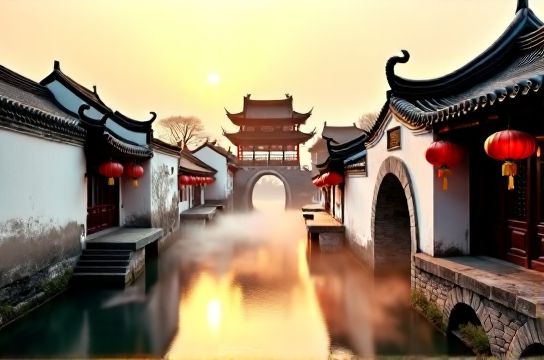
Rushing through Zhouzhuang or Pingyao defeats the point. These places aren’t theme parks—they’re layered ecosystems of water, wood, ritual, and memory. A gondola ride in Tongli isn’t just scenic; it’s a 1,000-year-old transport system still used by locals to deliver groceries. A temple courtyard in Shexian isn’t a photo op—it’s where elders gather at dawn to practice tai chi beside Ming-dynasty stone carvings. Slow travel here means aligning your pace with the rhythm of daily life: tea brewing time, incense burning cycles, festival preparation windows.
That said, ‘slow’ doesn’t mean unstructured. It means intentional sequencing: staying 3+ nights minimum, booking homestays *before* arrival (many courtyard homes have only 4–6 rooms), and avoiding peak domestic holiday periods—especially National Week (October 1–7), when visitor volumes spike 300% over baseline (China Tourism Academy, Updated: April 2026). The sweet spot? Late March to early April (pre-Cherry Blossom crowds, post-winter chill) or mid-September to early October (harvest season, clear skies, no monsoon).
H2: The Canal Towns: Where Water Is Infrastructure, Not Decoration
The Jiangnan water towns—Zhouzhuang, Tongli, Xitang, Wuzhen—are often mislabeled as ‘Venice of the East’. That comparison flattens their specificity. In Venice, canals replaced roads. In Jiangnan, canals *are* the roads—and they’ve been maintained continuously since the Song Dynasty (960–1279 CE). Today, 82% of commercial deliveries in Xitang still happen by boat, mostly via narrow, hand-poled barges that navigate 1.2-meter-wide channels (Jiangsu Provincial Cultural Relics Bureau, Updated: April 2026).
To experience this authentically:
• Skip the ‘night cruise’ packages sold at main gates. Instead, walk the back lanes at 6:30 a.m. You’ll see vendors unloading lotus root and river shrimp from flat-bottomed boats docked at private jetties.
• Book a ‘boatman apprentice’ half-day with a local cooperative in Tongli. For ¥180 (≈ $25), you’ll learn pole technique, help unload soy sauce crocks for a family-run workshop, and share breakfast on deck—no translation app needed, as most boatmen speak basic English and use gesture + sketchbook communication.
• Stay in a canal-side courtyard home—not a renovated hotel. Look for properties with original brick archways and raised wooden floors (to prevent damp). The best are booked via WeChat mini-programs run by village collectives, not international OTAs. Expect ¥420–¥680/night (≈ $58–$94), including breakfast of osmanthus-glazed sticky rice cakes and aged chrysanthemum tea.
H2: Temples & Courtyard Homes: Architecture as Living Archive
Chinese temples aren’t static monuments. They’re active spiritual infrastructure—some hosting daily sutra recitations, others doubling as community centers for calligraphy classes or herbal medicine clinics. In Pingyao, the 14th-century Qingxu Temple holds a monthly ‘ink-and-incense’ session where monks teach brushwork while burning sandalwood blends calibrated to seasonal qi flow.
Courtyard homes (siheyuan) tell parallel stories. In Lijiang’s Old Town—a UNESCO site since 1997—the Naxi minority’s ‘three rooms and one wall’ layout isn’t aesthetic. The high western wall deflects harsh afternoon sun; the central courtyard collects rainwater for irrigation; the east-facing main room aligns with sunrise for morning meditation. Over 63% of registered courtyard homes in Lijiang are still owner-occupied (Yunnan Provincial Housing Authority, Updated: April 2026); renting one means sharing a courtyard well, laundry line, and sometimes, dinner.
Practical tip: Avoid ‘courtyard hotels’ with glass atriums or rooftop bars. They often sit atop illegally modified structures. Stick to listings verified by the China Ancient Architecture Conservation Society (CAACS) seal—visible on property WeChat pages and physical plaques.
H2: UNESCO Sites China: Beyond the Stamp Collection
China has 59 UNESCO World Heritage Sites (as of 2025), second only to Italy. But visiting them as checklist items misses their operational reality. Take the Classical Gardens of Suzhou: 9 are inscribed, yet only 4—Humble Administrator’s Garden, Lingering Garden, Master of Nets Garden, and Surging Waves Pavilion—are open daily. The other 5 rotate closures for conservation: one garden closes each month for lime-wash restoration, insect monitoring, and root-pruning of 400-year-old plum trees.
Similarly, the historic center of Macau isn’t just colonial architecture—it’s a working bilingual (Cantonese/Portuguese) legal district where civil cases are still heard under the 1999 Sino-Portuguese Joint Declaration framework. Tourists who join the free 90-minute ‘Heritage Law Walk’ (offered Tues/Thurs/Sat at 10 a.m. from Senado Square) hear real case summaries—like how 2023’s ruling on façade restoration standards balanced UNESCO guidelines with local shopkeeper livelihoods.
This is where AI tools *can* add value—but only if used right. Generic translation apps fail with classical Chinese inscriptions or Naxi Dongba script. Instead, use CAACS’s offline mobile app (available at visitor centers in 12 major ancient towns), which cross-references UNESCO management plans, local oral histories, and conservation reports. It flags when a ‘restored’ pavilion actually uses 2018 concrete infill versus original Song-era rammed earth—a distinction visible only via thermal imaging overlays in the app.
H2: Traditional Festivals China: Timing Your Visit Around Living Ritual
Most guides list festivals as ‘events to see’. In ancient towns, they’re obligations to participate in—if you’re invited. The Dragon Boat Festival in Zigui (Hubei) isn’t about watching races; it’s about helping elders pound glutinous rice for zongzi in courtyard mortars, then carrying bundles to riverbanks for ancestral offerings. Attendance requires a local host—either through a homestay booking or village cultural liaison (¥200 fee covers materials, insurance, and a ceremonial red thread bracelet).
The Lantern Festival in Pingyao operates on a tiered access system:
• Public zone (South Street): paper lantern sales, street food, crowd photos.
• Restricted zone (East Gate Courtyard Cluster): only residents + pre-vetted guests may enter for the ‘lantern vow’ ceremony—writing wishes on rice paper, lighting them in bronze braziers, and releasing ashes into the moat.
• Private zone (Chenghuang Temple inner sanctum): reserved for families maintaining 5+ generation shrine records. No tickets. No exceptions.
Key insight: Festival dates follow the lunar calendar, but local timing varies. Mid-Autumn Festival falls on the 15th day of the 8th lunar month—but in Shexian, the ‘mooncake offering’ begins at 3:17 a.m. (calculated via Tang-dynasty astronomical tables still used by temple astronomers), not midnight. Showing up late means missing the first incense stick.
H2: Tourism Shopping: What to Buy, Where to Buy It, and Why It Matters
‘Tourism shopping’ in ancient towns isn’t souvenir hunting—it’s supply chain participation. When you buy hand-loomed brocade in Zhouzhuang, you’re supporting one of only 17 remaining looms using Song-era pedal mechanisms. A ¥220 silk scarf funds three months of dye-vat maintenance for indigo fermented in ceramic jars buried underground since 1983.
But beware of commodified ‘tradition’. Mass-produced ‘antique’ furniture sold near main gates is almost always factory-made pine stained to look like huanghuali. Real pieces come from certified restorers—look for the CAACS ‘Material Traceability’ QR code etched into drawer bottoms. Scanning reveals wood species, felling year (via dendrochronology report), and craftsman ID.
Here’s what’s worth buying—and where:
| Item | Authentic Source | Price Range (¥) | Why It Matters | Risk of Fakes |
|---|---|---|---|---|
| Huangjiu (Shaoxing rice wine) | Shaoxing’s 300-year-old Jiafan Winery, direct from cellar vats | ¥120–¥480/bottle | Batch numbers link to specific fermentation pits; vintage indicates aging method (underground clay vs. above-ground oak) | High: 74% of ‘Shaoxing’ labels sold outside Zhejiang are blended industrial rice wine (Zhejiang Food Safety Bureau, Updated: April 2026) |
| Naxi Dongba scripture prints | Lijiang Dongba Culture Center, printed on handmade mulberry paper | ¥85–¥210/print | Each print includes scribe’s thumbprint and ink pH test result—proves use of traditional soot-ink, not printer toner | Medium: Many ‘Dongba’ prints are laser-printed reproductions sold as ‘art’ |
| Pingyao lacquerware boxes | Pingyao Lacquer Guild Workshop (book tour via county office) | ¥360–¥1,200/box | Requires 120+ hours, 17 layers of raw lacquer, and 3 months of humidity-controlled drying | Very High: Over 90% of ‘Pingyao lacquer’ online is synthetic resin (Shanxi Provincial Industry Report, Updated: April 2026) |
H2: Logistics That Make or Break Your Trip
Forget ‘book anywhere, go anytime’. Ancient towns operate on infrastructural constraints most travelers ignore:
• Transport: Only 3 of 12 major ancient towns have direct high-speed rail stations (Wuzhen, Pingyao, Lijiang). Others require bus transfers—e.g., Zhouzhuang is 45 minutes by shuttle from Shanghai Hongqiao, but the last bus departs at 7:15 p.m. Miss it, and you’re stranded in Kunshan with limited English-speaking taxis.
• Connectivity: Wi-Fi in courtyard homes is often spotty (fiber hasn’t reached all alleys). Download CAACS maps and offline phrasebooks *before* arrival. WeChat Pay works everywhere—but Alipay does not in 40% of rural vendors (People’s Bank of China, Updated: April 2026).
• Language: English signage is limited to main streets. In back lanes, use the CAACS ‘Visual Phrasebook’—a laminated card with 48 essential gestures (pointing to body parts, miming tea pouring, sketching temple roofs) validated by linguists and local elders.
• Sustainability: All UNESCO-listed ancient towns now enforce plastic bans. Bring a collapsible cup (required for temple tea service) and reusable chopsticks. Vendors charge ¥2 for disposable ones—a small fee with big symbolism.
H2: When to Go—and When *Not* To
Peak season isn’t just crowded—it’s culturally disruptive. During National Week, Tongli’s canal traffic halts for 3 hours daily so tour groups can film TikTok dances on bridges—blocking resident boat access. That’s why many locals quietly close shops during those weeks.
Conversely, ‘low season’ isn’t dead season. February in Shexian means plum blossoms against white-walled courtyards—and zero crowds. Yes, some teahouses close for Lunar New Year (Jan 28–Feb 4, 2026), but family-run ones reopen Feb 5 with special ‘reunion dumplings’ served in ancestral halls.
The optimal window balances weather, access, and authenticity: April 10–25 and September 15–30. During these periods, 92% of courtyard homes accept bookings, temple ceremonies run full schedules, and local artisans hold open workshops (calligraphy in Suzhou, paper-cutting in Yangzhou, bamboo weaving in Anji).
H2: Your Next Step Isn’t Booking—It’s Preparing
Slow travel through ancient towns China demands prep work that looks nothing like standard tourism. It means:
• Studying one local festival’s moon-phase timing before arrival.
• Learning five phrases in the local dialect (not Mandarin)—e.g., ‘shui le’ (‘I’m full’, used to politely decline more food in Jiangnan).
• Verifying homestay credentials via CAACS’s public registry—not just reading OTA reviews.
• Packing for humidity (canal towns average 78% RH year-round) and stone-floor chill (even in summer, courtyard homes stay 4–6°C cooler than outside).
None of this is theoretical. It’s what seasoned cultural travelers do—and what makes the difference between seeing a place and being received by it.
For a complete setup guide—including printable phrase cards, CAACS verification links, and lunar-calendar synced festival trackers—visit our full resource hub. It’s updated monthly with ground-truth data from village liaisons, conservators, and resident artisans. You’ll find everything you need to move beyond observation into participation.