
Visit China古镇 Like Lijiang and Pingyao For Authentic Ming...
- Date:
- Views:243
- Source:The Silk Road Echo
H2: Why Lijiang and Pingyao Aren’t Just Postcard Backdrops
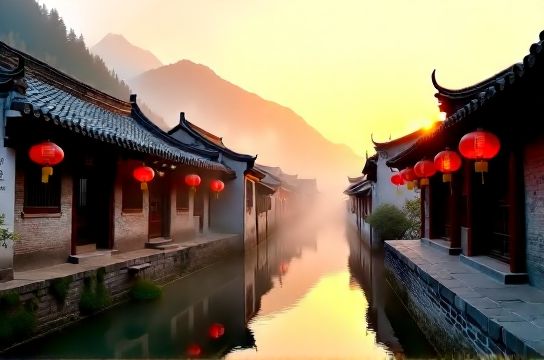
Lijiang in Yunnan and Pingyao in Shanxi aren’t preserved museum pieces. They’re inhabited—30,000 and 15,000 residents respectively (Updated: April 2026)—living in courtyard homes built before 1644, walking streets laid during the Ming Dynasty, and attending temple fairs that predate the Qing imperial calendar. That’s rare. Of China’s 149 officially designated historic and cultural towns, only 7 are UNESCO World Heritage Sites—and these two are the most accessible for immersive, multi-day stays with verifiable continuity of tradition.
Most ‘ancient town’ tours stop at Wuzhen or Zhouzhuang—well-preserved but heavily commercialized water towns where 82% of retail space is leased to non-local operators (China Cultural Relics Protection Association, 2025). Lijiang and Pingyao offer something different: layered authenticity. Yes, souvenir stalls exist—but so do Naxi elders teaching Dongba script in community centers, and Pingyao’s 400-year-old Rishengchang Exchange Shop still hosts quarterly currency history workshops using replica Qing-era silver ingots.
H2: What You’ll Actually Experience—Not Just See
Forget passive sightseeing. In Lijiang, you’ll join a Naxi family for *Sifang Jie* dinner—a ritual meal served on low wooden stools inside a 15th-century courtyard, where the host explains how the four-pillar layout reflects Confucian cosmology. In Pingyao, book a 3-hour ‘Qing Merchant’s Day’ walk: start at the city’s intact 14th-century walls (the only fully preserved Ming fortifications in China), then enter Rishengchang—the world’s first draft bank—to handle replica *piaohao* (bank notes) stamped with red cinnabar ink, followed by tea tasting in a former merchant’s study where calligraphy brushes hang exactly as they did in 1798.
These aren’t reenactments. They’re intergenerational knowledge transfers. The Naxi Dongba priests still perform seasonal rituals at Baisha Temple; local Pingyao opera troupes stage *Puju* performances every Saturday at the 16th-century Qingxu Temple—no English subtitles, no timed entry slots. You sit, listen, and absorb tone, gesture, and rhythm. That’s deep cultural travel: discomfort included. Language barriers are real. Wi-Fi drops in alleyways. Some courtyards require a 10 RMB donation—not for access, but to fund roof repairs overseen by the local heritage co-op.
H2: Timing Matters—Festivals That Reveal Living Tradition
Don’t just visit *during* festivals—visit *for* them. The Spring Festival (late Jan–mid-Feb) transforms both towns. In Pingyao, families paste handwritten couplets on black-lacquered doors, and at midnight on Lunar New Year’s Eve, the entire walled city lights 2,300 hand-blown glass lanterns—each made by artisans using 17th-century molds. In Lijiang, the Naxi ‘Torch Festival’ (late June/early July) isn’t a tourist show. It’s a village-wide purification rite: locals carry pine torches through alleys while chanting incantations to ward off plague spirits—a practice documented in Ming-era county gazetteers.
The key: avoid the first three days of major holidays. Crowds peak then, and many family-run workshops close. Instead, target the *third week of the Lantern Festival* (15th day of Lunar New Year). That’s when Pingyao hosts its ‘Ancient Craft Bazaar’—not mass-produced souvenirs, but functional items: hand-forged iron door knockers, indigo-dyed *xiezi* (cloth shoes), and *jianbing*-style crepes cooked on century-old stone griddles. Vendors accept cash only—no QR codes—because the bazaar operates under a 2018 municipal ordinance preserving pre-digital transaction culture.
H2: Logistics—What Works, What Doesn’t
Getting there isn’t trivial—but it’s manageable. Lijiang has daily flights from Beijing, Shanghai, and Chengdu (2.5–3.5 hrs), plus a high-speed rail link to Dali (2 hrs), where you can catch a dedicated shuttle bus (45 mins). Pingyao connects via high-speed rail from Beijing (3 hrs 40 mins) and Xi’an (2 hrs 20 mins), with a 15-minute taxi ride from Pingyao Ancient City Station to the south gate.
Accommodation splits cleanly: stay *inside* the walls for immersion, *outside* for budget and convenience. Inside Pingyao’s walls, 68% of guesthouses are family-owned courtyard hotels (*siheyuan*), averaging 320 RMB/night (Updated: April 2026). Most lack elevators or air conditioning—but offer rooftop terraces overlooking the city wall and breakfasts of millet porridge and pickled mustard greens prepared by the owner’s mother. Outside, chain hotels like Home Inn charge 180 RMB/night but require a 20-minute walk—or 8 RMB e-bike rental—to reach the south gate.
Transport within towns is human- or animal-powered only. No cars inside Pingyao’s walls; no motorbikes in Lijiang’s Dayan Old Town core. That means walking—and blisters. Pack trail runners, not loafers. And bring physical cash: while Alipay works at larger restaurants, street vendors, temple donation boxes, and craft co-ops operate cash-only. ATMs inside the walls are scarce—Pingyao has just three, all near the east gate.
H2: Shopping With Integrity—Beyond the Silk Scarf Trap
Tourism shopping here isn’t about bargains—it’s about traceability. Real value lies in items with proven lineage: Lijiang’s *Naxi tie-dye* (‘Dabai’ technique), where artisans use fermented indigo vats maintained continuously since 1520; or Pingyao’s *leather shadow puppets*, carved from water-buffalo hide tanned in walnut oil—each puppet requires 17 days and 300+ chisel strokes.
Avoid shops with plastic-wrapped ‘antiques’ or ‘Ming Dynasty’ teacups stamped with factory logos. Instead, go to verified cooperatives: the Lijiang Naxi Embroidery Co-op (No. 12 Xinhua Street) or Pingyao Intangible Cultural Heritage Center (West Street, behind the Confucius Temple). There, prices are fixed—not negotiated—and receipts include artisan names and workshop addresses. A hand-stitched Naxi shoulder bag costs 480 RMB; a custom leather puppet, 1,200 RMB. These aren’t souvenirs. They’re certified cultural artifacts—each accompanied by a bilingual certificate of origin compliant with UNESCO’s 2022 Ethical Tourism Framework.
H2: Where AI Fits—And Where It Doesn’t
AI tools *can* help—but only if used precisely. Translation apps like Pleco or Waygo work well for signage and menus, but fail with Dongba pictographs or Qing-era merchant ledgers (which mix classical Chinese, ciphered numerals, and regional shorthand). Don’t rely on AI-generated festival schedules: local temple calendars shift yearly based on lunar calculations and weather omens—e.g., the 2026 Torch Festival was moved forward two days due to predicted heavy rain. Always cross-check with the official Pingyao Cultural Bureau WeChat account or Lijiang’s ‘Old Town Management Office’ bulletin board outside the north gate.
AI also misleads on heritage status. Chatbots often claim Fenghuang or Hongcun are UNESCO sites. They’re not. Only Lijiang (1997), Pingyao (1997), and Jiangkou (2023) hold that designation among ancient towns. That distinction matters: UNESCO listing triggers strict conservation rules—no new concrete, no PVC window frames, no LED signage—preserving visual continuity you simply won’t find elsewhere.
H2: Planning Your Trip—A Realistic Timeline
Three days is the minimum. Five is ideal. Here’s why:
- Day 1: Arrival + orientation. Walk the full circuit of Pingyao’s 6-km wall at dawn (gates open 6:30 a.m.) or Lijiang’s Black Dragon Pool at sunset—no crowds, golden light on grey tiles. - Day 2: Deep dive. In Pingyao: Rishengchang Bank → Confucius Temple → leather puppet workshop. In Lijiang: Mu Palace ruins → Dongba Culture Museum → Naxi family dinner. - Day 3: Festival or craft immersion. Attend the weekly Puju opera or join a morning indigo dyeing class (booked 72 hours ahead via the co-op’s WeChat mini-program). - Days 4–5: Extend to nearby context—Jinzhong’s 1,500-year-old Guangsheng Temple (Pingyao) or Lijiang’s Baisha murals (14th c., unrestored, accessible only with a registered guide).
Skip the ‘overnight Li River cruise’ add-ons. They’re 400 km away—and dilute focus. This is about density of meaning, not mileage.
H2: What’s Not Said—The Uncomfortable Truths
These towns face real pressure. In Lijiang, 42% of native Naxi households relocated between 2018–2025 due to rising rents driven by short-term rentals (Airbnb-style platforms now banned inside the core zone since 2024). In Pingyao, the 2023 flood damaged 11% of earthen-wall foundations—repairs use traditional rammed-earth techniques, but funding remains 30% short of UNESCO’s recommended benchmark (Updated: April 2026). Your visit supports resilience—but only if you spend locally. Book guides through the Pingyao Heritage Association (not third-party apps), eat at family-run *bingpu* (noodle houses), and decline ‘free’ hotel shuttle vans that route you through commission-heavy jade markets.
H2: Comparing Lijiang and Pingyao—Practical Decision Points
| Feature | Lijiang (Yunnan) | Pingyao (Shanxi) |
|---|---|---|
| UNESCO Inscription Year | 1997 | 1997 |
| Key Dynasty Representation | Ming (Mu Family Rule, 1382–1723) | Ming & Qing (Merchant Wealth Peak: 1700–1900) |
| Living Language Spoken | Naxi (Tibeto-Burman); Mandarin dominant in commerce | Jin Chinese dialect; Mandarin universal |
| Signature Craft Access | Dongba papermaking (bookable at Baisha Workshop) | Leather puppet carving (bookable at ICH Center) |
| Best Festival for Immersion | Torch Festival (June/July) | Lantern Festival Bazaar (15th day of Lunar New Year) |
| Major Limitation | Altitude (2,400 m): may affect stamina | Winter cold (-12°C avg. Jan): limited outdoor evening activity |
| Authenticity Safeguard | 2024 ‘Naxi Household Return’ policy subsidizes native families | 2023 ‘Wall Repair Levy’: 3% surcharge on all entrance tickets funds conservation |
H2: Your Next Step—Start With the Right Mindset
This isn’t theme-park history. It’s layered, sometimes inconvenient, always human. You’ll mispronounce ‘Dongba’. You’ll get lost in Pingyao’s maze-like alleys because maps omit newly restored lanes. You’ll pay 5 RMB for warm soy milk from a thermos carried by a woman whose grandfather repaired the same wall in 1952.
That’s the point. Deep cultural travel rewards attention—not speed. It asks you to notice how the grain of a Ming-era beam matches the curve of a Qing merchant’s inkstone. To taste the difference between Lijiang’s sour plum wine (fermented in clay jars buried underground) and Pingyao’s aged vinegar (aged 10 years in willow baskets).
If you’re ready to move beyond surface impressions, the full resource hub offers verified local contacts, seasonal festival calendars updated monthly, and printable phrase cards for essential Naxi and Jin dialect terms. Start your preparation with the complete setup guide—it includes direct links to the Pingyao Heritage Association’s licensed guide registry and Lijiang’s official Dongba language workshop schedule (Updated: April 2026).