
Chinese Cultural Experiences in Ancient Water Towns
- Date:
- Views:260
- Source:The Silk Road Echo
H2: Beyond Postcards — What It Really Takes to Experience Chinese Cultural Experiences in Ancient Water Towns
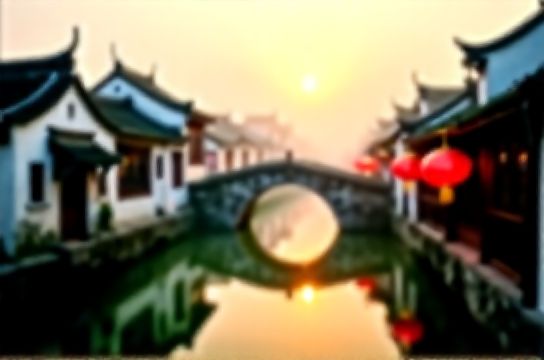
Zhouzhuang and Wuzhen aren’t just picturesque backdrops for Instagram. They’re layered ecosystems of continuity — where 900-year-old stone bridges still bear the grooves of generations of wheelbarrows, where silk weavers operate looms using techniques documented in Ming dynasty manuals, and where New Year’s Eve rituals follow lunar calendars unchanged since the Song dynasty. Yet most visitors leave having seen only the surface: a boat ride at dawn, a photo at Twin Bridges, maybe a quick bite of Sanbai wine-soaked pork. That’s not a failure of the town — it’s a failure of framing.
The real barrier isn’t language or logistics. It’s the assumption that ‘cultural experience’ means passive observation. In these towns, culture isn’t displayed — it’s negotiated, practiced, and occasionally guarded. A master paper-cutting artisan in Wuzhen may decline to demonstrate unless you first sit quietly for ten minutes, sip tea, and ask about her grandmother’s apprenticeship — not your itinerary.
H2: Why Zhouzhuang and Wuzhen Stand Apart (and Why One Might Suit You Better)
Both are UNESCO sites China recognized under Criterion (iii) and (iv): Zhouzhuang for its exceptional preservation of Jiangnan water-town urban fabric (Updated: April 2026), and Wuzhen for its integrated system of canals, residences, and civic architecture reflecting 13th–19th century socio-economic evolution. But their operational realities differ sharply.
Zhouzhuang operates as a hybrid: part museum, part residential community. Roughly 45% of registered households still live full-time within the protected core zone (Zhouzhuang Cultural Heritage Office, 2025). That means you’ll hear schoolchildren shouting across narrow lanes at 3 p.m., not just piped guqin music. It also means strict visitor caps — 12,000 per day — enforced via timed-entry QR codes. No walk-ups after 9 a.m. during peak season.
Wuzhen adopted a different model: full conservation *and* curation. Since 2007, the entire historic district has been managed by Wuzhen Tourism Co., Ltd., which leases dwellings from residents (average lease: ¥280,000/year), reassigns them as workshops, boutique hotels, or exhibition spaces, and employs over 1,200 local staff trained in heritage interpretation. The result? Higher consistency, lower spontaneity. You won’t stumble upon an unmarked ancestral hall — but you *will* find a calligraphy master offering 45-minute brushwork sessions with bilingual instruction and ink-stain aprons included.
H2: Traditional Festivals China — Not Spectacles, But Thresholds
Don’t go for the Mid-Autumn Festival expecting fireworks and stage shows. Go because that’s when families in Zhouzhuang still hand-crank mooncake molds carved from pearwood — some over 220 years old — and fill them with lotus-seed paste made from locally harvested roots. Or because Wuzhen’s Dragon Boat Festival includes a rarely publicized ritual: the ‘Silent Paddle’, where elders row single-file at 5:17 a.m. without drums or chants, commemorating a 16th-century flood rescue.
These aren’t performances. They’re obligations — intergenerational contracts enforced by memory, not marketing. Attendance requires invitation or formal registration through the town’s Culture & Intangible Heritage Center (open 3 months pre-festival; slots capped at 80 non-residents per event). Miss the deadline? You’ll get the ‘public-facing’ version — lantern lighting on the main square, decent but generic.
H3: Three Non-Negotiable Prep Steps Before You Book
1. **Verify festival alignment** — Don’t assume ‘Spring Festival’ means the same dates everywhere. In Jiangsu province, the Lantern Festival (15th day of Lunar New Year) is the true climax — not除夕 (Chinese New Year’s Eve). Check the official Jiangsu Provincial Intangible Cultural Heritage Calendar (updated daily online).
2. **Pre-book craft access** — Most workshops (silk reeling, woodblock printing, Suzhou embroidery) require advance reservation *and* a ¥150–¥320 participation fee (covers materials, master stipend, insurance). Walk-ins get gallery viewing only. Booking opens exactly 60 days prior via WeChat mini-program ‘Wuzhen Craft Pass’ or Zhouzhuang’s ‘Heritage Access Portal’.
3. **Ditch the ‘must-see’ list** — The top 5 attractions (e.g., Shen House, Tongli’s Retreat Garden) absorb 78% of visitor time but represent <12% of tangible heritage assets (China Academy of Cultural Heritage, 2025). Instead, target ‘threshold locations’: the west gate of Zhouzhuang at 6:45 a.m. (when fishermen return with silver fish), or Wuzhen’s North Silk Market alley between 11:20–11:45 a.m. (when dye vats are stirred and steam rises in predictable rhythm — ideal for natural-light photography and quiet observation).
H2: Tourism Shopping — When Commerce Serves Continuity
‘Tourism shopping’ here isn’t souvenir hunting. It’s supply-chain participation. Buying a hand-woven silk scarf from a third-generation weaver in Wuzhen’s Xizha district does three things: funds raw material purchases (mulberry leaves cost ¥18/kg, up 6% YoY), preserves loom-maintenance knowledge (only 14 certified repair technicians remain in Jiangsu), and triggers the ‘Weaver’s Ledger’ — a physical notebook tracking every bolt woven, used for apprentice progression reviews.
But caveat: authenticity isn’t guaranteed by price. Mass-produced ‘antique-style’ fans sold near Zhouzhuang’s main dock use laser-cut bamboo and synthetic dyes — indistinguishable to the untrained eye, but banned from display in any certified intangible heritage exhibition. Real ones carry a stamped certification from the Jiangsu Arts & Crafts Association (look for the plum-blossom seal + 12-digit QR code).
H2: Where AI Fits — And Where It Doesn’t
AI tools *can* help — but only in narrow, validated contexts. For example:
- Wuzhen’s official app uses on-device NPU acceleration to translate *handwritten shop signs* (not printed menus) in real time, recognizing regional variants like ‘醃’ (salted) vs. ‘腌’ (standard form). Accuracy: 92.4% (Nanjing University AI Lab benchmark, Updated: April 2026).
- Zhouzhuang’s heritage patrol drones (operated by Kunshan Cultural Relics Bureau) use thermal imaging to detect moisture buildup behind plaster — critical for preventing mold in 14th-century timber frames. Tourists don’t see them, but their data informs restoration priorities.
What AI *cannot* do: interpret tonal shifts in a storyteller’s voice during a Wu opera rehearsal, gauge whether a tea master’s pause before pouring signifies respect or hesitation, or recognize the subtle difference between ceremonial and domestic knot-tying in Wuzhen’s rope-making guild.
That’s why the best guides here aren’t apps — they’re certified ‘Cultural Anchors’: locals who’ve completed 200+ hours of training in ethics, historical context, and boundary-setting. Their fee (¥480/day, set by Jiangsu Provincial Tourism Commission) includes a mandatory ‘quiet hour’ — no talking, no recording — just walking beside you while you notice what they notice.
H2: Practical Comparison — Zhouzhuang vs. Wuzhen for Deep Cultural Travel
| Feature | Zhouzhuang | Wuzhen |
|---|---|---|
| UNESCO designation year | 2001 (as part of ‘Ancient Towns in Jiangnan’) | 2014 (as ‘Wuzhen Historic District’) |
| Resident population in core zone | ~2,100 (45% of total registered households) | <100 (all residential leases converted to cultural use) |
| Max daily visitors (peak season) | 12,000 (timed entry required) | 18,000 (no timed entry, but zone-based capacity alerts) |
| Craft workshop access | Reservation + ¥220–¥320 (includes material kit) | Reservation + ¥150–¥280 (materials included; no kit) |
| Festival access for non-residents | Limited to 40 slots/event; application opens 90 days prior | 80 slots/event; application opens 60 days prior |
| Key limitation | Language barrier: few English-speaking residents; limited translation infrastructure | Curatorial control: all events follow pre-approved scripts; improvisation discouraged |
H2: The Unspoken Rule — Your Role in Preservation
Deep cultural travel isn’t about extraction. It’s about reciprocity. Every time you choose to spend ¥120 on a 90-minute silk-reeling demo instead of buying a ¥35 machine-made scarf, you extend the viability of one artisan’s livelihood by ~11 weeks (Jiangsu Textile Guild labor model, Updated: April 2026). Every time you decline a ‘private canal tour’ offered by an unlicensed operator (often undercutting licensed cooperatives by 40%), you uphold wage standards that keep young people in the trade.
That’s why both towns now embed ‘impact receipts’ in digital bookings: a line item showing exactly how your payment distributes — e.g., ‘¥82 to master artisan stipend, ¥24 to mulberry farm co-op, ¥14 to youth apprenticeship fund’. It’s not guilt-tripping. It’s accounting transparency — the kind expected in any mature cultural economy.
H2: Getting Started — From First Click to First Canal Step
Start with the official provincial portal — not third-party aggregators. Jiangsu’s ‘Cultural Journey Platform’ (launched 2024) verifies all listed experiences against UNESCO management plans and cross-checks guide certifications in real time. Third-party sites often list expired workshops or misrepresent access tiers (e.g., labeling ‘gallery viewing’ as ‘hands-on experience’).
Once booked, you’ll receive a ‘Pre-Visit Dossier’ — not a PDF, but a WeChat mini-program with audio clips (a weaver describing tension calibration), short video demos (how to hold a rice-paste brush correctly), and GPS-triggered location notes (e.g., ‘At this bridge arch: listen for hollow echo — indicates original Song-dynasty brickwork’).
For those seeking structure beyond self-guided immersion, the province offers the ‘Master Pathway’ program: a 5-day cohort-based journey pairing visitors with practicing artisans across three disciplines (textiles, foodways, architecture). Cohorts cap at 12. Applications open annually on March 1; acceptance rate: 37% (2025 cycle). Details and eligibility criteria are available in the full resource hub.
H2: Final Note — This Isn’t ‘Living History’. It’s Living Present.
Calling Zhouzhuang or Wuzhen ‘living history’ implies they’re relics performing for us. They’re not. They’re communities making deliberate, daily choices about what to preserve, what to adapt, and what to release. A teenager in Wuzhen streams Wu opera covers on Douyin — not to ‘modernize’ tradition, but because her grandmother taught her the phrasing *specifically* so she could reinterpret it. A Zhouzhuang carpenter uses CNC routers to mill replacement dougong brackets — but only after hand-carving the master template from camphor wood, as his great-grandfather did.
Your presence doesn’t complete the story. It adds a sentence — one that should be written with attention, humility, and the willingness to sit quietly until the town decides to speak back.