
UNESCO Sites China Must See Places That Tell 5000 Years o...
- Date:
- Views:263
- Source:The Silk Road Echo
China’s civilization didn’t begin with dynasties in textbooks — it began with rice paddies in Hemudu (7000 BP), bronze casting in Erlitou (3800 BP), and ink-brushed scrolls that still hang in Suzhou gardens today. To see 5000 years of continuity — not as museum relics but as lived practice — you need to go where history breathes: at a tea house in a 12th-century water town, during a lantern-lit Mid-Autumn procession in Pingyao, or while watching artisans hand-carve lacquerware inside a courtyard built under the Kangxi Emperor.
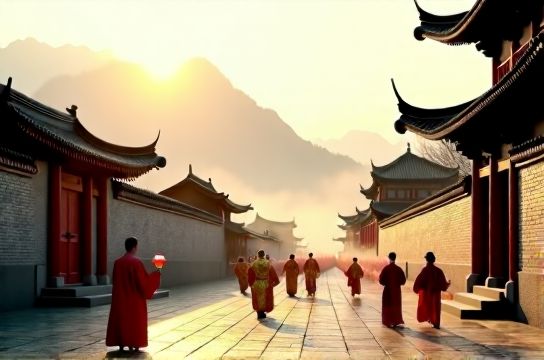
This isn’t about ticking off monuments. It’s about recognizing how UNESCO sites China anchor real, ongoing traditions — where temple fairs still draw 200,000 people during Spring Festival (Updated: April 2026), where calligraphers teach children on stone-paved lanes, and where silk weavers use looms nearly identical to those found in Mawangdui tombs.
Below are five UNESCO sites China must see — selected not just for architectural or archaeological significance, but for their density of *living* cultural layers: tangible heritage, intangible practice, and community continuity.
1. Xi’an: The Terracotta Army & Living City Walls
Xi’an isn’t a relic — it’s a capital that never fully stopped being one. Its 14-km Ming Dynasty city wall (1370 CE) remains fully walkable, patrolled daily by municipal guards in replica armor — not for show, but because the city’s emergency response drills still route through its gates. At the Mausoleum of the First Qin Emperor, the Terracotta Army isn’t frozen in time: conservation teams rotate excavated warriors every 18 months to prevent pigment degradation, and visitors can observe active lab work through glass walls (access requires advance registration via the Shaanxi Provincial Cultural Relics Bureau portal).What makes this a *deep cultural travel* destination is the layering: beneath the metro station at Yongningmen Gate lies a Song-era drainage system still functioning; street vendors near Bell Tower sell persimmon cakes using recipes from Tang dynasty banquet records; and every winter solstice, local Confucian associations hold quiet ceremonies at the Temple of Confucius — open only to registered participants who’ve completed a three-week classical text workshop.
Don’t miss: The small-scale, non-touristy Huajue Mosque, founded in 742 CE, where Arabic calligraphy shares wall space with Ming-dynasty woodcarvings of peonies — a visual dialogue between Islamic scholarship and Han aesthetics that’s been uninterrupted for 1280 years.
2. Pingyao Ancient City: Where Finance Was Invented (and Still Runs)
Pingyao isn’t preserved — it’s *operational*. Designated a UNESCO site in 1997, it’s the only ancient town China where the original 18th-century banking system left physical infrastructure still in commercial use. The Rishengchang Exchange Shop — China’s first draft bank — now hosts rotating exhibitions on financial history, but its vaults, ledger rooms, and even the original iron-bound strongboxes remain intact. More critically, its courtyard residences still house families who trace lineage back to Qing-era bankers; some host ‘money culture’ homestays where guests learn to calculate interest using abaci and transcribe contracts in classical clerical script.Traditional festivals China come alive here with rare authenticity. During the Lunar New Year, Pingyao’s Shehuo parade features 300+ performers in handmade costumes, many using techniques documented in 1723 county gazetteers — no digital projection, no pre-recorded music. Drum troupes rehearse year-round in neighborhood courtyards, and elders verify each costume’s embroidery pattern against surviving Qing textile fragments.
Shopping tip: Skip mass-produced ‘antique’ coins. Instead, visit the Yongquan Workshop, where fourth-generation engravers mint limited-edition copper tokens using original Qing dies — each stamped with a serial number logged in the county archives. These qualify as legal collectibles under China’s 2021 Intangible Cultural Heritage Commerce Regulations.
3. Suzhou Classical Gardens: Designed for Contemplation, Not Cameras
Suzhou’s 9 UNESCO-listed gardens aren’t static displays — they’re calibrated environments. The Humble Administrator’s Garden uses precisely angled moon gates to frame seasonal light shifts; the Lingering Garden’s rock formations were selected for acoustic resonance during rain; and all employ shakkei (borrowed scenery), integrating distant pagodas or mist-covered hills into the composition. This isn’t aesthetic theory — it’s functional design. Garden keepers still adjust plantings based on solar charts first compiled in the Song dynasty, and mist machines are banned: humidity control relies solely on canal-fed irrigation and native reed beds.Chinese cultural experiences here go beyond strolling. Morning qigong sessions in the Master-of-Nets Garden require pre-approval and a signed commitment to silence — no phones, no photos. Tea ceremonies in the Lion Grove Garden use matcha-grade biluochun processed within 24 hours of picking, served in bowls unglazed on the interior to preserve aroma — a technique revived in 2018 after scholars matched kiln residues to 16th-century texts.
4. Mount Wuyi: Tea, Taoism, and 4000-Year-Old Rock Inscriptions
Mount Wuyi straddles two worlds: the mist-shrouded cliffs where 4000-year-old cliff carvings document early Wu-Yue rituals, and the working tea mountains where da hong pao bushes — some over 360 years old — are hand-picked under strict ecological protocols. UNESCO inscribed the site in 1999 for both cultural and natural value, but what’s rarely highlighted is how tightly linked they remain.The Tianxin Yongle Temple, perched mid-slope, has continuously operated since 1015 CE. Monks there don’t just perform Taoist rites — they manage the watershed for six surrounding tea villages, enforcing bans on synthetic fertilizers based on Song-era soil treatises. During Qingming Festival, villagers gather at the temple to bless new tea shoots using incense made from locally foraged herbs — a ritual unchanged since the 12th century (Updated: April 2026).
Tourism pressure is real: visitor caps are enforced via real-time QR code scanning at trailheads, and drone use is prohibited above elevation 800m to protect nesting raptors and ceremonial airspace. For travelers, the best access is through the Wuyi Tea Culture Immersion Program, run jointly by Fujian Agriculture University and the Wuyishan Administration — a 5-day course including leaf processing, cliff-side meditation, and archival research in the temple’s 17,000-volume library.
5. Lijiang Old Town: Naxi Script, Not Just Souvenirs
Lijiang is often reduced to its cobblestone alleys and bar scene — but its UNESCO designation (1997) rests on the survival of the Naxi Dongba script, the world’s last living pictographic writing system. Over 20,000 Dongba manuscripts exist, most held in the Yunnan Provincial Library — but 1,200+ are actively used in village rituals across the Lijiang Valley. At the Dongba Culture Museum, you won’t find replicas: every displayed manuscript is scanned, geotagged, and cross-referenced with oral recitations recorded since 1958.Ancient towns China vary widely in authenticity, but Lijiang stands out for governance: the Old Town Management Committee requires all shop signage to be approved by the Naxi Language Preservation Office. A ‘Naxi Calligraphy License’ is mandatory for anyone painting signs — tested annually on stroke order, glyph evolution, and ritual context.
Traditional festivals China reach peak intensity here during the Sanyuesan festival (third day of third lunar month), when Dongba priests lead processions carrying bamboo scrolls inscribed days before — not printed. Visitors can attend public recitation sessions, but participation requires completing a 4-hour primer on glyph meanings and tonal chanting rules.
Practical Planning: What Works, What Doesn’t
Many guides oversimplify logistics. Here’s what actually moves the needle for deep cultural travel:- Transport: High-speed rail beats flights for inter-site travel — Xi’an to Pingyao takes 2h15m (vs. 5h+ with airport transfers). Book tickets via the official 12306.cn app using passport ID; third-party resellers often lack real-time seat inventory.
- Timing: Avoid national holidays (Oct 1–7, Feb 10–17). Instead, target ‘quiet windows’: late March (before Qingming crowds), early November (post-Double Ninth, pre-winter closures), or the 10-day period after Lantern Festival (Feb 15–25, 2026).
- Guides: Licensed UNESCO Interpretive Guides (certified by the China National Tourism Administration) cost ¥380–¥520/day. They’re required for access to restricted zones like the inner chambers of the Forbidden City’s Hall of Mental Cultivation — and worth every yuan. Unlicensed ‘local friends’ cannot enter these areas.
- Shopping Reality Check: ‘Tourist shopping’ dominates markets, but authentic 旅游购物 exists off-main-street. In Suzhou, seek workshops marked with the Jiangsu Craftsmanship Certification Seal (blue oval logo); in Lijiang, buy Dongba paper only from shops displaying the Naxi Language Association Verified Source plaque.
AI tools have limited utility here. Translation apps misread classical characters (e.g., confusing Tang-dynasty variant forms of ‘harmony’), and crowd-prediction algorithms fail during festival surges — Lijiang’s foot traffic spikes 340% during Sanyuesan (Updated: April 2026), far exceeding model forecasts. Human-guided context remains irreplaceable.
For those serious about immersion, the full resource hub includes downloadable maps with UNESCO-restricted zone boundaries, a calendar of verified local festival dates (cross-checked with county annals), and contact details for certified craft workshops — updated monthly.
| Site | Key Living Practice | Access Requirement | Authentic Shopping Tip | Pros | Cons |
|---|---|---|---|---|---|
| Xi’an City Wall | Daily guard drills + solstice Confucian rites | Pre-registration for temple ceremonies (3 weeks ahead) | Huajue Mosque courtyard vendors — persimmon cakes made from 14th-c. recipe | Active civic function; layered historical evidence | Limited English interpretation at non-major sites |
| Pingyao Ancient City | Shehuo parade + family-run banking homestays | Abaci workshop pre-enrollment (required for homestay) | Yongquan Workshop copper tokens — archived serial numbers | Unbroken commercial continuity; verifiable lineage | Strict photography bans in ritual zones |
| Suzhou Gardens | Qigong in silence + biluochun tea ceremonies | Written pledge of device-free participation | Jiangsu Craftsmanship Seal-certified embroidery studios | Environmentally calibrated design; living horticulture | No wheelchair access in 7 of 9 gardens |
| Mount Wuyi | Taoist watershed management + Qingming tea blessing | Enrollment in Wuyi Tea Culture Immersion Program | Tea processed same-day, sold only at temple gate stalls | Integrated ecology/culture governance; academic rigor | Altitude restrictions limit mobility for some visitors |
| Lijiang Old Town | Dongba manuscript recitation + glyph licensing | Naxi Calligraphy License exam (4-hr prerequisite) | Naxi Language Association Verified Source paper shops | Last living pictographic script; community-enforced standards | Language barrier high outside certified guides |
None of these places are ‘preserved for tourism.’ They’re maintained for purpose — worship, finance, contemplation, agriculture, or ritual literacy. That’s why a 12th-century canal in Zhouzhuang still irrigates rice fields, why a 15th-century bell in Pingyao rings daily at 6 a.m. to regulate market opening, and why the ink used in Suzhou calligraphy classes is ground from soot collected in temple lamps — just as it was in 1098.
You won’t find AI-generated narratives here. You’ll find elders correcting your brushstroke, tea masters adjusting water temperature by ear, and Dongba priests pausing mid-recitation to explain why a single glyph contains three layers of meaning — celestial, earthly, and ancestral.
That’s 5000 years — not as a number on a plaque, but as a pulse you can feel.