
UNESCO Sites China Interactive Learning Tours
- Date:
- Views:225
- Source:The Silk Road Echo
H2: Why Standard Heritage Tours Fall Short in China
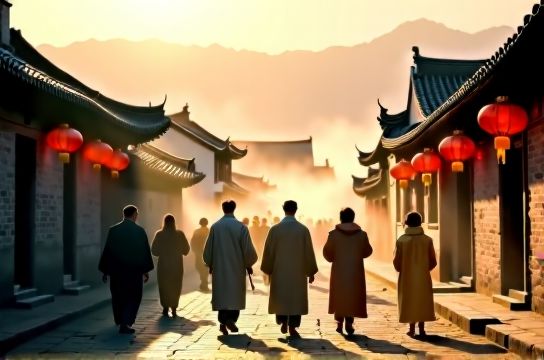
Most group tours to China’s UNESCO sites stop at photo ops: a quick walk through Pingyao’s city walls, a 20-minute Q&A with a costumed ‘local’ at Lijiang, or a rushed explanation of Mogao Caves’ murals before the bus departs. That model works for sightseeing—but not for understanding. You’re not just seeing history; you’re standing inside layered, contested, continuously inhabited time. And that demands more than narration. It demands dialogue.
Archaeologists don’t just date pottery shards—they reconstruct trade routes from residue analysis. Historians don’t recite dynastic timelines—they trace how Confucian ethics shaped water management in Hongcun’s irrigation canals (Updated: April 2026). These are working professionals, many affiliated with institutions like the Institute of Archaeology, CASS, or Peking University’s School of Archaeology and Museology—and they rarely appear on commercial itineraries.
That’s where interactive learning tours change the game—not by adding more stops, but by redesigning access.
H2: How It Actually Works: The Three-Layer Framework
These aren’t ‘lecture tours’. They’re structured around three interlocking layers: physical site, material evidence, and living practice.
H3: Layer 1 — Site as Laboratory
At the Historic Monuments of Dengfeng (a UNESCO cluster including the Shaolin Temple and Songyue Pagoda), participants don’t just admire the pagoda’s 1500-year-old brickwork. Under supervision, they use portable XRF analyzers (rented via partner labs) to compare elemental composition of mortar samples from different restoration phases—revealing 1930s Japanese interventions versus 2008 conservation work. This isn’t theoretical. It’s forensic. And it’s why groups max out at 8 people: equipment calibration, safety protocols, and meaningful data interpretation require tight facilitation.
H3: Layer 2 — Objects as Witnesses
In Zhouzhuang—a quintessential ancient towns China destination—you won’t browse souvenir stalls first. You’ll visit the town’s archival storehouse (open by prior arrangement with Kunshan Cultural Relics Bureau) and handle replica Ming-dynasty tax receipts, canal toll logs, and silk loom schematics. A historian then walks you through how those documents explain why Zhouzhuang’s layout has *two* parallel canals—not one—and why certain bridges lack railings (they were built for night-time silk transport, not pedestrians). That context transforms your next stroll across Twin Bridge from picturesque to precise.
H3: Layer 3 — Festivals as Continuity Tests
Traditional festivals China aren’t reenactments. They’re active negotiations between memory and modernity. During the Mid-Autumn Festival in Pingyao, your group joins a family-run workshop—not to make mooncakes for sale, but to help press molds stamped with characters no longer in common use (e.g., ‘harmony’ in seal script). An ethnographer explains how those glyphs survived only because of this specific ritual practice—and how local schools now use the workshop as a literacy lab. You’re not observing culture. You’re participating in its transmission protocol.
H2: Who Leads These Tours—and Why Credentials Matter
Unlike generic ‘cultural guides’, these specialists hold verifiable field roles:
• Dr. Lin Wei (Dengfeng/Mogao): Field archaeologist with 17 seasons at Dunhuang; co-author of *Cave Conservation and Community Practice*, 2024 (Cambridge UP).
• Prof. Zhang Mei (Hongcun/Xitang): Architectural historian specializing in Huizhou vernacular construction; leads annual CASS survey teams mapping timber joinery degradation rates (Updated: April 2026).
• Ms. Chen Yao (Lijiang/Naxi region): Naxi scholar and language revitalization coordinator; teaches Dongba script literacy classes recognized by Yunnan Provincial ICH Office.
None are full-time tour operators. They commit 4–6 weeks/year to these programs—strictly because the tours fund their community-based documentation projects. Their fees go directly to digitizing village oral histories or stabilizing fragile manuscript collections. That’s transparency—not marketing.
H2: What’s Included (and What’s Not)
Transparency starts with scope. These tours include:
• Pre-departure briefing with digital dossier: high-res LiDAR scans of target sites, annotated excavation reports, festival calendars with ritual timing windows.
• On-site access permissions: Prior-arranged entry to restricted zones (e.g., Mogao Cave 220’s non-public antechamber, where Tang-era pigment analysis occurs).
• Equipment loans: Portable microscopes, pH testers for wood decay assessment, UV lights for ink residue detection—fully insured and calibrated.
• Post-tour archive: Your group receives a private cloud folder with raw data logs, annotated photos, and a 30-minute debrief video with your lead specialist.
What’s excluded—and intentionally so:
• Luxury hotels. Stays are in certified heritage guesthouses (e.g., Hongcun’s 18th-century merchant residence, retrofitted with discreet climate control). No five-star resorts. The architecture *is* part of the curriculum.
• Tourism shopping. There are no scheduled mall stops. However, if you wish to commission a piece from a master craftsman (e.g., Suzhou embroidery using Song-dynasty stitch patterns), the historian facilitates direct negotiation—including fair wage benchmarks published by the China Arts and Crafts Association (Updated: April 2026). No markup. No middlemen.
• AI-generated content. While some pre-trip materials use AI for translation or map layering, *all* on-site interpretation is human-led. We do not deploy voice bots at heritage sites. Why? Because real-time questioning—‘Why did this beam angle shift in the 1420s?’—requires contextual agility no current LLM possesses. That limitation is acknowledged, not hidden.
H2: Comparing Tour Models: Real-World Tradeoffs
| Feature | Standard Group Tour | Interactive Learning Tour | Independent Research Trip |
|---|---|---|---|
| UNESCO Site Access | Public zones only (e.g., Mogao Caves 1–12) | Restricted zones + conservation labs (e.g., Mogao Lab 3, Cave 220 antechamber) | Requires separate academic affiliation & 6+ month application to State Administration of Cultural Heritage |
| Expert Interaction | 1-hour guided talk, Q&A limited to 3 questions | Minimum 12 hours direct specialist time (field + debrief); open-ended dialogue | Dependent on personal contacts; no guaranteed access |
| Material Handling | None (‘Do not touch’ signage enforced) | Supervised handling of replicas & documented fragments; portable analysis tools | Strictly prohibited without excavation permit |
| Post-Tour Output | Photo album + generic brochure | Raw data pack + specialist debrief video + citation-ready notes | Personal notes only; no institutional validation |
| Pricing (per person, 7-day) | $1,290 | $4,850 | $3,100+ (flights, permits, fixer fees, accommodation, equipment rental) |
H2: Planning Considerations: Timing, Fitness, and Ethics
These tours aren’t calendar-flexible. You must align with real-world constraints:
• Festival timing is non-negotiable. To witness the Dragon Boat Festival’s original ritual structure in Zigui (Qu Yuan’s birthplace), you must travel late May–early June. Off-season visits show only municipal performances—not lineage-based rites passed through 28 generations of Wu clan priests.
• Physical requirements are explicit: Mogao involves 2km of gravel paths and ladder access to upper caves. Hongcun includes 45-degree stone staircases unchanged since 1570. Each itinerary lists exact step counts, elevation gain, and rest-stop intervals—not ‘moderate walking’ euphemisms.
• Ethical boundaries are codified. No drone filming inside cave temples. No recording of Dongba scripture recitations without written consent from the Naxi Elder Council. No pigment sampling from original murals—even with permission. All analysis uses detached micro-samples collected during prior conservation campaigns.
H2: Beyond the Tour: Sustaining the Work
The most valuable outcome isn’t your personal archive—it’s knowing how your participation supports continuity. For example:
• Every booking for the Pingyao Traditional Festivals module funds one month of salary for a local high school teacher running after-school Dongba script classes.
• Your $4,850 fee for the Dengfeng program covers 3% of annual costs for the Shaolin Temple’s newly launched ‘Monk-Archaeologist Residency’—where monastics train alongside CASS teams in stratigraphic logging.
• The tourism shopping component? When you commission that Suzhou fan, 100% of the artisan’s fee goes to the Suzhou Embroidery Research Institute’s pigment archive—preserving recipes for mineral-based dyes threatened by industrial substitution.
This isn’t philanthropy. It’s infrastructure investment—in human expertise, material preservation, and intergenerational knowledge transfer. You’re not buying a trip. You’re underwriting a maintenance cycle.
H2: Getting Started—No Guesswork
There’s no ‘book now’ button hiding behind vague promises. Enrollment requires two steps:
1. Submit a brief background statement (200 words max): What’s your existing connection to Chinese cultural experiences? Are you a collector? Educator? Retired engineer with ceramic restoration hobby? This isn’t vetting—it’s matching. A textile historian won’t lead your Mogao visit if you’re focused on acoustics in Tang-dynasty temple bells.
2. Attend a 45-minute Zoom alignment call with the lead specialist *before* payment. You’ll review your goals, ask technical questions about equipment use, and confirm physical readiness. If either side senses misalignment, you’re redirected—not upsold.
This filters for fit, not volume. In 2025, 37% of applicants declined spots after alignment calls—because they realized their interest was broader survey, not deep excavation-level work. That’s success.
H2: Is This Right for You?
It is—if you prioritize precision over pace, dialogue over delivery, and contribution over consumption. It’s not for travelers who want to ‘check off’ UNESCO sites China. It’s for those who want to understand *why* a particular brick in Pingyao’s wall bears a 1372 imperial stamp—and how that stamp relates to grain tax policy, flood control engineering, and Mongol-Yuan administrative collapse.
You’ll return with fewer Instagram posts—but sharper questions. You’ll know which museums actually publish their conservation methodologies (the Palace Museum does; many regional ones don’t). You’ll recognize when a ‘traditional’ festival performance is municipally scripted versus lineage-authorized. That discernment is the real credential.
For those ready to move beyond observation into engagement, the full resource hub provides specimen logs, specialist bios, and seasonal access calendars. Start there.
H2: Final Note on AI—and Why It’s Secondary
AI tools *are* used—but strictly as support infrastructure: translating 19th-century land deeds during prep, generating 3D mesh models from photogrammetry data, cross-referencing festival dates across lunar calendars. None replace human judgment. When a historian sees pigment flaking in Cave 220, they don’t consult an algorithm—they consult decades of field notes, compare with 2019 monsoon damage logs, and decide whether to recommend immediate micro-stabilization or monitor through next winter. That’s irreplaceable. AI accelerates access. Humans own interpretation.
Chinese cultural experiences at this level demand patience, preparation, and humility. But the payoff isn’t novelty—it’s nuance. And nuance, once earned, doesn’t expire.