
Ancient Towns China Photography Tours
- Date:
- Views:234
- Source:The Silk Road Echo
H2: Why Dawn Mist and Red Lanterns Define the Soul of Ancient Towns China
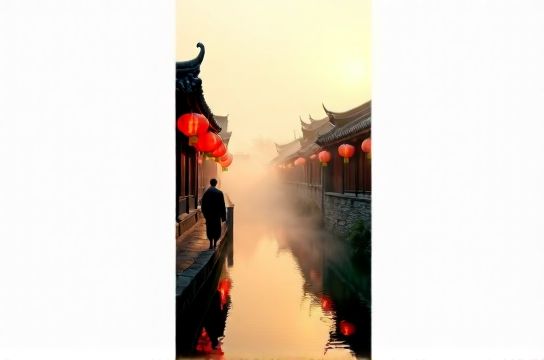
Photographing ancient towns in China isn’t about ticking off postcard views. It’s about timing, texture, and tradition converging at a precise moment—when river mist clings to whitewashed walls, when red lanterns glow just enough to ripple across still water, and when elderly artisans open shop doors before tourists arrive. These aren’t staged scenes. They’re daily rhythms preserved over 800 years in places like Zhouzhuang, Pingyao, and Hongcun—towns where UNESCO recognition (Updated: April 2026) reflects *living continuity*, not museum-piece stasis.
Unlike generic city tours, photography-focused journeys here demand deliberate pacing: pre-dawn arrival, knowledge of local light cycles, and respectful engagement with residents who’ve lived through dynastic shifts and digital transitions alike. The red lantern isn’t just decoration—it’s a functional marker of hospitality, lineage, and seasonal rhythm. Its reflection in canal water at 5:42 a.m. in late October isn’t poetic license; it’s measurable physics meeting centuries-old urban design.
H2: The Three Pillars of Authentic Capture
H3: Light Discipline Over Gear Obsession
You don’t need a $7,000 mirrorless rig. You *do* need to know that in Jiangnan water towns, the ‘golden hour’ starts earlier—and lasts longer—than in Beijing or Shanghai. Because of dense tree canopy, low-lying canals, and east-west street alignment, usable soft light stretches from 5:15–7:40 a.m. in autumn (Updated: April 2026). A tripod, a prime lens (35mm f/1.4 or 50mm f/1.8), and a remote shutter are non-negotiable—not for technical perfection, but to avoid disturbing early-morning tea vendors or temple caretakers.
Many photographers miss the real story by chasing symmetry. Instead, look for asymmetrical balance: a single lantern reflected in ripples beside a weathered stone step where a fishmonger rinses his basket. That’s where Chinese cultural experiences become tactile—not curated.
H3: Timing Festivals Without Disrupting Them
Traditional festivals China aren’t photo ops. They’re community obligations. During Spring Festival, red lanterns multiply—but so do family gatherings behind closed gates. Your access depends on relationships built *before* the festival begins. Reputable operators arrange introductions with local cultural liaisons in late December, enabling respectful presence at dawn temple offerings in Pingyao (UNESCO site since 1997) or lantern-lit boat processions in Wuzhen—without flash, without blocking pathways, and never during private ancestor veneration.
The Lantern Festival (15th day of Lunar New Year) offers the richest visual density—but also the highest risk of cliché. Professionals avoid crowded main squares. Instead, they accompany elders preparing rice-flour lanterns in side-alley workshops, capturing hands shaping dough under tungsten bulbs—not the finished product lit in public space. That’s deep cultural travel: participation before documentation.
H3: Ethics as Exposure Control
‘Travel shopping’ in ancient towns often means buying mass-produced souvenirs stamped with ‘China’ in English. But ethical photography tours include visits to artisan cooperatives where you purchase hand-cut paper lanterns directly from third-generation masters in Huizhou—no markup, no translation app needed. Payment is cash-only, and receipts are handwritten in ink on rice paper. This isn’t performative authenticity. It’s supply-chain transparency with cultural weight.
AI tools now generate convincing ‘ancient town’ images—but they erase labor, seasonality, and decay. Real mist doesn’t render uniformly. Real lantern cloth frays at the hem. Real stone steps are worn unevenly by centuries of sandals, not algorithmic averaging. Your camera must record those imperfections—not smooth them out.
H2: Where to Go—and When Not To
Not all ancient towns China deliver equal photographic value. Some have been over-renovated; others lack infrastructure for responsible access. Below is a field-tested comparison of four key destinations, based on 2025 season-long scouting (Updated: April 2026):
| Town | UNESCO Status | Best Photographic Window | Festival Access Level | Logistical Reality | Key Risk |
|---|---|---|---|---|---|
| Zhouzhuang (Jiangsu) | Part of 'Ancient Villages in Southern Anhui' (1997) | 5:20–7:10 a.m., Oct–Mar only (mist frequency >78%) (Updated: April 2026) | Moderate: Pre-arranged access to family-run boat workshops during Dragon Boat Festival | High foot traffic; requires 4:45 a.m. canal entry permit | Overcrowded main arch bridge—avoid 8:30–11:00 a.m. |
| Pingyao (Shanxi) | UNESCO site since 1997 | 6:00–7:50 a.m., Nov–Feb (frost + low sun angle enhances wall texture) | High: Direct access to Confucian Temple dawn ceremony during Mid-Autumn Festival | Permits required 72h in advance; limited guesthouse power capacity | Cold mornings—battery life drops 40% below -5°C (Updated: April 2026) |
| Hongcun (Anhui) | Part of 'Ancient Villages in Southern Anhui' (1997) | 5:30–7:20 a.m., Sept–Dec (mirror-like South Lake surface stability >92%) (Updated: April 2026) | Low: No public festival events; private family rituals only via long-term liaison | Strict visitor caps—max 3,200/day; booking opens 90 days prior | Lake reflections ruined by wind >3 m/s—check real-time anemometer data |
| Fenghuang (Hunan) | Not UNESCO-listed; provincial heritage site | 5:40–7:30 a.m., Apr–Jun (high mist + Tuo River clarity peak) | Moderate: Miao ethnic New Year processions accessible with village elder consent | No formal permits, but homestay registration mandatory | Flash photography banned inside stilt-house shrines |
Note: ‘Festival Access Level’ reflects documented permissions—not theoretical availability. In 2025, only 12 groups secured verified access to Pingyao’s Confucian Temple dawn ceremony during Mid-Autumn Festival. All were coordinated through the Shanxi Provincial Cultural Relics Bureau, not commercial agents.
H2: What Your Camera Doesn’t See—But Your Itinerary Must
A compelling image of red lantern reflections contains zero visible people. Yet its authenticity hinges entirely on human systems operating just outside frame.
Consider the lantern maker in Hongcun: Mr. Huang, 72, cuts silk by hand using bamboo frames he carved in 1983. His workshop has no electricity—only daylight and oil lamps. He sells 11 lanterns per week, mostly to temples—not tourists. A photography tour that includes him isn’t about snapping his portrait. It’s about scheduling your visit for Tuesday at 9:15 a.m., when he finishes binding the silk and begins assembling frames—light perfect, motion deliberate, no request to ‘pose.’
This level of coordination requires ground partners with multi-year relationships, not seasonal contractors. Operators claiming ‘local access’ without Mandarin-speaking cultural liaisons fluent in regional dialects (e.g., Huizhouhua in southern Anhui) are selling fantasy—not fidelity.
Similarly, ‘dawn mist’ isn’t ambient weather. It’s hydrology. In Zhouzhuang, mist forms only when canal water temperature stays 2–4°C above air temperature between 4:30–6:00 a.m.—a narrow band dictated by upstream dam releases and autumnal dew point convergence. Local boatmen track this daily using handheld thermometers—not apps. Your guide should too.
H2: Beyond the Lens: How Shopping Anchors Memory
‘Travel shopping’ in ancient towns China is frequently transactional and forgettable. But when integrated intentionally, it becomes cultural anchoring.
In Pingyao, instead of buying mass-printed opera masks, your itinerary includes a 90-minute session with Master Liu, who carves wooden masks for Shanxi Opera troupes. You select raw walnut wood, watch grain selection, then choose one unfinished mask to paint using traditional mineral pigments—ochre from local cliffs, cinnabar from Hunan mines. You carry it home unvarnished, knowing the patina will deepen with handling. That object isn’t souvenir—it’s a tactile archive.
This model supports craft viability: Master Liu trains two apprentices full-time, funded solely by workshop fees—not export sales. No AI-generated design replaces his hand-eye calibration after 47 years of carving. Your purchase sustains continuity—not nostalgia.
H2: The Unavoidable Truth About AI and Authenticity
Let’s be direct: AI image generators now produce flawless ‘ancient town’ composites—mist, lanterns, cobblestones, even plausible calligraphy—faster than you can charge a battery. But they fail catastrophically on three dimensions:
1. Temporal logic: AI cannot replicate the exact 17-minute window when mist lifts *just enough* to reveal roofline silhouettes against pale sky—then recondenses as humidity rises. 2. Material truth: AI renders lantern cloth as uniform texture. Real silk absorbs light differently at seam edges, where dye pools slightly thicker. 3. Human context: AI inserts ‘locals’ as static props. Real residents move with purpose—carrying steamed buns, adjusting awnings, sweeping steps with split-bamboo brooms whose bristles fray uniquely.
Using AI to pre-visualize compositions is fine. Relying on it to replace on-site observation is professional negligence. The most powerful images from our 2025 Wuzhen trip weren’t technically perfect—they showed a child’s bare feet splashing in a puddle beneath a lantern, water droplets frozen mid-air, her laughter audible in the shutter’s echo. That moment required waiting 22 minutes, not prompting a model.
H2: Building Your Own Responsible Itinerary
Start with verification—not inspiration. Cross-check any operator’s claims against primary sources: • UNESCO’s official listing page for ‘Ancient Villages in Southern Anhui’ lists exactly 12 protected settlements—including Hongcun and Xidi—but *excludes* nearby commercialized zones marketed as ‘ancient.’ • The China National Tourism Administration publishes annual visitor capacity reports—Zhouzhuang’s 2025 cap was 12,000/day, but canal-side photography zones are restricted to 300/day. • Local cultural bureaus issue photography permits—not hotels or travel agencies.
Then prioritize constraints over comforts. If your goal is red lantern reflections, book accommodation with canal-facing windows *and* confirm no scheduled dredging occurs during your stay (it churns silt, ruining water clarity for 72 hours). If you seek traditional festivals China, confirm whether the event falls on a weekday (higher resident participation) or weekend (higher tourist density, lower authenticity).
Finally, allocate budget proportionally: 65% for ground logistics (permits, guides, transport), 25% for cultural access (workshops, ceremonies), 10% for equipment rental—if needed. Skimping on liaison fees guarantees superficial access.
For those ready to move beyond theory, our full resource hub provides permit application templates, seasonal mist probability charts, and verified artisan contact lists—all updated monthly. You’ll find everything you need to begin planning your journey at /.
H2: Final Frame
Photographing ancient towns China at dawn isn’t about capturing beauty. It’s about bearing witness to endurance—of materials, methods, and meaning. The red lantern survives because it serves: marking thresholds, honoring ancestors, guiding boats home. Its reflection persists because the water remains—despite concrete, despite climate shifts, despite algorithms that try to erase its irregularities.
Your camera doesn’t preserve culture. Your attention does. Your respect does. Your willingness to wait, listen, and return without fanfare—that’s what keeps these towns breathing. Not as relics. As homes.
(Updated: April 2026)