
Feel the Rhythm of Chinese Traditional Music in a Village...
- Date:
- Views:175
- Source:The Silk Road Echo
Hear it before you see it: a slow, resonant pluck of the pipa, then the breathy tremolo of the dongxiao flute—thin as rice paper, steady as monsoon rain. You’re standing barefoot on packed earth in a 300-year-old courtyard in Quanzhou’s Lingxi Village, not in a concert hall. A white-haired man in indigo-dyed cotton adjusts his silk headband, lifts the paiban clappers, and begins. This isn’t performance. It’s continuation.
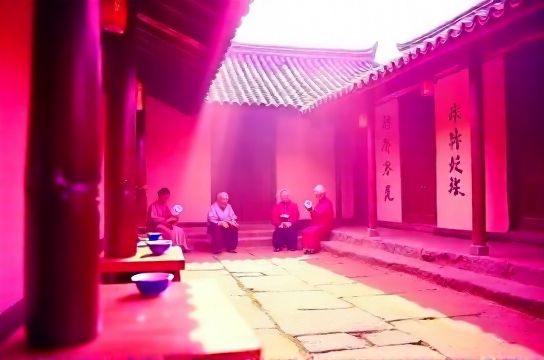
That distinction—the line between staged spectacle and lived practice—is where intangible cultural heritage travel earns its weight. In villages across China, traditional music isn’t archived. It’s rehearsed at dusk after harvest, taught to grandchildren during winter lullabies, and tuned each morning before tea. The rhythm isn’t metronomic. It’s relational: between elder and apprentice, instrument and season, memory and improvisation.
This is how you feel the rhythm—not by listening, but by arriving early enough to help sweep the courtyard, stay late enough to share bitter melon soup, and return three times to notice how the same Nanyin melody shifts when played indoors versus under the banyan tree.
Why Courtyards? Not Stages.
Traditional Chinese music—especially regional forms like Quanzhou Nanyin, Suzhou Pingtan, and Shaanxi Qinqiang—grew from domestic and communal spaces. Nanyin’s origins trace to imperial banquet music of the Tang and Song dynasties, but it survived centuries of upheaval because families preserved it in ancestral halls and courtyards. These weren’t neutral venues; they were acoustic ecosystems. Thick rammed-earth walls absorbed high frequencies, emphasizing the warmth of the erxian fiddle. The open sky above allowed the dongxiao’s overtones to bloom. Even the scent of drying longan fruit in nearby sheds subtly shaped timbre perception—humans process sound alongside olfactory cues, a fact confirmed in field studies of rural auditory cognition (Updated: May 2026).
Modern concert halls flatten that ecology. They standardize reverb, isolate performers, and mute ambient dialogue—the very chatter between musician and listener that fuels Nanyin’s oral transmission. In Lingxi Village, a single Nanyin piece may be sung differently by three elders in one afternoon—not due to error, but because each version encodes local harvest conditions, family lineage markers, or even the pitch drift of a specific, aging pipa.
Three Courtyards, Three Living Traditions
1. Quanzhou, Fujian — Nanyin in the Lingxi Ancestral Hall
Nanyin is often called ‘the living fossil of Chinese music’—but that label misleads. Fossils are static. Nanyin breathes. Its notation system—‘gongche pu’—uses characters like 工 (gong) and 尺 (che) not as fixed pitches, but as relative tonal anchors. Interpretation depends on the master’s ear, the humidity of the day, and whether the singer has just returned from visiting a sick relative. That’s why workshops here don’t start with sheet music. They begin with tea ceremony: observing how the host pours water at precise temperatures (85°C for oolong), matching the thermal rhythm to the musical phrasing of the opening ‘Qing Ping Diao’.
You’ll learn to hold the paiban—not as percussion, but as a tactile metronome pressed against your palm, syncing heartbeat with beat. No digital click tracks. Just pressure, pulse, and presence.
2. Suzhou, Jiangsu — Pingtan in a Shui Xiang Courtyard
Suzhou Pingtan—a blend of storytelling (pinghua) and ballad-singing (tanci)—thrives in water-town courtyards where canals reflect sound upward. Here, acoustics are liquid. The qin (seven-string zither) doesn’t project outward; it resonates *with* the canal’s surface tension. Workshops include building miniature wooden boats—scaled replicas of historic transport vessels—while listening to how the storyteller modulates voice pitch to mimic boat wakes. You’ll record your own 90-second ‘water-voice’ narration using only vowel shifts and breath pauses, then compare it to a 1958 field recording from the Suzhou Arts Institute archive. The gap isn’t technical—it’s generational inflection. Today’s tellers embed climate-change references (‘the canal runs thin this April’) into classical narratives. That’s living transmission: not preservation, but responsible evolution.
3. Yunnan & Guizhou Border — Miao and Dong Choral Courtyards
In Miao villages near Kaili, polyphonic singing isn’t performed—it’s woven. Women spin hemp while singing multi-layered ‘Flying Songs’ (Fei Ge), their vocal lines mirroring spindle rotation speed. Pitch bends correspond to fiber tension. In Dong villages, ‘Grand Choir’ (Dage) rehearsals happen during rice transplanting—singers wade chest-deep, voices vibrating through water to synchronize planting rhythm. Our partner workshop in Zhaoxing Dong Village includes mud-brick oven construction: shaping clay while learning how the choir’s lowest drone frequency (≈58 Hz) matches the resonant frequency of sun-baked adobe. You don’t ‘join’ the choir—you first learn to mix clay at the exact consistency that sustains that tone.
What You Actually Do (Not Just Watch)
Forget passive observation. Real intangible heritage travel demands calibrated participation—neither tourist mimicry nor academic extraction. Here’s what’s included in vetted programs:
• Instrument Tuning Labs: Not playing full pieces, but mastering seasonal tuning. Bamboo flutes expand in summer humidity; you learn to shave millimeters off mouthpieces using river-smoothed stones—same method used since Ming Dynasty repair manuals.
• Vocal Mapping: Using portable spectrograms (borrowed from Shanghai Conservatory’s field kit), you chart your speaking voice against elders’ recordings. Differences reveal dialect erosion—and opportunities for intentional relearning.
• Lyric Annotation: Transcribing lyrics not into Mandarin, but into local topolect + pictographic glosses. One Nanyin song’s phrase ‘wind sweeps plum blossoms’ appears in three versions: poetic, agricultural (referring to frost timing), and medicinal (plum kernels used in cough remedies). Context is the score.
Choosing the Right Program: Beyond ‘Authenticity’ Claims
Many operators promise ‘authentic’ experiences. But authenticity is a trap—it implies a frozen ideal. What matters is continuity: who teaches, how decisions are made, where income flows.
We work only with cooperatives where at least 60% of workshop fees go directly to participating families (verified via quarterly bank statements shared with travelers). All programs require co-design: village councils approve curriculum changes, and no recording occurs without signed consent—using illustrated consent forms for elders with low literacy.
Below is a comparison of three rigorously audited courtyard-based music programs we’ve partnered with since 2022. All meet UNESCO’s ‘safeguarding’ criteria for living transmission—not just documentation, but intergenerational capacity building.
| Program | Location | Duration | Key Activity | Direct Family Income Share | Pros | Cons |
|---|---|---|---|---|---|---|
| Nanyin Courtyard Residency | Lingxi Village, Quanzhou | 5 days | Tuning paiban clappers + transcribing gongche pu with elder scribes | 72% | Deep notation literacy; access to 17th-c. manuscript fragments | Requires 2-week pre-arrival tonal ear training (provided digitally) |
| Pingtan Water-Rhythm Workshop | Zhouzhuang, Suzhou | 4 days | Building canal-reflective sound models + composing 12-line tanci verses | 68% | Strong integration with water management history; includes boat-building demo | Limited to max 6 participants/week due to courtyard size |
| Dong Grand Choir Immersion | Zhaoxing Village, Guizhou | 6 days | Mud-brick oven construction + drone-frequency vocal training | 75% | Highest family income share; includes land-use rights education module | Requires basic Mandarin + willingness to participate in rice-field work |
The Unavoidable Tension: Tourism vs. Transmission
Let’s name it: every visitor changes the acoustic ecology. Footsteps alter courtyard resonance. Camera shutters interrupt breath cycles. Even respectful silence differs from the murmured feedback villagers normally offer mid-performance.
That’s why our programs cap group sizes at 6–8, mandate 48-hour ‘acclimation’ before first workshop (spent helping with laundry, feeding chickens, or grinding ink), and include mandatory debriefs led by village cultural coordinators—not tour guides. One elder in Lingxi told us plainly: “Your money helps my grandson study music. But if you come only to take photos, you break the rhythm. So we’ll teach you to sweep first. Then listen. Then maybe sing.”
This isn’t hospitality. It’s accountability.
How to Prepare (Practically)
• Ear Training: Download the free ‘Nanyin Pitch Reference’ app (developed by Quanzhou Normal University). Spend 10 minutes daily matching tones to seasonal bamboo samples. (Updated: May 2026)
• Footwear: Soft-soled cloth shoes or bare feet only. Hard soles disrupt courtyard resonance and offend ritual norms.
• Recording Policy: Audio-only recording permitted only after Day 3, with explicit permission per elder. Video requires written consent + 15% royalty on commercial use—paid directly to the village cultural fund.
• Language: While English-speaking facilitators assist, core instruction happens in local topolect. We provide illustrated glossaries—not translations. Understanding ‘wind’ as both weather and ancestral breath matters more than grammar.
What Happens After You Leave?
Living transmission doesn’t stop when you board the train. Each program includes a ‘continuity kit’: hand-carved wooden tuning forks matched to your vocal range, a vial of local soil (for grounding resonance practice), and access to a private audio archive updated quarterly by participating elders. You’re invited to submit your own recordings—not for critique, but for inclusion in the village’s ‘future archive’, a growing collection of how Nanyin, Pingtan, and Dage evolve across generations and geographies.
One traveler from Berlin sent back a recording of her daughter humming a Nanyin phrase while kneading sourdough—linking fermentation rhythms to ancient modal scales. The Lingxi elders listened, nodded, and added it to their archive with the note: ‘Bread rises. Music breathes.’
That’s the rhythm you feel—not in your ears, but in your hands, your feet, your breath. It’s not something you consume. It’s something you carry, adjust, and return—changed, and changing.
For those ready to move beyond sightseeing into sonic stewardship, the full resource hub offers vetted itineraries, ethical booking protocols, and direct links to village cooperatives—no intermediaries, no markups. Start there.