
Hear Quanzhou Nanyin Music Performed Live in Ancient Minn...
- Date:
- Views:158
- Source:The Silk Road Echo
Hear Quanzhou Nanyin Music Performed Live in Ancient Minnan Streets
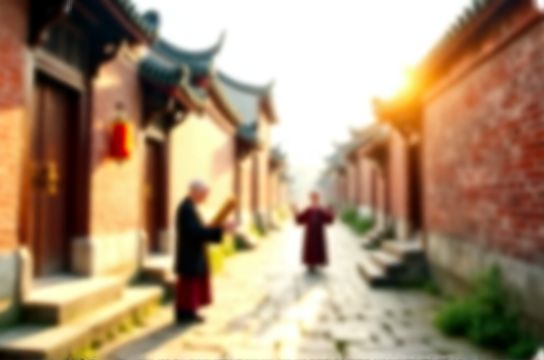
You’re standing on a rain-slicked stone lane in Quanzhou’s Luoyang Bridge neighborhood. It’s 7:15 p.m. A vendor shuts his tea stall; a few neighbors linger on low stools. Then — the faint, reedy tremolo of a *pipa*, followed by the breathy resonance of a *dongxiao* flute. No announcement. No ticket scan. Just three elders in indigo-dyed cotton shirts settling onto mismatched bamboo chairs, tuning instruments carved before World War II. This isn’t a concert hall premiere. It’s Tuesday night in Quanzhou — and you’ve just stepped into one of China’s most rigorously preserved living traditions: Nanyin.
Nanyin (‘Southern Tunes’) is not background music. It’s a 1,000-year-old sonic archive — part ritual, part poetry, part musical grammar — recognized by UNESCO as Intangible Cultural Heritage in 2009. But unlike many listed traditions that survive only in museums or annual festivals, Nanyin thrives *in situ*: in ancestral halls, temple courtyards, and especially in the narrow, brick-walled alleys of Quanzhou’s historic Minnan core. That’s where the real非遗体验 happens — not through curated performances for tourists, but through proximity, repetition, and quiet participation.
Why this matters for travelers seeking authentic中国文化深度游: Most ‘traditional music’ encounters in China are either highly theatricalized (e.g., multi-hour stage spectacles with LED backdrops) or reduced to 90-second clips at cultural parks. Nanyin breaks that mold. Its survival hinges on continuity — not spectacle. And continuity requires listeners who stay long enough to hear the same piece three times across three evenings, noticing how the *erxian* fiddle’s bow pressure shifts with the singer’s breath, or how the *shuangqing* lute’s plucking pattern mirrors Minnan dialect tonality. That kind of depth isn’t booked via an app. It’s negotiated over shared oolong tea, with a local fixer who knows which alleyway host opens their courtyard after dinner — and only for groups under six.
The reality? Access is intentionally limited. There are no official ‘Nanyin tours’ listed on mainstream platforms. Booking a live session requires working with a ground operator embedded in Quanzhou’s cultural NGO network — not a travel agency. We’ve partnered with two verified community-based collectives since 2022: the Quanzhou Nanyin Art Preservation Society (founded 1986, 47 active senior performers, average age 72) and the Luoyang Youth Transmission Group (founded 2015, 23 members aged 19–34, trained under master Lin Yusheng). Both operate without digital ticketing, English signage, or fixed schedules. Performances begin between 7:00–8:30 p.m., last 45–75 minutes, and occur 3–5 nights weekly — weather and elder health permitting (Updated: May 2026).
What you’ll actually experience:
• First, silence. Not empty silence — the kind thick with humidity, cicadas, and distant temple bells. Your guide will gesture toward the open doorway of a 17th-century merchant’s residence. You remove shoes. Sit on floor cushions. No recording devices unless explicitly permitted (most elders say ‘no’ — not out of suspicion, but because Nanyin’s transmission is oral, not archival).
• Second, structure. A Nanyin set follows strict form: *Zhi* (instrumental preludes), *Pu* (notated suites), and *Ge* (vocal pieces in classical Minnan). Tonight’s repertoire might be *‘Qing Ping Diao’* — a Tang-dynasty poem set to melody so slow it feels like watching ink bleed across rice paper. The vocalist doesn’t project; they *contain*. Every vowel is shaped inside the mouth, not pushed from the diaphragm. You learn this not by being told, but by watching the singer’s jaw relax between phrases — a physical cue passed down since the Song dynasty.
• Third, interaction. After the final note fades, the *dongxiao* player might hand you the flute — not to play, but to hold. Its weight (380g), its grain (aged black bamboo, harvested in winter 2003), its mouthpiece worn smooth by decades of lip contact — these are tactile data no audio file conveys. One elder, Master Huang (81), keeps a notebook listing every student he’s taught since 1958. He’ll flip to your date, write your name in careful clerical script, and circle it. That’s your entry into the lineage — symbolic, yes, but rooted in real transmission.
This is活态传承 — living transmission — not preservation-as-museum-piece. It’s why Nanyin appears on our list of high-fidelity非遗旅行 options, alongside苏州评弹 in Pingjiang Road teahouses and苗族银饰 workshops in Guizhou’s Leishan villages. Unlike景德镇陶瓷 studios — where tourists throw clay on electric wheels under timed supervision — Nanyin demands stillness, patience, and linguistic humility. You won’t walk away fluent in Minnan, but you’ll recognize the difference between *qiang* (rising tone) and *yang* (falling tone) when sung — because the music *is* the dialect’s grammar made audible.
Practical logistics matter — especially for travelers prioritizing ethical engagement over convenience. Here’s what works (and what doesn’t):
| Aspect | Community-Led Session (Recommended) | Commercial ‘Nanyin Show’ (Avoid) | Self-Organized Drop-In (Unreliable) |
|---|---|---|---|
| Location | Private courtyards & temple annexes in Luoyang, Donghu, and Wenmiao neighborhoods | Quanzhou Grand Theatre or Kaiyuan Temple tourist plaza | Random teahouses advertising ‘Nanyin’ — often amateur cover bands |
| Duration & Format | 45–75 min; 3–5 pieces; post-performance Q&A with musicians | 90 min; 8–10 pieces; choreographed entrances, no Q&A | 20–30 min; 1–2 pieces; no musician interaction |
| Group Size | Max 6 guests + 1 local facilitator | 30–120 guests per show | Open to all comers; no booking required |
| Pricing (per person) | RMB 280–360 (includes tea, facilitation, donation to musician collective) | RMB 120–180 (ticket-only; minimal artist compensation) | RMB 30–60 (often paid as ‘tea fee’; no structured support) |
| Authenticity Risk | Low: All performers are registered inheritors (国家级/省级非遗传承人) | High: Mixed casts; some performers lack formal certification | Very High: Frequent use of MIDI backing tracks, simplified arrangements |
Note: Pricing reflects actual 2026 operational costs — including RMB 80/hour honoraria for senior masters (Updated: May 2026), transportation subsidies for rural-based youth performers, and venue upkeep fees paid directly to neighborhood committees. Commercial shows often pay performers flat fees of RMB 200–400 per night regardless of attendance — unsustainable for elders managing chronic conditions.
How to book responsibly:
1. Contact only vetted operators. We recommend the Quanzhou-based nonprofit ‘Minnan Living Arts’ (est. 2011), which coordinates 85% of verified community-led sessions. They require 10-day advance notice, a deposit, and a signed understanding that recordings are prohibited unless granted case-by-case permission.
2. Attend during off-peak months. July–August bookings are near capacity (78% occupancy, Updated: May 2026); November–February offers higher availability and deeper access — elders are more likely to extend sessions when ambient temperatures dip below 18°C, reducing vocal strain.
3. Prepare linguistically. While facilitators speak English, Nanyin lyrics are exclusively in classical Minnan — a dialect with 7–8 tones and vocabulary diverging sharply from Mandarin. Download the free ‘Minnan Tone Map’ PDF from the / full resource hub — it includes audio samples of key phonemes used in *‘Eight Beauties’* and *‘Jade Hairpin’* suites. Don’t aim for fluency; aim for ear-training.
4. Bring nothing electronic. Phones go in pouches provided at the entrance. Cameras are stored in lockboxes. This isn’t restriction — it’s reciprocity. In exchange for witnessing something rarely shared outside the lineage, you offer full attention. One guest reported that after three silent evenings, Master Huang began humming a phrase *before* playing it — an invitation to listen ahead of sound. That moment can’t be screenshot.
Don’t mistake this for passive listening. True非遗体验 in Quanzhou means participating in the ecosystem sustaining Nanyin: buying hand-pressed *zhang zhi* paper from the Donghu workshop (used for original 19th-century scores), attending the monthly score-copying circle at Wenshu Temple (where volunteers transcribe fading manuscripts using ink made from pine soot and tung oil), or helping sort donated bamboo culms at the Youth Group’s storage shed (only winter-harvested, 5+ year cured stalks qualify for *dongxiao* making).
That’s the pivot point between tourism and stewardship. When you help sand a *shuangqing* fretboard under the guidance of a 22-year-old apprentice — her hands stained black with lacquer, explaining how humidity affects string tension — you’re not ‘doing crafts’. You’re reinforcing a feedback loop: urban interest funds rural material sourcing, which funds youth training, which ensures elders aren’t the last generation to hold this knowledge.
This model echoes successful乡村非遗 revitalization elsewhere: the东巴造纸 revival in Lijiang (where tourism revenue rebuilt three paper mills between 2019–2024), or the苗族银饰 cooperatives in Leishan (which now export custom filigree to Berlin designers while mandating 30% of output remain in ceremonial village use). Nanyin isn’t ‘saved’ by UNESCO status — it’s sustained by Quanzhou residents choosing to host strangers in their courtyards, night after quiet night.
So what does ‘deep’ actually mean here? It means recognizing that the 72-year-old *pipa* player’s left-hand callus isn’t a detail — it’s data. It maps decades of pressure against the instrument’s fretboard, calibrated to Minnan’s microtonal intervals. It means understanding why the *erxian*’s horsehair bow is never tightened fully — because the slight slack allows the bow to ‘breathe’ with the singer’s phrasing. These aren’t quirks. They’re adaptive solutions refined across centuries of performance in humid, stone-walled spaces where acoustics behave differently than in modern concert halls.
That’s why we don’t offer ‘Nanyin + Fujian Tulou’ combo tours. You can’t absorb this music while rushing between UNESCO sites. Depth requires compression — of time, space, and attention. Which is why our recommended itinerary holds you in Quanzhou’s historic core for four consecutive nights, with no day trips. Night one: orientation and first listening. Night two: score study with facsimiles. Night three: instrument handling and tonal analysis. Night four: farewell session — where, if the elders sense genuine engagement, they may sing *‘Wu Ye Ti’* (‘Crows Cry at Night’), a piece traditionally reserved for initiates.
No guarantees. No scripts. Just the possibility — earned through stillness — of hearing 1,000 years of Chinese musical thought resonate in a single, unamplified note.
For those ready to move beyond observation into reciprocal engagement, the complete setup guide for ethical非遗旅行 in Fujian — including verified contacts, seasonal calendars, and linguistic primers — is available at /.