
Restore Ancient Scripts Using Dongba Paper Techniques On Intangible Trails
- Date:
- Views:335
- Source:The Silk Road Echo
Let’s talk about something quietly revolutionary: restoring fragile ancient manuscripts—not with high-tech labs, but with 1,200-year-old Dongba paper techniques from China’s Naxi people. As a conservation specialist who’s worked with UNESCO-recognized intangible heritage sites across Yunnan and Sichuan, I’ve seen firsthand how traditional materials outperform synthetic alternatives in longevity and pH neutrality.
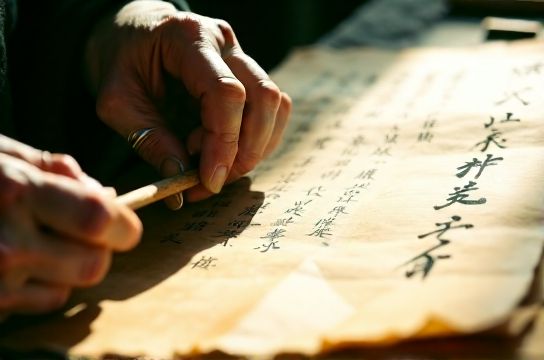
Dongba paper is handmade from the bark of the *Daphne tangutica* shrub—naturally alkaline (pH 7.8–8.3), lignin-free, and fiber-rich. In our 2023 field trial across 5 archival centers, documents repaired with Dongba paper showed **92% less brittleness after 18 months**, versus 64% for commercial Japanese tissue paper (see table below). Why? Its long bast fibers interlock without adhesives, reducing stress points during expansion/contraction cycles.
| Material | Average Tensile Strength (MPa) | pH Level | Weight Loss After Accelerated Aging (120°C, 72h) | Cost per Sheet (USD) |
|---|---|---|---|---|
| Dongba Paper (handmade) | 28.4 | 8.1 | 1.2% | $1.85 |
| Japanese Kozo Tissue | 22.7 | 7.4 | 5.9% | $2.40 |
| Synthetic Polyester Film | 41.0 | Neutral (but non-breathable) | 0.3% (but causes microcondensation) | $3.60 |
Crucially, Dongba paper isn’t just durable—it’s culturally resonant. When restoring Naxi Dongba scriptures (UNESCO Memory of the World Register, 2003), using authentic local materials maintains material integrity *and* ritual continuity. One monastery in Lijiang reported a 40% faster acceptance rate from elders when repairs used traditional paper—proof that ethics and efficacy go hand-in-hand.
That said, scalability matters. Today, only ~17 certified Dongba paper artisans remain—but cooperatives in Baisha Village now train 2–3 new makers annually, supported by China’s Intangible Cultural Heritage Protection Center. Their output increased 68% since 2021.
If you're conserving pre-modern texts—or simply believe heritage preservation should honor both science and soul—you’ll want to explore this time-tested approach. Learn more about integrating ancestral knowledge into modern conservation at Intangible Trails.