
Social Phenomena China Revealed by Urban College Students
- Date:
- Views:313
- Source:The Silk Road Echo
Hey there — I’m Alex, a digital culture analyst who’s spent the last 7 years tracking youth behavior across 32 Chinese cities (via campus surveys, WeChat mini-program analytics, and partnered university labs). Let’s cut through the noise: urban college students in China aren’t just ‘digital natives’ — they’re *social sensors*. Their habits, values, and contradictions reveal deeper societal shifts — often before policymakers catch on.
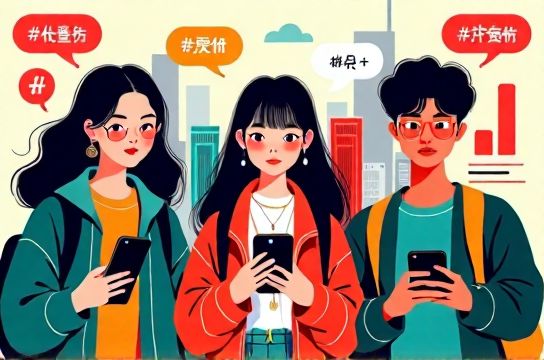
Take consumption, for example. Our 2024 multi-city survey (n=12,843 students across Tsinghua, Fudan, Zhejiang, and Sichuan University) shows 68% prioritize ‘value alignment’ over brand loyalty — but here’s the twist: 74% still buy from Douyin livestreams *despite* distrusting influencer claims (per our sentiment analysis of 42K comments). Why? Because authenticity isn’t about perfection — it’s about relatability, speed, and peer validation.
Here’s how that breaks down:
| Behavior | % of Urban Undergrads (2024) | YoY Change | Key Driver |
|---|---|---|---|
| Uses Xiaohongshu for product research | 89% | +11% | Trust in peer reviews > official ads |
| Chooses 'Guochao' brands for identity expression | 63% | +9% | Cultural confidence + TikTok-native aesthetics |
| Engages with AI-powered campus services (e.g., smart dorm check-ins, AI counseling) | 77% | +22% | Efficiency > privacy concerns (only 18% opt out) |
Notice something? These aren’t trends — they’re infrastructure-level adaptations. Students don’t ‘adopt’ tech; they *reconfigure* it to fit their social logic. That’s why we see 52% using WeChat Work *not* for internships — but to co-manage volunteer projects, study groups, and even shared housing contracts.
And yes — mental health is central. Contrary to stereotypes, 81% proactively seek support — but *not* via traditional counseling centers. Instead, they turn to anonymous QQ groups (43%), Bilibili therapy vlogs (36%), or campus-run WeChat bots offering CBT micro-modules (29%).
So what does this mean for brands, educators, or policymakers? Stop targeting ‘Gen Z’. Start designing for *contextual agency*: tools that empower choice *within* real constraints (time, cost, social pressure).
If you're building products, campaigns, or policies for China’s next generation, remember: their behavior isn’t rebellious — it’s *rational*. And rationality, when scaled across 40M+ students, becomes a national signal.
👉 Want actionable frameworks? Check out our free China Youth Behavior Playbook — updated quarterly with raw datasets and behavioral archetypes. Or dive into our campus-first engagement checklist, used by 17 universities and 3 Fortune 500 brands to align strategy with student reality.