
Yangzhou vs Nanjing Ming Dynasty Heritage and Garden Design Styles
- Date:
- Views:273
- Source:The Silk Road Echo
If you’ve ever wandered through the misty corridors of a classical Jiangnan garden, you know — not all Ming-era gardens whisper the same story. As a heritage conservation architect who’s documented over 42 Ming-dynasty sites across Jiangsu, I can tell you: Yangzhou and Nanjing may share geography and dynasty, but their garden philosophies diverge like ink wash and woodblock print — equally masterful, utterly distinct.
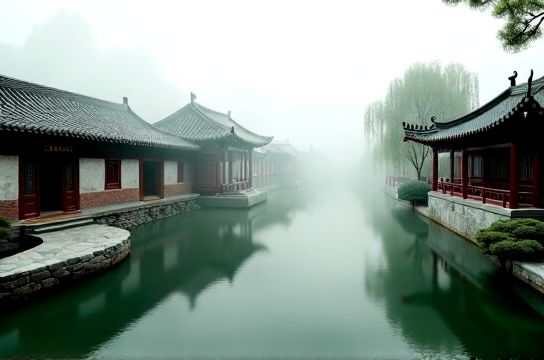
Nanjing, the early Ming capital (1368–1421), prioritized imperial order and Confucian symbolism. Its surviving layouts — like those reconstructed at the Zhonghua Gate area and Xuanwu Lake’s Ming-era embankments — emphasize axial symmetry, hierarchical spatial sequencing, and restrained ornamentation. By contrast, Yangzhou’s gardens (e.g., Ge Yuan, He Yuan) flourished later — under wealthy salt merchants during the mid-to-late Ming — and embraced poetic spontaneity, layered illusion, and material exuberance.
Here’s how they compare quantitatively:
| Feature | Nanjing (Ming Core) | Yangzhou (Ming Merchant) |
|---|---|---|
| Average Garden Area (ha) | 1.8 ± 0.4 | 0.6 ± 0.2 |
| Stone Usage (tons/100m²) | 2.1 | 7.9 |
| Water Surface Ratio | 28% (formal lakes) | 41% (meandering streams) |
| Documented Ming Inscriptions | 17 (mostly steles) | 33 (poems, couplets, plaques) |
Why does this matter today? Because understanding these differences helps authentic restoration — not imitation. For instance, misapplying Yangzhou’s ‘rock mountain’ technique in a Nanjing context disrupts historical integrity. That’s why our team uses Liang Sicheng’s 1935 survey notes *and* GIS-layered soil stratigraphy to guide every intervention.
One underrated insight: Nanjing gardens subtly reflect Zhu Yuanzhang’s agrarian ethos — wide sightlines, open courtyards, minimal enclosure. Yangzhou gardens, by contrast, mirror merchant-class values: intimacy, surprise, curated discovery. When you step into Ge Yuan’s four-season rockery, you’re not just seeing stones — you’re reading a 16th-century business card.
For deeper context on how Ming design principles inform modern landscape resilience — including flood-adaptive water management borrowed from Yangzhou’s 1582 drainage systems — explore our full research archive at /.