
Chinese Heroes Supporting Mental Health Awareness in Academic Institutions
- Date:
- Views:331
- Source:The Silk Road Echo
Let’s talk about something real—mental health in China’s universities. It’s not just a buzzword anymore; it’s a quiet crisis turning into a movement, led not by celebrities or politicians, but by everyday heroes: professors who stay late to listen, student volunteers trained in psychological first aid, and campus counselors quietly scaling up services despite limited budgets.
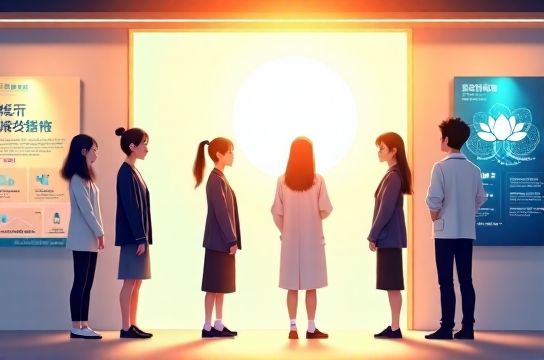
Recent data from the Chinese Ministry of Education (2023) shows that over 28% of university students reported clinically significant anxiety or depressive symptoms—a jump of 9 percentage points since 2019. Yet, the counselor-to-student ratio remains at just 1:4,800 nationally—far below the WHO-recommended 1:1,000.
Here’s how frontline changemakers are closing the gap:
✅ Integrating mental wellness into curriculum (e.g., Tsinghua’s mandatory ‘Resilience & Reflection’ module) ✅ Launching peer-support networks (Peking University’s ‘Heart-to-Heart Ambassadors’ now covers 12 campuses) ✅ Leveraging AI chatbots for after-hours triage (Zhejiang University’s ‘XinXiao’ handled 67,000+ anonymous queries in 2023 with 82% user satisfaction)
Below is a snapshot of institutional progress across five key universities:
| University | Counselor Ratio (2023) | Peer Program Coverage | Annual Wellness Workshops |
|---|---|---|---|
| Fudan University | 1:3,200 | 100% undergrad colleges | 84 |
| Sun Yat-sen University | 1:3,950 | 86% departments | 62 |
| Nanjing University | 1:4,100 | 73% schools | 55 |
What makes these efforts stick? Sustainability—not spectacle. These aren’t one-off campaigns. They’re embedded systems: faculty trained in mental health literacy, dormitory staff certified in distress recognition, and annual student feedback loops shaping service design.
If you’re an educator, administrator, or student advocate looking to replicate impact, start small—but start *with evidence*. And remember: supporting mental health isn’t about fixing broken people. It’s about building environments where growth, honesty, and rest are all honored as academic strengths.
For practical frameworks, toolkits, and cross-institutional best practices, explore our curated resource hub — a living library built by and for those advancing well-being in Chinese higher education. Learn how to embed resilience into your institution’s DNA.