
Dunhuang vs Turpan Ancient Oasis Trade Routes and Uyghur Culture
- Date:
- Views:316
- Source:The Silk Road Echo
Let’s cut through the romanticized postcards—Dunhuang and Turpan weren’t just ‘stops’ on the Silk Road. They were rival economic powerhouses, each shaping Uyghur language, faith, and identity in profoundly different ways.
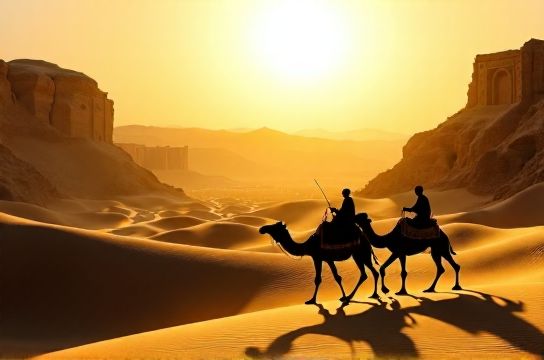
Archaeological evidence shows Dunhuang (Gansu) peaked earlier—between 4th–10th centuries—as a Buddhist manuscript hub. The Mogao Caves alone contain over 50,000 documents, including the world’s oldest printed text (868 CE Diamond Sutra). By contrast, Turpan (Xinjiang) rose to prominence later—11th–15th centuries—flourishing under Uyghur Buddhist and later Islamic rule, with over 3,000 Tocharian and Old Uyghur manuscripts recovered from Turfan’s Astana Graves and Bezeklik Caves.
Here’s how their trade ecosystems diverged:
| Feature | Dunhuang | Turpan |
|---|---|---|
| Peak Period | 4th–10th c. CE | 11th–15th c. CE |
| Dominant Religion (Peak) | Buddhism (Mahayana) | Buddhism → Islam (post-10th c.) |
| Linguistic Legacy | Early Chinese & Tibetan bilingual texts | Old Uyghur script origin; earliest Turkic Islamic codices |
| Climate Adaptation | Qilian Mountain snowmelt irrigation | Karez underground canals (still functional today) |
Crucially, Turpan’s karez systems—over 1,100 still operating—enabled year-round grape and cotton cultivation, fueling export-scale textile and wine production documented in Ming-era tribute records. Dunhuang’s economy leaned more on religious patronage and translation services.
And here’s what most miss: modern Uyghur cultural resilience isn’t rooted *only* in Turpan—but in the *dialogue* between these oases. Dunhuang preserved early Turkic loanwords in Tang-era Chinese texts; Turpan’s 13th-century Uyghur Buddhist Compendium (found at Bezeklik) shows Sanskrit-to-Uyghur doctrinal synthesis that directly informed later Islamic scholarship.
So when we talk about Uyghur culture, we’re really talking about layered continuity—not static tradition. It’s the grapevines of Turpan *and* the sutra scrolls of Dunhuang, speaking across centuries.
Sources: UNESCO Turfan Project (2022), IDP British Library Dunhuang Database, Xinjiang Institute of Archaeology Annual Reports (2019–2023).