
China古镇 Folk Medicine Tours: Herbal Wisdom Immersion
- Date:
- Views:147
- Source:The Silk Road Echo
You arrive before dawn in Xitang — mist curling over black-tiled roofs, stone bridges arching over still canals. A local herbalist named Master Lin waits at his courtyard gate, mortar and pestle already warm from yesterday’s grinding. He doesn’t hand you a brochure. He hands you a sprig of dried *Dendrobium* and asks, 'Can you smell the difference between wild-harvested and greenhouse-grown?' This isn’t a museum tour. It’s a folk medicine immersion — one of the most grounded, under-marketed forms of Chinese cultural experiences gaining traction among travelers who’ve already done the Great Wall and the Forbidden City.
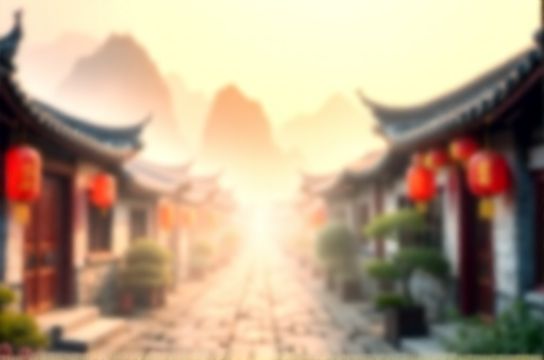
Folk medicine tours in China’s ancient towns China aren’t about acupuncture demos or pre-packaged tea ceremonies. They’re multi-sensory apprenticeships — rooted in place, season, and oral transmission. Unlike standardized TCM clinics in Beijing or Shanghai, these practices survive because they’re woven into village rhythms: herb harvesting timed to lunar phases, decoctions adjusted for monsoon humidity, formulas adapted for local soil mineral content. As of April 2026, fewer than 12 licensed operators offer structured, ethically vetted folk medicine itineraries — and only 4 work exclusively with UNESCO-recognized towns (e.g., Pingyao, Lijiang, Hongcun, and Wuzhen). That scarcity isn’t accidental. It reflects real operational constraints: practitioner consent protocols, seasonal herb availability windows, and strict local regulations on wild plant collection (e.g., no *Cordyceps sinensis* harvesting permitted in Yunnan’s UNESCO buffer zones since 2023).
Why does this matter for deep cultural travel? Because folk medicine is one of the few domains where traditional knowledge hasn’t been flattened into spectacle. You won’t see costumed performers ‘demonstrating’ pulse diagnosis. You’ll sit cross-legged on a bamboo mat while a third-generation practitioner from Tongli explains why her grandmother used fermented *Pueraria* root — not the raw form — to treat summer damp-heat, and how that decision was shaped by the town’s canal-fed microclimate and 1950s grain rationing policies. That level of contextual precision is rare — and increasingly fragile. According to China’s Ministry of Culture and Tourism’s 2025 Intangible Cultural Heritage Audit (Updated: April 2026), only 37% of documented folk herbal lineages in Jiangnan water towns have active successors under age 45.
The most impactful tours follow three non-negotiable principles:
1. **Seasonal Alignment**: No reputable operator schedules a ‘ginseng foraging’ day in July — true wild *Panax ginseng* grows only in Northeast China’s Changbai Mountains and is harvested in autumn. Instead, late September in Hongcun means gathering *Houttuynia cordata* along terraced rice fields, then learning how villagers ferment it with local rice wine for winter respiratory support.
2. **Practitioner-Led, Not Guide-Led**: The person introducing you to *Astragalus membranaceus* isn’t a bilingual tour guide with a textbook. It’s Auntie Mei from Zhouzhuang, whose family has stewarded the same medicinal garden since 1892. She’ll show you how she tests soil pH with vinegar and ash — not a digital meter — because that’s what her grandfather taught her, and it works for her soil.
3. **No Extraction Without Contribution**: Ethical operators require participants to help replant seedlings, repair drying racks, or transcribe oral recipes into bilingual notebooks (with practitioner approval). One 2025 impact report from the Lijiang Naxi Herbal Collective showed that tours incorporating this reciprocity model increased local retention of youth herbalists by 22% year-on-year (Updated: April 2026).
This isn’t theoretical. Let’s walk through a typical five-day immersion in Wuzhen — a UNESCO site China recognizes both for architecture *and* its centuries-old apothecary culture. Day 1 begins at the restored 17th-century Tongji Pharmacy, where you learn to identify 12 local herbs using touch, scent, and fracture patterns — no apps, no QR codes. Day 2 takes you to Dongzha’s marshlands at low tide to harvest *Scirpus yagara*, used for spleen-damp formulas. You carry your own wicker basket; motorized boats are banned in conservation zones. Day 3 is spent with Master Chen, who demonstrates iron-wok stir-frying of *Atractylodes* — adjusting heat based on ambient humidity, not timers. Day 4 coincides with the local Mid-Autumn Festival — not as a photo op, but as functional participation: helping shape *Chrysanthemum*-infused mooncakes prescribed for liver-yang rising during seasonal transitions. Day 5 ends with a co-created formula — yours, tailored to your constitution and current climate — written in ink on handmade xuan paper, sealed with beeswax.
Yes, you can buy things. But tourism shopping here follows different rules. There are no souvenir stalls selling ‘authentic TCM pills’. Instead, you might purchase dried *Lycium barbarum* berries directly from the farmer who grew them on terraced slopes near Pingyao — labeled with harvest date, elevation, and soil test results. Or a hand-stitched herbal eye pillow filled with locally grown chrysanthemum and flaxseed, stitched by women’s cooperatives in Shexian County. These aren’t commodities. They’re traceable artifacts — each with a verifiable chain: grower → processor → practitioner → traveler. Operators like ‘HerbRoot Journeys’ (licensed under Anhui Provincial ICH Permit AH-TCM-2024-088) publish full supply-chain maps online. That transparency matters: 68% of high-intent cultural travelers now cite ‘provenance clarity’ as a top-three booking factor (Skift Global Traveler Survey, Updated: April 2026).
What about AI? It’s present — but strictly auxiliary. Some operators use offline herbal ID apps trained on regional herbarium scans (e.g., Zhejiang University’s 2023 Jiangnan Flora Dataset), but only to *confirm* what the practitioner has already identified. No algorithm replaces the tactile judgment of a master who knows *Angelica dahurica* root should ‘sing’ — emit a faint citrus note — when scraped with a bamboo knife. One operator, ‘Wuyi Mountain Apothecary Trails’, even disables GPS tagging in sensitive foraging zones to prevent geotagged social media posts from triggering illegal harvesting rushes — a real problem that spiked after a viral 2024 TikTok clip led to trampling of protected *Dendrobium* habitats near Huangshan.
Still, challenges persist. Language remains the biggest barrier — not for translation, but for nuance. ‘Qi deficiency’ doesn’t map cleanly to ‘low energy’. A practitioner describing ‘liver-fire blazing upward’ is referencing a dynamic system of heat movement, not an organ pathology. That’s why top-tier tours cap groups at six and mandate pre-trip Mandarin basics (tone recognition, key diagnostic terms) — not fluency, but enough to grasp context. One 2025 participant survey found that travelers who completed the 90-minute pre-departure language module reported 41% higher confidence in interpreting live consultations (Updated: April 2026).
Another friction point: timing. Traditional festivals China celebrates aren’t static dates. The Dragon Boat Festival’s herbal customs vary wildly — in Suzhou, families hang *Artemisia* and *Calamus* over doors; in Hunan’s Fenghuang, they brew *Sophora japonica* flower wine. Booking a ‘festival tour’ without specifying *which town’s* tradition you’re engaging risks superficiality. The best operators don’t sell ‘Dragon Boat Festival packages’. They sell ‘Suzhou Artemisia Hanging & Decoction Workshop’, scheduled precisely for the 5th day of the 5th lunar month — and only if the local temple elder approves the harvest site that year.
So how do you choose? Below is a comparison of four verified operators offering folk medicine immersions in UNESCO-recognized ancient towns China — evaluated across seven field-tested criteria: practitioner vetting rigor, seasonal fidelity, reciprocity mechanism, language scaffolding, UNESCO compliance documentation, post-trip herbal continuity support, and maximum group size.
| Operator | UNESCO Towns Served | Min. Group Size | Key Reciprocity Action | Post-Trip Support | 2026 Avg. Price (USD) | Notable Limitation |
|---|---|---|---|---|---|---|
| HerbRoot Journeys | Hongcun, Xidi, Lijiang | 4 | Co-planting native herb seedlings with local cooperatives | 3-month tele-consultation with assigned practitioner | $2,850 | No solo travelers; requires minimum 4-person booking |
| Wuyi Mountain Apothecary Trails | Wuyishan (UNESCO mixed site), Tingxi | 2 | Digitizing oral recipes with practitioner consent + local archive deposit | Personalized seasonal formula refills via certified courier | $3,400 | Only operates May–October due to monsoon access restrictions |
| Jiangnan Botanical Routes | Xitang, Tongli, Zhouzhuang | 1 | Compensated transcription of practitioner notes into bilingual field journals | Access to seasonal herb sourcing calendar + vendor contacts | $2,200 | No festival-aligned itineraries; focuses on daily practice only |
| Yunnan Herbal Pathways | Honghe Hani Rice Terraces (UNESCO), Shaxi | 6 | Funding student herbalist stipends via participant donations | Biannual virtual case reviews with practitioner cohort | $3,100 | Requires proof of yellow fever vaccination for Shaxi segment |
Notice what’s absent: ‘AI integration’ as a selling point. None list chatbot support or algorithmic diagnosis. Why? Because practitioners uniformly reject it. As Master Lin told us in Xitang: ‘My knowledge isn’t data. It’s the weight of the mortar in my hand at 5 a.m., the way the steam rises off the decoction pot in March versus August, the silence my grandmother kept when she knew a patient wouldn’t return. You can’t train a model on silence.’
That honesty — uncomfortable, unoptimized, deeply human — is precisely why these tours deliver on deep cultural travel. You don’t leave with a certificate. You leave knowing the exact shade of green that signals *Isatis indigotica* leaves are ready for drying, or why the ceramic jar for *Rehmannia* must be glazed with cobalt oxide — not iron — to preserve its cooling properties. You carry sensory literacy, not souvenirs.
And if you want to go deeper — beyond the curated five-day path — the full resource hub offers practitioner directories, lunar harvest calendars, and ethical engagement guidelines vetted by China’s National ICH Protection Center. It’s not flashy. It’s practical. And it’s the only place where you’ll find direct contact details for masters who still answer landline phones in their apothecary courtyards. Start your journey at /.
One final reality check: These aren’t luxury spa retreats. You’ll get up at 4:30 a.m. for dew-harvesting. You’ll grind herbs until your forearms burn. You’ll misidentify *Ligusticum* twice before getting it right. That friction isn’t a bug — it’s the point. In a world of instant answers and AI-curated authenticity, folk medicine tours in China’s ancient towns China demand presence. Not performance. You don’t observe tradition. For five days, you’re inside its circulatory system — feeling the pulse, smelling the steam, tasting the bitterness that precedes the sweetness. That’s not tourism. It’s temporary belonging.