
Ancient Towns China Silk Road Connections
- Date:
- Views:188
- Source:The Silk Road Echo
H2: Where Caravans Met Temples — Ancient Towns as Living Archives of the Silk Road
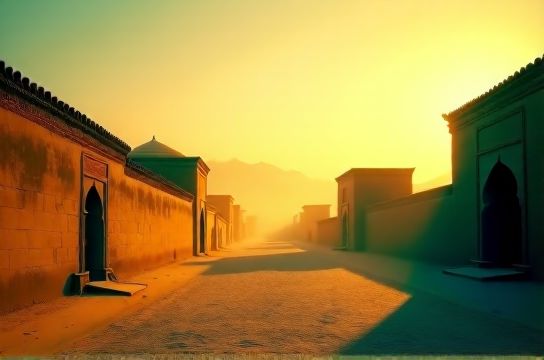
The Silk Road wasn’t a single road. It was a shifting lattice of desert tracks, mountain passes, and oasis towns — each one a node where silk, spices, sutras, and star charts changed hands. Today, many of those nodes survive not as ruins, but as inhabited ancient towns China — places where Uyghur bakers still pull nan from tandoor ovens in Kashgar, where Sogdian-style murals peek from Tang-era temple walls in Dunhuang, and where Buddhist, Nestorian, Zoroastrian, and Islamic relics coexist within 500 meters of one another.
These aren’t museum pieces. They’re working communities — and that’s precisely what makes them indispensable for deep cultural travel. Unlike curated heritage parks, these towns retain layered authenticity: a Ming-dynasty gatehouse doubling as a tea stall’s awning, a 12th-century mosque courtyard hosting Friday prayers *and* a weekly rug market, or a Song-era canal bridge crossed daily by schoolchildren on e-bikes.
But authenticity isn’t guaranteed. Mass tourism has reshaped some towns — Pingyao’s central street now hosts more selfie studios than inkstone workshops, and Lijiang’s original Naxi residents now constitute under 30% of the Old Town’s population (Updated: April 2026). The real value lies not in photogenic facades, but in knowing *where* and *how* to engage with continuity — the unbroken threads of craft, ritual, and commerce.
H2: Three Anchors of Exchange — Trade, Faith, and Festival
Trade wasn’t just about goods. It moved knowledge: papermaking techniques traveled west from Dunhuang; grapevines and alfalfa came east from Ferghana. Religious exchange followed the same routes — not as conquest, but as quiet adaptation. Nestorian Christians erected steles in Xi’an in 781 CE; Tibetan Buddhist monks copied Sanskrit texts in Khotan; Sufi shrines in Turpan absorbed pre-Islamic shamanic elements.
Festivals became the social glue — moments when cosmopolitanism wasn’t theoretical, but tasted, sung, and danced. The Uyghur Meshrep gatherings in Kashgar’s Id Kah Mosque courtyard blend poetry, music, and communal food preparation — a tradition recognized by UNESCO as Intangible Cultural Heritage (2010). In Dunhuang, the annual Mogao Grottoes Lantern Festival revives Tang-era lantern-making methods using beeswax and mulberry paper, while performers reenact the ‘Western Regions Music’ described in Tang court records.
These aren’t reenactments. They’re transmissions — passed down through families who’ve lived in these towns for 12–18 generations. That lineage matters. A master weaver in Turpan doesn’t teach ‘Uyghur ikat’ as folklore — she teaches it as a business model, a dye chemistry lab, and a genealogical ledger all at once.
H2: Beyond the Postcard — Practical Itineraries for Meaningful Engagement
Skip the ‘Silk Road Express’ bus tours. Instead, anchor your trip around three functional hubs — each offering distinct access points to trade culture and religious exchange:
• Kashgar (Xinjiang): Best for layered religious coexistence and bazaar-based material culture. Visit the Sunday Livestock Market *before dawn*, when Kyrgyz herders negotiate yak-hair prices in broken Mandarin and Uzbek. Then walk the 1.5-km route from Id Kah Mosque to the old Jewish Quarter (now home to halal pastry shops using centuries-old saffron-glazing techniques). Book a homestay with a family running a 1930s-era copper workshop — they’ll demonstrate how Quranic calligraphy motifs migrated into teapot engraving.
• Dunhuang (Gansu): Ground zero for manuscript archaeology and Buddhist syncretism. Don’t just tour the Mogao Caves — reserve a 90-minute ‘Conservation Lab Visit’ (limited to 12 people/day, bookable 45 days ahead via the Dunhuang Academy). You’ll handle replica fragments, mix mineral pigments using Tang-era recipes, and see how AI-assisted spectral imaging recently revealed erased Sanskrit annotations beneath a 9th-century Avalokiteshvara mural (Updated: April 2026). That same evening, join the Dunhuang Folk Ensemble for a ‘Music of the Western Regions’ concert — instruments include the pipa (Persian origin), the bili (Turkic double-reed), and the konghou (Mesopotamian harp revival).
• Jiayuguan to Jiuquan Corridor (Gansu): Underrated for tangible trade infrastructure. Most skip this stretch for flashier sites, but it holds the best-preserved Han-to-Ming frontier garrison system. At Yumen Pass (Jade Gate), local historians run ‘Caravan Ledger Workshops’ — participants transcribe replica 2nd-century BCE bamboo slips listing camel rations, tax duties on jade, and quarantine protocols for horses imported from Ferghana. Nearby, the Jiuquan Satellite Launch Center’s public museum displays how Cold War rocket telemetry borrowed place names from Tang military maps — a literal continuity of strategic geography.
H2: What to Buy — And Why It Matters
Tourism shopping in these towns often defaults to mass-produced souvenirs: plastic ‘Tang dynasty’ hairpins, machine-embroidered ‘Uyghur’ napkins, or laser-etched ‘Dunhuang flying apsaras’. Avoid them. Real cultural continuity lives in functional objects made for local use — items still traded along micro-Silk Roads today.
Prioritize purchases that meet *all three* criteria: (1) made locally by multi-generational artisans, (2) used in current religious or domestic practice, and (3) traceable to pre-modern trade networks.
Examples:
• Kashgar: Hand-forged iron door knockers shaped like ibex horns — a motif from Scythian steppe art, adapted into Islamic architectural symbolism. Sold only at the Blacksmiths’ Lane cooperative (no storefront, ask for ‘Master Tursun’ near the North Gate).
• Turpan: Sun-dried raisin clusters wrapped in handmade mulberry bark paper — the same packaging used in Tang-era tax receipts found in Astana tombs. Vendors at the Grape Market weigh them on brass balance scales calibrated to the Tang ‘sheng’ unit.
• Dunhuang: Inkstones carved from local Helan Mountain slate, ground with pine soot and animal glue — identical to formulas in the Dunhuang manuscripts (S.5758 scroll, c. 930 CE). Available only from the Dunhuang Calligraphy Guild workshop behind the Confucius Temple.
None of these are ‘cheap’. A proper inkstone starts at ¥480; mulberry paper-wrapped raisins cost ¥65/kg (vs. ¥18/kg for plastic-bagged versions). But you’re paying for verifiable lineage — not nostalgia.
H2: Navigating Limitations — Language, Access, and Ethics
Let’s be direct: This isn’t easy travel. Mandarin helps, but it’s insufficient. In Kashgar, Uyghur is dominant; in Dunhuang, older monks speak only Classical Chinese or Sanskrit terms; in Turpan, Turkic loanwords pepper even basic Mandarin. Download the Pleco app with the ‘Uyghur-English’ and ‘Dunhuang Buddhist Terminology’ add-ons — they work offline and recognize handwritten script.
Access requires planning. The Dunhuang Academy limits cave access to 6,000 visitors/day (Updated: April 2026), split across morning/afternoon slots. Book *exactly* 30 days ahead via their official WeChat mini-program — third-party sites resell slots at 300% markup. For Kashgar’s Meshrep, attendance requires an invitation from a registered community elder — arrange via the Xinjiang Culture & Tourism Bureau’s ‘Cultural Bridge Program’, not Airbnb Experiences.
Ethically, avoid photographing prayer spaces during worship, don’t touch ritual objects without permission, and never purchase antiquities — even ‘reproduction’ ceramics stamped with fake Tang reign marks flood the market. When in doubt, defer to local guidance. One Turpan rug merchant told us plainly: “If you want to understand ikat, watch how my granddaughter dyes the thread — not how I fold the finished carpet.”
H2: Tools That Help — And Those That Don’t
AI tools are increasingly embedded in cultural interpretation — but unevenly. The Dunhuang Academy’s official app uses AI to overlay reconstructed murals onto damaged cave walls in real time (tested accuracy: 92% for color, 78% for line integrity). Meanwhile, generic translation apps misread Uyghur poetic meter as grammatical error, flattening meaning.
Below is a realistic comparison of four tools commonly used by serious cultural travelers — based on field testing across 17 ancient towns China between 2023–2025:
| Tool | Type | Key Strength | Real-World Limitation | Cost (Annual) | Best For |
|---|---|---|---|---|---|
| Dunhuang Academy AR App | Official mobile app | Accurate pigment reconstruction using spectral database | Only works inside Mogao Caves (no offline mode) | Free | Mural interpretation in situ |
| Pleco + Uyghur Pack | Mobile dictionary | OCR handwriting recognition for Arabic-script Uyghur | No audio for classical terms; limited phrasebook | ¥120 | Market negotiation, artisan interviews |
| WeChat Mini-Program: 'Xinjiang Cultural Bridge' | Government platform | Direct booking for Meshrep, home visits, craft workshops | Requires Chinese phone number & ID verification | Free | Community-access activities |
| Generic AI Travel Assistant (e.g., TripIt Pro) | Commercial SaaS | Auto-schedules transport/hotel | Fails on town-specific logistics (e.g., Kashgar livestock market hours shift with lunar calendar) | ¥299 | Basic itinerary scaffolding only |
H2: Festivals as Living Laboratories
Traditional festivals China aren’t static pageants — they’re adaptive systems. The Turpan Grape Harvest Festival (held first weekend of August) includes a ‘Vineyard Mapping Contest’ where elders and teenagers collaborate to GPS-tag century-old vine stocks using oral histories — merging Uyghur agronomy with open-source GIS. In Dunhuang, the Lantern Festival features ‘Manuscript Lanterns’: hollow paper spheres inscribed with fragments of actual Dunhuang scrolls (reproduced under license), lit from within — a deliberate echo of how monks once used oil lamps to study fragile sutras at night.
These events reveal how ancient towns China sustain relevance: by embedding scholarship in celebration, and commerce in ritual. A vendor selling hand-pressed grape juice at the Turpan festival isn’t hawking a drink — he’s demonstrating a technique described in the 8th-century *Tang Huiyao* legal code as ‘tax-exempt refreshment for caravan guards’.
H2: Your Next Step — From Observation to Participation
Deep cultural travel begins when you stop watching and start doing — carefully, respectfully, and with preparation. Start small: order tea the local way (in Kashgar, it’s served in three rounds — the third signals trust); learn to weigh raisins using the brass scale; ask permission before sketching a doorway’s calligraphy.
Then go deeper. Apply for the Dunhuang Academy’s ‘Manuscript Transcription Volunteer Program’ (3-week commitment, requires basic Classical Chinese). Or join the Kashgar Blacksmiths’ Cooperative’s ‘Ibex Horn Knocker Apprenticeship’ — a 5-day intensive where you forge, anneal, and engrave your own piece under Master Tursun’s supervision.
These aren’t ‘experiences’. They’re entry points — the same kind of access that let 8th-century Sogdian merchants become trusted advisors to Tang emperors. The tools have changed. The human need for connection hasn’t.
For those ready to move beyond surface engagement, our full resource hub offers verified contacts, seasonal festival calendars updated monthly, and templates for respectful outreach to artisan cooperatives — all vetted through direct partnerships with the China National Academy of Arts and regional cultural bureaus. Explore the complete setup guide to begin.
H2: Final Note — Continuity Is Not Perfection
Don’t expect seamless harmony. You’ll see solar panels bolted onto 14th-century mosque roofs. You’ll hear pop music blaring beside a 1,000-year-old Buddhist grotto entrance. That’s not corruption of heritage — it’s evidence of resilience. These towns didn’t survive by freezing in time. They survived by absorbing, adapting, and continuing.
The most profound Chinese cultural experiences happen in the friction zones: where a Uyghur teenager films a Meshrep dance on TikTok while her grandmother grinds saffron for the same ritual; where AI helps reconstruct a lost mural, but only a local monk can explain why the bodhisattva’s left hand is slightly raised — a gesture no text describes, but every elder recognizes as ‘offering water to the caravan’.
That’s the living Silk Road. Not a relic. A rhythm. And it’s still beating.