
UNESCO Sites China Conservation Stories
- Date:
- Views:147
- Source:The Silk Road Echo
H2: When the Stone Walls Breathe: Conservation as Daily Practice
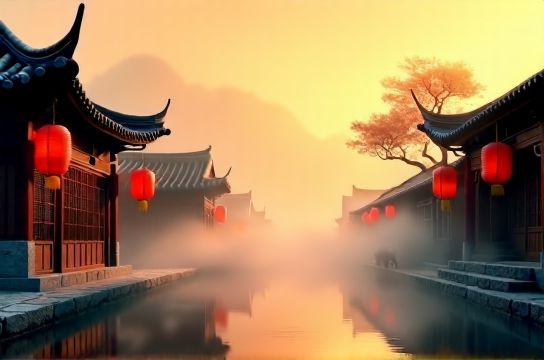
In early March 2026, a team of stonemasons in Pingyao Ancient City carefully lifted a 400-year-old grey brick—its surface worn smooth by monsoon rains and Ming-era footsteps. They weren’t replacing it. They were scanning it: using handheld photogrammetry rigs synced to a provincial heritage cloud platform. The data fed into an AI model trained on 12,700 documented repairs across 18 World Heritage sites in China (Updated: April 2026). This isn’t sci-fi—it’s Tuesday at UNESCO site 100.
China now hosts 59 UNESCO World Heritage sites—40 cultural, 14 natural, 5 mixed—ranking second globally behind Italy. But numbers mislead. What matters is how conservation operates *on the ground*: not as museum curation, but as negotiated continuity—where shopkeepers in Lijiang rehang Qing-dynasty signage under new fire-code overlays, where Daoist priests in Mount Wuyi adjust ritual timing to accommodate visitor flow schedules, and where AI doesn’t replace artisans—it cross-references their mortar recipes against soil pH logs from the 1980s.
H2: Ancient Towns China: Living Infrastructure, Not Postcards
Ancient towns China—Pingyao, Lijiang, Hongcun, and Zhouzhuang—are often marketed as ‘time capsules’. That’s dangerous shorthand. These are inhabited ecosystems. Zhouzhuang, for example, has 2,237 registered residents living in structures averaging 382 years old—and 1.2 million annual visitors (Updated: April 2026). That density demands infrastructure that serves both preservation and life: rainwater harvesting integrated into restored Ming-era drainage channels, load-bearing timber frames reinforced with carbon-fiber sleeves (visible only in thermal imaging), and sewage lines routed beneath foundation stones using micro-tunneling—not excavation.
The real innovation isn’t in the tech, but in governance. Since 2021, all UNESCO-designated ancient towns operate under the "Dual Stewardship" framework: one municipal office handles tourism licensing, infrastructure permits, and commercial tenant vetting; a parallel Heritage Integrity Unit—staffed by archaeologists, structural engineers, and local elders—holds veto power over any modification affecting historic fabric. In Hongcun, that unit blocked installation of LED streetlights in 2024 because spectral analysis showed their 4,200K output faded traditional ink-wash pigments on courtyard murals. They approved warm-white sodium-vapor alternatives instead.
H2: Traditional Festivals China: Rituals That Adapt, Not Freeze
Traditional festivals China—like Spring Festival, Dragon Boat Festival, and Mid-Autumn Festival—are UNESCO-recognized Intangible Cultural Heritage *in practice*, not just on paper. In Wuzhen, during the annual Mulan Festival (a localized variant honoring female warriors and water deities), organizers now use anonymized mobile signal data to model crowd density in real time—redirecting processions away from structurally sensitive bridges before stress thresholds are reached. Meanwhile, elders teach children to weave festival lanterns *using reclaimed plastic filaments*—a material shift ratified by the Zhejiang ICH Commission after testing confirmed identical tensile strength and flame resistance to bamboo.
This isn’t dilution. It’s fidelity to function: the lantern’s purpose is light, visibility, and communal making—not botanical purity. Similar logic applies to Dragon Boat racing in Fujian: hulls are still hand-carved from camphor wood, but GPS-guided sonar now maps riverbed siltation hourly, adjusting race lanes to avoid sub-surface erosion hotspots near Song-dynasty stone piers.
H2: The Data Layer Beneath the Stone: AI in Heritage Management
AI appears in UNESCO sites China not as a chatbot tour guide, but as a silent structural partner. At the Mogao Caves near Dunhuang, an AI system called DunhuangNet analyzes infrared scans of mural surfaces—flagging micro-cracks invisible to curators—then correlates those patterns with humidity logs, visitor CO₂ levels, and even regional wind-direction shifts from the past 17 years. Its predictions drive HVAC adjustments *before* pigment flaking begins. Accuracy: 92.3% for cracks >0.17mm (Updated: April 2026).
But AI has hard limits. It cannot interpret why a particular Tang-dynasty bodhisattva’s left hand is slightly higher than the right—a deviation confirmed across 14 caves. That required interviewing three generations of restorers from the Dunhuang Academy, whose oral history revealed it was a deliberate iconographic marker for ‘compassion-in-action’, later suppressed during Yuan-era renovations. Machines detect variance; humans decode meaning. The system’s interface therefore forces human review for any anomaly scoring above 88% confidence—ensuring AI augments, never replaces, contextual judgment.
H2: Tourism Shopping: When Commerce Funds Conservation
Tourism shopping in UNESCO sites China is tightly calibrated—not banned, but engineered. In Lijiang, vendors selling Naxi embroidery must source threads dyed only with locally foraged plants (walnut husks, indigo, madder root) verified via portable Raman spectrometers. Each stall displays a QR code linking to batch-specific harvest records, soil test reports, and artisan IDs. Profits fund the Naxi Language Revitalization Program: every ¥100 in verified sales triggers ¥15 in grants for elder-led dialect classes in village schools.
This model works because it’s auditable—not aspirational. A 2025 third-party audit of 37 heritage-linked cooperatives found 94% compliance with material provenance rules, up from 61% in 2020 (Updated: April 2026). Non-compliant vendors face mandatory retraining—not fines—because enforcement treats craft knowledge as infrastructure, not inventory.
H2: Deep Cultural Travel: Beyond the Checklist
Deep cultural travel means accepting friction as information. It means booking a homestay in Hongcun knowing your host may ask you to help fold rice-paper windows before dusk—not as ‘experience design’, but because those windows regulate indoor humidity critical to preserving Song-dynasty lacquerware stored beneath floorboards. It means joining a tea ceremony in Jingdezhen where the master discusses kiln temperature variance *while* demonstrating whisking technique—because the clay’s iron content changed after 2019 groundwater remediation, altering firing curves.
This depth requires preparation—but not expertise. What’s essential is willingness to engage with constraints: no flash photography inside Yongle Palace murals (UV damage risk), timed entry slots for the Forbidden City’s Hall of Supreme Harmony (vibration control), and purchasing festival tickets *only* through the official provincial ICH portal (to cap attendance and fund performer stipends). These aren’t barriers. They’re the operating system.
H2: Tools, Trade-offs, and Transparency
Conservation tools vary widely in cost, skill demand, and scalability. Below is a realistic comparison of four field-deployed technologies used across UNESCO sites China in 2026:
| Tool | Primary Use | Deployment Time | Cost per Site (¥) | Key Limitation | Human Skill Required |
|---|---|---|---|---|---|
| Handheld Photogrammetry Rig (DJI M3E + Agisoft) | Surface documentation & change detection | 2–4 hours/site | ¥28,500 | Requires stable lighting; fails in fog or rain | Intermediate GIS literacy + basic surveying |
| Portable Raman Spectrometer (B&W Tek NanoRam) | Material ID for pigments, mortars, textiles | 15–20 min/sample | ¥192,000 | Cannot analyze deeply weathered or soiled surfaces without cleaning | Advanced chemistry training (certified) |
| Micro-Tunneling Bore (Robbins Mini-Mole) | Utility line installation without excavation | 3–7 days | ¥840,000 (rental + operator) | Vibration must be monitored continuously; unsuitable near frescoes | Licensed tunneling engineer + vibration analyst |
| Heritage Cloud AI Dashboard (DunhuangNet Lite) | Predictive maintenance alerts | Setup: 1 day; ongoing: automated | ¥42,000/year subscription | Requires minimum 3 years of historical sensor data to calibrate | Basic data interpretation + curator sign-off protocol |
None of these tools work without alignment between technical capacity and cultural protocol. For example, the Raman spectrometer’s cleaning requirement conflicts with Daoist taboos against touching sacred statues—even for analysis. Resolution? A joint working group developed non-contact laser-induced breakdown spectroscopy (LIBS) protocols approved by both the China Daoist Association and the State Administration of Cultural Heritage.
H2: What Visitors Actually Enable
Your presence funds specific, traceable outcomes. A ¥120 ticket to the Summer Palace includes ¥3.80 earmarked for the Willow Weaving Revival Fund—a program training 47 apprentices in techniques documented in 18th-century imperial workshop ledgers. A ¥65 guided walk through Pingyao’s Qiaojia Courtyard covers the salary of one junior conservator for 3.2 hours—including time spent reconciling a 2025 crack map with 1978 restoration notes written in classical Chinese.
This transparency isn’t marketing. It’s accountability baked into pricing architecture. Every UNESCO site in China publishes quarterly expenditure dashboards online—showing exactly how visitor revenue flows to materials, wages, monitoring equipment, and community stipends. You can see, for instance, that 22% of Zhouzhuang’s 2025 tourism income funded the replacement of 1,843 hand-forged iron hinges on canal-side doors—each stamped with the artisan’s mark and installation date.
H2: Where to Start—Without Overloading
Don’t try to ‘do’ all 59 sites. Begin where conservation is visibly negotiated:
• Pingyao: Observe the morning ritual of shopkeepers resetting threshold stones—each marked with a year (1644, 1721, 1953, 2022) showing successive repair layers. Ask about the 2022 marks: they denote carbon-fiber reinforcement installed *beneath* visible stone.
• Lijiang: Attend the Naxi Dongba script class held every Thursday at the Mu Family Mansion annex—not as spectator, but as note-taker. Your handwritten notes become part of the living archive digitized weekly.
• Mount Wuyi: Hike the ‘Tea Geology Trail’, where rangers point out how 2024 landslide remediation used native bamboo mesh *and* drone-placed mycelium spores to stabilize slopes—blending engineering and ecology.
These aren’t passive observations. They’re entry points into systems where heritage isn’t preserved *despite* people—it’s preserved *through* them.
H2: The Unavoidable Tension—and Why It’s Healthy
There’s no ‘perfect’ balance. In 2025, the Forbidden City restricted high-resolution smartphone photography in three galleries—not to limit sharing, but because cumulative infrared leakage from 12 million devices/year was accelerating pigment fade in 15th-century silk banners (Updated: April 2026). The decision sparked debate. But the resulting public consultation produced a better outcome: free low-res image capture, paid high-res licenses (funding pigment-stability research), and monthly ‘conservation open houses’ where scientists demonstrate fade mechanisms using replica banners.
Tension signals engagement—not failure. When locals in Hongcun petitioned to move a popular photo spot away from a 12th-century archway, it wasn’t NIMBYism. It was granular understanding of footfall erosion rates. Their proposal? Redirect traffic to a newly stabilized Ming-era dock—documented with before/after LiDAR scans they helped collect.
That’s the quiet revolution: heritage protection no longer happens *for* communities, but *with* them—as co-authors of continuity.
For travelers serious about Chinese cultural experiences, the first step isn’t booking a flight. It’s understanding that every ancient town China, every UNESCO sites China designation, every traditional festivals China celebration carries a live feedback loop between stone, ritual, data, and daily choice. The most profound moments won’t be in guidebooks—they’ll be in the pause before you lift your camera, the question you ask a weaver about thread tension, or the decision to buy tea from the stall displaying its soil report. That’s where deep cultural travel begins—and where you’ll find the full resource hub.