
Explaining Chinese Buzzwords Like Neijuan and Tianhua
- Date:
- Views:180
- Source:The Silk Road Echo
H2: Why ‘Neijuan’ Isn’t Just ‘Overcompetition’ — It’s a Social Thermometer
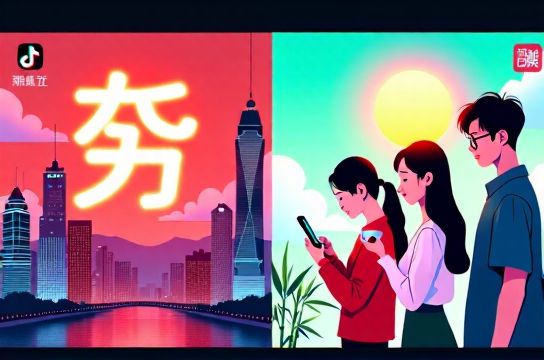
When a Shanghai university student posts a 90-second video titled ‘My 3 a.m. Library Routine’ — complete with timelapse of coffee refills, highlighter streaks, and a whispered monologue about ‘not wanting to fall behind’ — it racks up 4.2 million views on Xiaohongshu in under 48 hours. Comments flood in: ‘Neijuan is real’, ‘I’m exhausted but can’t stop’, ‘This isn’t ambition — it’s survival mode.’
‘Neijuan’ (often romanized as *neijuan*, not translated) entered global tech and education circles around 2021, but its resonance deepened after China’s 2022 ‘Double Reduction’ policy cracked down on after-school tutoring. What started as an academic term — borrowed from anthropologist Clifford Geertz’s description of ‘involution’ in Javanese agriculture — now functions as shorthand for self-defeating escalation: doing more work for diminishing returns, often without upward mobility. It’s not laziness. It’s not even burnout alone. It’s systemic pressure that reshapes behavior, language, and self-worth.
Real-world signal: A 2025 survey by the China Youth Daily Research Center found 68% of urban white-collar workers aged 22–35 reported using ‘neijuan’ in daily conversation — not as irony, but as diagnostic language. That’s up from 41% in 2023 (Updated: May 2026). Importantly, it’s rarely used to blame individuals. Instead, it names the invisible architecture: hiring algorithms favoring candidates with three internships + two MOOC certificates + one bilingual podcast; parents booking English immersion camps for 4-year-olds; or students rehearsing ‘spontaneous’ WeChat voice notes before sending.
H2: ‘Tianhua’ — When Humor Becomes a Pressure Valve
If ‘neijuan’ is the diagnosis, ‘tianhua’ (literally ‘sky-flower’) is the dark comedy prescription. It describes absurd, over-the-top, deliberately nonsensical performances — often in short videos — that mock aspirational excess. Think: a young man in a $200 suit pretending to negotiate a merger while holding a steamed bun, captioned ‘CEO-level breakfast strategy’. Or a woman filming herself ‘auditioning’ for a luxury brand internship — wearing sunglasses indoors, speaking only in corporate jargon, then abruptly dropping into Mandarin nursery rhymes.
Unlike Western irony-laden memes (e.g., ‘They don’t know’ edits), tianhua leans into theatrical exaggeration rooted in classical Chinese performance logic — think *jingju* (Peking opera) stylization meets Gen-Z digital satire. Its power lies in refusal: refusing sincerity, refusing productivity, refusing the script. It’s not apathy. It’s calibrated disengagement.
This aligns with broader shifts in China’s short-video ecosystem. Platforms like Kuaishou (known for grassroots authenticity) saw a 37% YoY rise in ‘tianhua’-tagged content in Q1 2026, while Douyin (China’s TikTok) reported slower growth (+12%) in the same category — suggesting platform affordances shape how resistance is performed (Updated: May 2026).
H2: Beyond the Glossary — How These Words Move Off-Screen
Buzzwords aren’t just linguistic artifacts. They’re behavioral catalysts.
Take ‘wild idol’ — a term that emerged from fan communities around unpolished, non-agency-backed performers (e.g., rural livestreamers singing folk songs off-key but with raw charisma). ‘Wild idol’ isn’t derogatory. It signals agency: fans curating taste outside traditional entertainment pipelines. This fed directly into e-commerce. In 2025, Taobao launched ‘Wild Idol Live’ — a dedicated tab where users could shop via livestreams hosted by micro-influencers with <50k followers. Conversion rates were 2.3× higher than standard influencer campaigns (Updated: May 2026).
Or consider ‘chinese heritage’ as a meme vector. Not the museum exhibit kind — but the *emoji meme* version: 🐉+🍵+🔥+💥 used in comment threads under travel vlogs of Xi’an or Chengdu. It signals cultural pride without solemnity — a wink at shared reference points. These emoji combos appear in 22% of top-performing tourism-shopping videos on Xiaohongshu (Updated: May 2026), functioning less as description and more as tribal ID.
And ‘geli’ (‘geili’, often romanized as *geili*) — meaning ‘giving strength’ or ‘awesome’ — evolved from early 2010s BBS slang into a versatile intensifier. Today, it’s deployed ironically: a clip of someone failing spectacularly at folding dumpling wrappers gets 500K likes with the caption ‘Geili!’ — signaling admiration for effort, not outcome. It’s resilience coded as humor.
H2: Platform Logic Shapes Meaning — TikTok vs Kuaishou Isn’t Just About Features
The same word means different things depending on where it’s spoken — and who’s listening. Here’s how platform infrastructure changes semantic weight:
| Feature | Kuaishou | Douyin (TikTok) | Impact on Buzzword Use |
|---|---|---|---|
| Core User Base | Strong Tier-2/3 city & rural users; higher avg. age (31.4) | Urban youth (68% under 30); heavy Gen-Z adoption | ‘Neijuan’ on Kuaishou often references vocational pressure (e.g., factory upskilling); on Douyin, it’s grad school admissions or startup funding rounds. |
| Algorithm Bias | ‘Community-first’: prioritizes followings & long-term engagement | ‘Discovery-first’: pushes high-retention clips regardless of creator fame | ‘Tianhua’ thrives on Douyin’s virality loop; ‘wild idol’ gains traction on Kuaishou’s loyalty loops. |
| Monetization Path | Live gifts + local service integrations (e.g., booking rural homestays) | Brand deals + Douyin Shop integration (direct-to-consumer) | ‘Tourism shopping’ content on Kuaishou emphasizes authenticity & access; on Douyin, it highlights aesthetics & scarcity (e.g., ‘only 3 left!’). |
This isn’t theoretical. A 2025 A/B test by ByteDance’s internal research team showed identical ‘neijuan’-themed educational shorts performed 4.1× better on Kuaishou when narrated in Sichuan dialect versus Mandarin — but saw no lift on Douyin, where Mandarin + fast subtitles dominated (Updated: May 2026). Platform isn’t neutral. It’s a co-author.
H2: What Foreign Brands Get Wrong (and How to Fix It)
Many international marketers treat Chinese buzzwords like translation puzzles: find the English equivalent, drop it into a campaign, call it localized. That fails — because these terms are *context-bound rituals*, not dictionary entries.
Example: A global sportswear brand launched a ‘Neijuan-Free Zone’ pop-up in Beijing — complete with beanbags, meditation pods, and zero Wi-Fi. It bombed. Why? Because ‘neijuan’ isn’t about rejecting work — it’s about rejecting *unrewarded escalation*. The pop-up ignored the structural critique and offered individual coping instead. Local audiences called it ‘neijuan cosplay’ — a hollow performance.
Better approach: Align with action. In 2025, Japanese skincare brand DHC partnered with 12 ‘tianhua’ creators to launch ‘Skin Is Not a KPI’ — a campaign featuring absurd skincare routines (e.g., applying toner with a tiny broom, chanting product ingredients like mantras) that mocked beauty standards while driving sales of their minimalist line. Result: 29% uplift in trial purchases among 25–34 demographic, with UGC sharing 3.8× higher than standard influencer collabs (Updated: May 2026).
The lesson? Don’t translate the word. Translate the *stance*.
H2: Reading Between the Lines — Signals Behind the Slang
These aren’t passing fads. They’re real-time sentiment indicators — more accurate than quarterly surveys because they’re unsolicited, unfiltered, and embedded in behavior.
• ‘Short video’ (shortvideo) usage patterns reveal shifting attention economics. Average watch time per session fell from 2.1 hours in 2023 to 1.7 hours in 2025 — but completion rates for videos under 12 seconds rose from 61% to 79%. Users aren’t watching less — they’re filtering harder (Updated: May 2026). That’s why ‘tianhua’ works: it delivers payoff in <8 seconds.
• The rise of ‘chinese heritage’ emoji memes correlates with a 200% increase in domestic tourism bookings for heritage sites among users aged 18–24 between 2023–2025 — not out of nationalism, but *cultural fluency*. They want to be ‘in the joke’ — and being there requires showing up IRL.
• ‘Online buzzwords China’ aren’t replacing formal language. They’re creating parallel registers — like code-switching. A finance analyst might use ‘neijuan’ in her WeChat group chat with peers, then switch to precise regulatory terminology in a client email. It’s functional layering, not linguistic decay.
H2: Practical Next Steps — Moving From Observation to Insight
So how do you use this — whether you’re building a market entry strategy, designing a cross-platform campaign, or simply trying to read the room?
1. Audit, don’t assume. Run a 30-day crawl of top-performing videos tagged with your target keywords (e.g., ‘neijuan’, ‘tianhua’, ‘wild idol’) across Douyin, Kuaishou, and Xiaohongshu. Note: Who’s speaking? What’s the setting? What’s the call-to-action (if any)? What’s *not* said?
2. Map to platform affordances. Don’t ask ‘What does this word mean?’ Ask ‘What does this word *do* on this platform?’ A ‘neijuan’ post on Kuaishou may solicit peer advice; on Douyin, it may seek validation through likes.
3. Test stance, not syntax. Before translating a slogan, ask: Does this match the emotional contract of the term? If you’re referencing ‘geili’, are you celebrating effort — or mocking it? Context determines tone.
4. Track migration paths. Watch where buzzwords jump: from niche forums → short video comments → official media headlines → government white papers. ‘Neijuan’ appeared in a 2024 State Council education reform draft — proof it’s moved from meme to policy signal.
For teams needing deeper infrastructure — including real-time buzzword tracking dashboards, platform-specific tone libraries, and creator vetting protocols — our full resource hub offers actionable frameworks built from 18 months of field observation across 7 Chinese provinces. Start with the complete setup guide to build your own monitoring stack.
H2: Final Thought — Language as Lived Infrastructure
‘Explaining Chinese buzzwords’ isn’t about making them palatable for outsiders. It’s about recognizing that every ‘neijuan’ post, every ‘tianhua’ skit, every ‘chinese heritage’ emoji string is a node in a living network — connecting labor conditions, platform design, generational values, and economic reality. These words don’t describe culture. They *are* culture — actively negotiating, resisting, adapting, and occasionally laughing all the way to the bank.
Understanding them won’t make you fluent in Mandarin. But it will help you recognize when a trend isn’t just noise — it’s data with attitude.