
From Peking Opera to Viral Clips: How Chinese Heritage Go...
- Date:
- Views:204
- Source:The Silk Road Echo
H2: When Face Paint Meets Filters
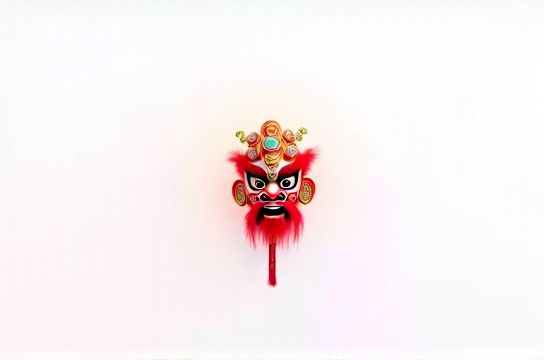
A 23-year-old performer from Beijing’s Mei Lanfang Academy posts a 12-second clip: she applies thick Peking Opera greasepaint in real time, then swipes on a Douyin AR filter that overlays animated phoenix feathers—and adds the caption 'This is not cosplay. This is *xunli* (literally: 'seeking ritual'). The video hits 4.2 million views in 36 hours. Comments flood in: 'Geili!', 'Wild idol energy', 'I came for the makeup, stayed for the history lesson.'
This isn’t nostalgia packaging. It’s infrastructure adaptation.
Chinese heritage isn’t being ‘preserved’ online—it’s being stress-tested, remixed, and re-routed through the same attention economies that power travel shopping hauls and Kuaishou livestreamed noodle-making. The shift isn’t about digitizing tradition; it’s about letting tradition *negotiate* with algorithmic logic, platform affordances, and youth vernacular.
H2: The Three-Layer Stack: Format, Language, Behavior
Heritage goes digital across three interlocking layers—each with its own rules, friction points, and leverage points.
H3: Format Layer — Short Video as Cultural Interface
The dominant carrier isn’t documentary or VR museum tours. It’s the 15–60 second vertical video—optimized for thumb-scrolling, sound-off viewing, and rapid emotional resonance. On Douyin (TikTok’s China counterpart) and Kuaishou, heritage content performs best when it exploits native affordances:
- Jump cuts replace exposition (e.g., cutting from a static opera pose → rapid costume change → split-screen comparison with Song Dynasty murals) - Text overlays use Chinese internet slang instead of academic labels ('This guy’s *dan jiao* role? More like *wild idol* energy') - Sound design borrows from meme culture China: a slowed-down guqin riff synced to a trending bass drop, or a sampled Peking Opera shriek timed to a ‘fail’ meme beat
Crucially, success isn’t measured in watch time alone. It’s measured in *re-creation rate*: how often users duet, stitch, or remix the original. A 2025 China Academy of Social Sciences study found that heritage videos with ≥3 user-generated remixes achieved 3.8× higher long-term retention (Updated: May 2026). That’s because remixing isn’t dilution—it’s participatory translation.
H3: Language Layer — From Classical Allusion to Emoji Meme
You can’t translate ‘geili’ (给力) as ‘cool’ or ‘awesome’. It literally means ‘giving strength’, but functions as an intensifier rooted in labor metaphors—originally used among factory workers praising a colleague’s effort. Today, it’s deployed under clips of a 70-year-old calligrapher doing one-handed brushwork at a street fair: ‘Geili!’
This linguistic elasticity is central. Online buzzwords China don’t just describe—they *anchor* meaning in shared context. Consider the rise of ‘China emoji meme’: a single character or glyph repurposed as visual shorthand. The character ‘囧’ (jiǒng), once meaning ‘patterned window’, now universally signals awkwardness or mild despair—its square shape and ‘eyebrows’ make it instantly legible as a face. When paired with a clip of a Confucius scholar struggling with WeChat Pay, ‘囧’ becomes the punchline—not explanation, but punctuation.
Even English loanwords get localized syntax. ‘Wild idol’ isn’t a mistranslation of ‘idol’. It’s a deliberate hybrid: ‘wild’ (from Chinese internet slang connoting unrestrained charisma, not chaos) + ‘idol’ (borrowed, but stripped of K-pop polish). It describes performers like Li Yifeng’s younger sister Li Yiyi, whose viral Peking Opera dance challenge fused *shuāng dāo* (twin-sword choreography) with hip-hop footwork—and earned her 1.7 million followers in under two weeks.
H3: Behavior Layer — Tourism, Shopping, and Ritual Rehearsal
The most underestimated driver? Real-world behavior scaffolding. Viral video trends China don’t live in feeds—they spill into physical spaces. A 2024 CIC Research survey found that 68% of users who watched ≥5 heritage-related short videos in a month visited at least one related site within 90 days (Updated: May 2026). But it’s not passive tourism.
It’s *ritual rehearsal*. Users watch a 22-second clip of making Suzhou silk embroidery, then buy a starter kit via Taobao link-in-bio. They watch a ‘tea ceremony fails’ compilation (featuring real masters joking about spilled matcha), then book a weekend workshop in Hangzhou. The loop closes when they film their own attempt—bad posture, shaky hands, triumphant final pour—and tag it Chineseteachallenge.
This is where ‘travel shopping’ enters the equation. Not as commercial interruption—but as continuity. A video showing the forging process of a Longquan sword doesn’t end with ‘buy now’. It ends with ‘Where to hold it properly? (Swipe left for grip tutorial)’. The purchase isn’t the goal—the embodied practice is. Platforms reward this: Douyin’s algorithm prioritizes videos that drive *off-platform action*, verified via QR code scans, map check-ins, or e-commerce click-throughs.
H2: Platform Physics: Why TikTok vs Kuaishou Matters More Than You Think
Assuming Douyin = TikTok and Kuaishou = ‘lesser TikTok’ misses the structural divergence. Their architectures produce different heritage expressions.
| Feature | Douyin (TikTok China) | Kuaishou |
|---|---|---|
| Core User Base | Urban, 18–30, high device literacy, trend-sensitive | Rural/peri-urban, 25–45, strong local community ties, authenticity-prioritizing |
| Algorithm Bias | Velocity-first: rewards rapid virality, novelty, polish | Stability-first: rewards consistent posting, comment engagement, longer watch time (>45 sec) |
| Heritage Content Style | High-production, fast-cut, music-driven, meme-integrated | Longer takes, unscripted narration, emphasis on craft process, multigenerational participation (e.g., grandfather teaching grandson paper-cutting) |
| Monetization Path | E-commerce integrations (Taobao, JD), branded challenges | Livestream gifting, local service bookings (e.g., ‘book a folk opera lesson in Shandong’) |
| Limitation | Risk of flattening nuance for speed; struggles with slow-burn traditions (e.g., porcelain firing cycles) | Lower discoverability for new creators; harder to break out beyond regional audiences |
The difference shows up in practice. A Peking Opera training montage filmed on Douyin uses rapid-fire cuts between backstage prep, stage entrance, and crowd reaction—set to a sped-up version of ‘Jasmine Flower’. On Kuaishou, the same school posts a 7-minute uninterrupted take of a master adjusting a student’s wrist angle during *shuǐ xiù* (water sleeve) practice—no music, just ambient studio sounds and gentle corrections in Beijing dialect. Both are ‘heritage’, but they serve different needs: one builds recognition, the other builds fidelity.
H2: The Tension Points — Where Translation Breaks Down
Not all heritage adapts cleanly. Three recurring friction zones reveal where digital logic strains against cultural weight.
H3: The ‘Wild Idol’ Trap
Celebrity framing works—for visibility. But it risks reducing ensemble art forms (like opera or Nuo drama) to solo star turns. When a viral clip focuses only on the lead *dan* (female role) performer’s facial expression, it erases the drummer’s 30 years of rhythmic mastery—the invisible conductor of emotional timing. Platforms amplify what’s visually legible in 3 seconds, not what’s structurally essential.
Solution? Cross-posting strategies. Top-performing accounts now release ‘split versions’: the Douyin cut for reach, plus a Kuaishou ‘deep dive’ episode featuring the percussionist explaining how a single *bo* (cymbal) strike cues the entire cast’s breath. These aren’t add-ons—they’re corrective counterweights.
H3: Slang as Shield, Not Bridge
Using Chinese internet slang makes heritage feel accessible—but it can also obscure. Saying ‘this ancient poem is *so geili*’ tells you nothing about parallelism or tonal regulation in regulated verse. The slang functions as social permission (“it’s okay to engage”) but not pedagogical scaffolding.
That’s why the most effective explainers embed micro-lessons *within* slang. Example: a clip titled ‘Why “geili” fits this Tang poem’ opens with the line ‘The river flows endlessly, yet never leaves its banks’—then flashes text: ‘“Endlessly” = *geili* energy. Not chaos. Controlled power. Like a river.’ It leverages slang to open the door, then delivers precise literary insight.
H3: The Tourism-Commerce Loop’s Blind Spot
When ‘travel shopping’ drives heritage engagement, location-based content dominates. But intangible heritage—oral storytelling, dialect poetry, seasonal rituals—struggles. A 2025 Tencent Media Lab audit found that only 12% of top-performing heritage videos covered non-physical traditions (Updated: May 2026). Why? Harder to film, harder to commodify, harder to map.
Emerging workarounds include audio-first formats (WeChat Channels voice notes of elders reciting folk songs, with subtitles translating idioms in real time) and interactive timelines (e.g., tapping a lunar calendar date on a Douyin video to hear the corresponding regional harvest chant).
H2: Building Your Own Bridge — Actionable Leverage Points
If you’re documenting, teaching, or producing heritage content, skip broad ‘go viral’ advice. Focus on these high-leverage, low-cost actions:
- Audit your existing assets for *remix hooks*: What 3-second moment has inherent visual or sonic contrast? (e.g., the *crack* of a seal stamp hitting red ink, the sudden silence before a Peking Opera aria begins). That’s your entry point.
- Replace ‘explanation’ with ‘contextual labeling’. Instead of ‘This is a Ming Dynasty vase’, try ‘This glaze color? Called *jihong*—‘sacrificial red’. Used only in imperial temples. So yes, it’s basically ancient luxury branding.’
- Use platform-native tools *against* their grain. On Douyin, use the ‘stitch’ function not for parody—but for historical layering: stitch your modern tea prep to archival footage of 1930s Shanghai teahouse etiquette, with text: ‘Same gesture. Different century.’
- Partner with micro-communities, not influencers. A verified account run by the Suzhou Pingtan Association (a 400-year-old storytelling guild) gained 220K followers in 2025—not by chasing trends, but by launching a weekly ‘Slang vs. Classical’ series comparing modern buzzwords to Song-era vernacular texts. Their audience? Teachers, translators, and game developers building culturally grounded narratives.
None of this requires a budget. It requires observing where attention *already* lives—and meeting it with precision, not pandering.
H2: The Signal Beneath the Noise
When a teenager films herself attempting *kunqu* opera’s signature ‘water sleeves’—filming mid-fumble, captioning it ‘Me trying to be graceful (geili level: 0)’—she’s not mocking tradition. She’s performing a very old Chinese act: *xì wán* (playful engagement). Historically, literati practiced calligraphy not to become masters, but to cultivate presence. Today, that same impulse lives in the pause before uploading—when she watches the clip, deletes it, re-films the sleeve flick, and adds the phoenix filter.
The viral video trends China aren’t erasing heritage. They’re revealing its operating system: iterative, contextual, deeply social. The memes aren’t jokes *about* tradition—they’re the latest runtime environment for it.
For practitioners, institutions, and educators, the takeaway isn’t ‘get on TikTok’. It’s ‘map the attention pathways your audience already navigates—and plant signposts there, in their language, at their pace.’ The full resource hub offers templates, platform-specific script frameworks, and real campaign tear-downs—including how the Shaanxi Folk Art Institute doubled workshop sign-ups using Kuaishou livestreamed clay-sculpting sessions with zero ad spend. You’ll find it all at /.