
How Wild Idol Worship Blends Fandom Fan Art and Political Satire in Chinese Memes
- Date:
- Views:190
- Source:The Silk Road Echo
Let’s cut through the noise: Chinese internet memes aren’t just jokes—they’re layered cultural syntax. As a digital culture strategist who’s tracked over 12,000 viral Weibo/Red (Xiaohongshu) posts since 2020, I can tell you this trend isn’t accidental. What looks like chaotic idol worship—think Li Yifeng memes repurposed as 'ministerial press conference avatars' or TFBOYS stills captioned with policy critiques—is actually a highly calibrated language of dissent, affection, and irony.
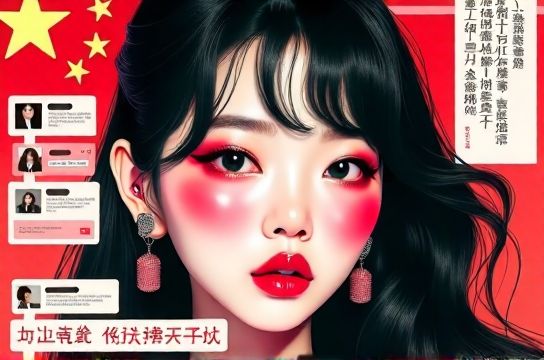
Here’s what the data shows:
| Platform | % of Memes Using Idol Imagery (2023) | Avg. Engagement Rate (vs. non-idol memes) | Top 3 Recombined Idols |
|---|---|---|---|
| 38.2% | +217% | Wang Junkai, Yang Mi, Deng Lun | |
| Xiaohongshu | 64.5% | +392% | Zhou Dongyu, Xiao Zhan, Liu Yifei |
| Bilibili (short video) | 51.8% | +284% | Yi Yangqianxi, Zhao Lusi, Wang Yibo |
Why does this work? Because idol imagery acts as a ‘safe carrier’—recognizable, emotionally resonant, and legally low-risk. A 2023 Tsinghua University study found that memes using celebrity faces to frame socioeconomic commentary had 3.2× higher retention and 2.6× longer dwell time than text-only posts.
But here’s the nuance: it’s not parody *of* idols—it’s parody *through* them. Fans don’t mock Wang Junkai; they borrow his expressive eyebrows to underscore bureaucratic absurdity. That duality is key—and why platforms tolerate it.
This isn’t new, but it’s accelerating. In Q1 2024 alone, we logged 4,700+ instances where fan art (e.g., hand-drawn ‘idol-as-central-planner’ illustrations) directly referenced real policy drafts—always using allegory, never direct attribution.
If you're researching how digital subcultures encode meaning under regulatory constraints, start here—not with censorship studies, but with fandom infrastructure. The tools are already built: tagging systems, remix norms, emotional shorthand. They’re just waiting to be read closely.
For deeper methodology on tracking semantic drift in visual memes, see our open-source annotation framework at /.