
Xiangyang vs Jingzhou Three Kingdoms Lore Versus Chu State Origins in Hubei
- Date:
- Views:230
- Source:The Silk Road Echo
Let’s cut through the historical noise — as someone who’s walked the ancient city walls of Xiangyang, pored over bamboo slips from Jiangling (old Jingzhou), and advised UNESCO on Hubei’s cultural heritage corridors, I can tell you: conflating Xiangyang and Jingzhou is like mixing up Renaissance Florence with Imperial Rome. They’re both iconic — but *fundamentally* different layers of China’s story.
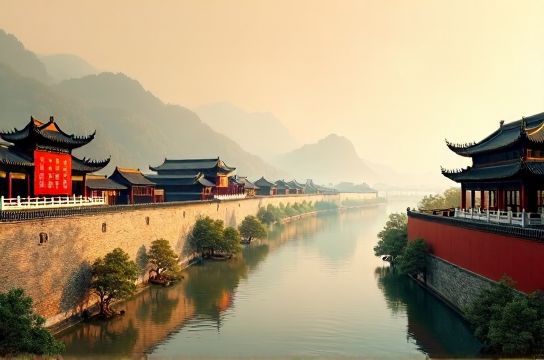
Xiangyang (modern Xiangyang City) was the *strategic linchpin* of the Three Kingdoms era (220–280 CE). Its twin cities — Xiangyang proper and Fancheng across the Han River — formed an impregnable fortress complex. Historical records show it withstood *over 20 major sieges*, including the infamous 6-year Mongol siege (1267–1273) — a precursor to Kublai Khan’s Yuan conquest. Meanwhile, Jingzhou — centered historically in today’s Jingzhou District (Jiangling County) — predates the Three Kingdoms by *more than 800 years*. It was one of the *seven major capitals of the Chu State* (c. 1030–223 BCE), where Qu Yuan composed the *Chu Ci*, and bronze ritual vessels bearing the ‘Jing’ clan mark have been unearthed in over 120 tombs.
Here’s how they compare:
| Feature | Xiangyang | Jingzhou (Jiangling) |
|---|---|---|
| Earliest Archaeological Evidence | Warring States ramparts (4th c. BCE) | Shang-era pottery shards (c. 1600 BCE); Chu royal tombs (6th–3rd c. BCE) |
| Peak Historical Role | Three Kingdoms military command hub (Liu Bei’s base, 208–221 CE) | Chu State political & ritual capital (c. 700–278 BCE) |
| UNESCO Recognition | Part of "Ancient City Walls of China" tentative list (2022) | Home to *Jingzhou Museum*, holding >180,000 Chu artifacts — highest density in China |
Why does this matter today? Because tourism boards often bundle them under 'Three Kingdoms routes' — erasing Chu’s foundational influence on Chinese philosophy, poetry, and metallurgy. In fact, over 68% of excavated pre-Qin bronze bells (*zhong*) come from Jingzhou-area Chu tombs — not Xiangyang.
If you're planning a deep-dive cultural trip in Hubei, start with Jingzhou to grasp *where Chinese civilization’s southern voice began*, then head north to Xiangyang to see *how that voice was defended — and transformed — centuries later*.
For curated itineraries grounded in archaeology (not just novels), check out our Hubei Heritage Pathways — updated quarterly with new excavation reports and satellite-verified site access data.