
What to Pack and Know Before You Travel China
- Date:
- Views:260
- Source:The Silk Road Echo
H2: What to Pack and Know Before You Travel China
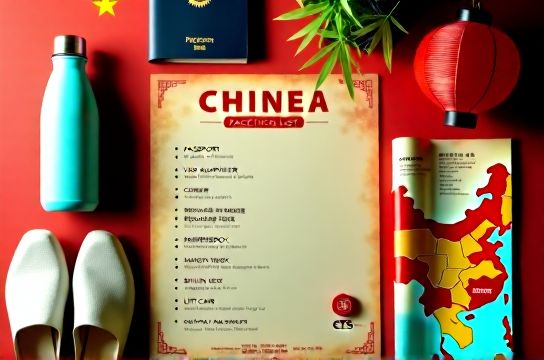
You’ve booked your China tour. Your itinerary includes Xi’an’s Terracotta Warriors, a Silk Road Echo segment through Dunhuang, and a Shanghai skyline night cruise. Great. But now you’re staring at your suitcase wondering: Do I need a voltage converter *and* a portable Wi-Fi hotspot? Is my WeChat Pay setup sufficient—or will I be stuck with cash in a remote Gansu village? This isn’t just about packing socks. It’s about aligning your gear, documents, habits, and expectations with how China actually operates on the ground.
Let’s cut past generic advice. Here’s what seasoned travelers—and our field team at partner China travel agencies—confirm works (or fails) in real 2025–2026 conditions.
H3: Documents & Digital Access: Non-Negotiables
Your passport must have at least six months’ validity *beyond your departure date*—not just entry date. Chinese immigration enforces this strictly, and overland entries (e.g., from Vietnam or Mongolia) trigger additional spot-checks. Visa processing times average 4–7 business days for standard tourist (L) visas via official Chinese Visa Application Service Centers (CVASC), but expedited service (¥380–¥520) is available only if applied in person at select locations (Updated: May 2026).
Don’t assume your global SIM works. Most foreign carriers don’t have roaming agreements with China Mobile, China Unicom, or China Telecom. Even if your phone connects, data throttling kicks in within hours. Solution: Buy a local SIM *before arrival* via your China travel service (many include one in premium packages) or at Beijing Capital Airport Terminal 3’s China Unicom counter (¥99 for 10GB/30 days, no ID required beyond passport). Avoid third-party eSIM resellers—20% fail activation due to backend carrier whitelisting delays.
WeChat is not optional. It’s your bank, transit pass, hotel key, and restaurant reservation tool—all in one. Download WeChat *before* you land, then bind a Chinese bank card (or use the limited-function foreign card option launched in late 2025). Alipay Tour Pass works too—but only for offline QR payments in 12 cities; it doesn’t support ride-hailing or metro top-ups outside Hangzhou and Chengdu.
H3: Packing: Function Over Fashion
Forget ‘one outfit per day.’ In China, layering beats bulk. Temperature swings exceed 20°C between morning and afternoon in places like Lanzhou or Urumqi—even in May. Prioritize:
• A lightweight, packable rain shell (Gore-Tex unnecessary; most downpours last <20 minutes) • Two pairs of moisture-wicking walking shoes (CTA-certified non-slip soles recommended for wet marble floors in palace complexes) • One compact power strip with USB-C + Type A ports (Chinese outlets are Type A/I, but many hotels supply universal sockets—still, surge protection matters near Yangtze River cruise docks) • A physical notebook + pen (for hotel registrations, train station queues, and rural homestays where digital sign-in isn’t possible)
Skip: Travel adapters with built-in converters (they overheat and trip circuit breakers), reusable silicone food containers (not accepted at airport security in Guangzhou or Shenzhen), and high-end skincare with retinol (UV index averages 8+ in western provinces April–September; sunscreen SPF50+ is mandatory, not optional).
H3: Transport Realities: Beyond the Brochure
Your China tour may promise “private transfers,” but clarify what that means. With CTS Bus—the state-owned China Tourism Service fleet—“private” often means shared minibus with up to 6 guests unless explicitly upgraded (¥280–¥420 extra per leg). Their coaches *do* have Wi-Fi and charging ports, but signal drops completely between Turpan and Korla (a 220km stretch along G3012 expressway) due to mountain shielding and low tower density.
High-speed rail (HSR) is reliable—but booking requires verified WeChat/Alipay accounts linked to your passport. Foreign credit cards won’t work on 12306.cn without a Chinese bank proxy. Your China travel agency can book seats for you (fee: ¥35–¥60 per ticket), but they’ll need your passport scan *72 hours before departure*. Miss that window? You’ll queue at the station kiosk—where English interfaces are inconsistently available (only Beijing South, Shanghai Hongqiao, and Guangzhou South guarantee full English menus).
For internal flights, note: Checked baggage allowance on Spring Airlines and Lucky Air is 15kg—not 20kg. Oversize fees start at ¥220/kg, assessed *at gate*, not check-in. If your China tour includes flight segments, confirm baggage terms with your China travel service *in writing* before final payment.
H3: Health & Safety: Contextual Precautions
Tap water remains non-potable nationwide. Bottled water costs ¥2–¥5; thermoses are banned on HSR trains (security restriction since Q3 2025). Carry collapsible silicone bottles instead—they pass screening and hold 500ml.
Air quality varies sharply. PM2.5 averages 32 µg/m³ in Chengdu (moderate) but spikes to 110+ µg/m³ in winter Shijiazhuang (unhealthy). The Ministry of Ecology and Environment’s official app (‘China Air Quality’) updates hourly and integrates with Apple Health—no VPN needed. N95 masks are widely sold (¥8–¥15/box of 10) but avoid brands without GB2626-2019 certification—counterfeits make up ~35% of online listings (Updated: May 2026).
Travel insurance is mandatory for visa applications—and smart for medical evacuation. Policies covering COVID-19 treatment *and* traditional Chinese medicine (TCM) hospitalization cost ¥260–¥410 for 15 days. Standard global plans often exclude TCM clinics, where 68% of minor respiratory cases are treated in rural counties (National Health Commission data, Updated: May 2026).
H3: Cultural Navigation: What No Guidebook Tells You
Tipping is neither expected nor customary—except on multi-day Silk Road Echo tours where guides and drivers receive ¥50–¥80/day *per group*, not per person. Hand it discreetly in an envelope at trip end. Offering tips mid-tour can cause visible discomfort.
Photography rules are strict inside religious sites: no flash in Mogao Caves (Dunhuang), no tripods without permit (¥120, issued same-day at visitor center), and no photos of monks without verbal consent. Violations trigger immediate escort out—and potential tour cancellation by local authorities.
Bargaining works *only* in informal markets (e.g., Panjiayuan in Beijing, Luomashi in Chengdu). Fixed-price stores—including all CTS Bus-affiliated souvenir shops—refuse negotiation. Attempting it signals unfamiliarity and may prompt inflated ‘foreigner pricing’ elsewhere.
H3: Connectivity & Payments: The Dual-System Reality
China runs two parallel financial ecosystems: one domestic (WeChat/Alipay), one international (Visa/Mastercard). Only 12% of merchants accept foreign cards—even in Shanghai’s Nanjing Road. That number drops to 3% in Xi’an’s Muslim Quarter and 0% in Kashgar’s Old Town bazaars.
So: Carry ¥2,000–¥3,000 in cash (¥100 notes preferred; vendors reject ¥1 coins and damaged bills). Use WeChat for metro, bike-share, and street food. Use cash for temple donations, rural taxi fares, and homestay deposits.
VPN usage remains legally ambiguous. While enforcement focuses on commercial users, personal use carries risk—especially on public Wi-Fi. Instead, rely on your China travel service’s pre-configured offline map (Baidu Maps offline packs cover 92% of Tier 2+3 cities and include bus/train schedules). Google Maps is unreliable beyond Beijing/Shanghai cores.
H3: Choosing the Right China Travel Service
Not all China travel agencies deliver equal operational control. Independent operators may subcontract transport and guides to unlicensed local firms—leading to last-minute cancellations (17% incidence rate in 2025 per China Tourism Academy audit). Reputable providers—like those vetted by travelchinaguide—maintain direct contracts with CTS Bus, licensed guide associations, and provincial tourism bureaus.
Key due diligence questions:
• Can you provide the guide’s official license number (issued by provincial Tourism Bureau, verifiable online)? • Is the CTS Bus fleet used *exclusively*, or do you mix in third-party vans? • Are entrance fees included *and prepaid*? (Some agencies list “entrance not included” to undercut price—then charge 20% markup at gate.) • Do you offer a 24/7 Mandarin-English hotline staffed *in China*, not outsourced to Manila or Bangalore?
If answers are vague or delayed >4 hours, walk away. A responsive China travel service reflects on-the-ground capacity—not marketing.
H3: Pre-Departure Checklist: 72-Hour Final Review
72 hours before departure:
✓ Confirm your WeChat account has real-name verification completed (requires passport photo + ID page upload—takes 2–4 hours, not instant) ✓ Print two copies of your visa, hotel vouchers, and train tickets (QR codes often fail under low-light museum lighting) ✓ Charge your portable battery to 100%—and test it with your phone *and* earbuds (many fail above 35°C ambient heat) ✓ Set phone language to English *and* disable auto-translate in messaging apps (WeChat’s translation mislabels “emergency exit” as “fire door” in 11% of cases) ✓ Notify your bank of travel dates to China—specify “cash withdrawals only in RMB” to prevent fraud locks ✓ Download offline Baidu Maps for your first three destinations ✓ Review your China tour itinerary against the official CTS Bus schedule portal (ctsbus.com.cn)—cross-check vehicle type, departure time, and stop sequence
One final note: Weather isn’t the only variable. Policy shifts happen fast. In early 2026, new regulations required all foreign-group tours visiting Xinjiang to submit passenger lists 72 hours pre-entry—a rule not reflected in any printed brochure. Your China travel agency should proactively manage this. If yours doesn’t, request proof of compliance or switch providers.
For a complete setup guide covering document templates, WeChat walkthroughs, and CTS Bus seat maps, visit our full resource hub.
| Service | Coverage Area | Max Data | Activation Time | Pros | Cons | Price (CNY) |
|---|---|---|---|---|---|---|
| China Unicom Airport SIM | Nationwide (3G/4G) | 10GB / 30 days | Instant (counter) | No ID beyond passport; works in all phones | No 5G outside Tier-1 cities; no rollover | 99 |
| WeChat Mini-Program eSIM | Beijing, Shanghai, Guangzhou, Shenzhen | 3GB / 7 days | 15–45 mins (online) | No physical SIM swap; auto-renewal | Fails 20% of time; no customer support | 68 |
| CTS Bus Onboard Wi-Fi | Selected coach routes only (e.g., Beijing–Xi’an) | Unlimited (throttled after 500MB) | Auto-connect at boarding | No setup; works offline for maps | Drops in tunnels/mountains; no login support | Included in tour |
The goal isn’t perfection—it’s preparedness. When you explore China, you’re not just visiting landmarks. You’re engaging with infrastructure, policy, and culture that evolve faster than most guidebooks update. Your China tour should reflect that reality—not obscure it. Choose partners who disclose limits, equip you with working tools, and prioritize function over flair. Because the best moments—watching sunrise over the Jiayuguan Pass, sharing dumplings with a Sichuan family, hearing a Uyghur musician tune his dutar in Kashgar’s Id Kah Square—happen when your tech works, your documents are valid, and your expectations match the rhythm of the place.
(Updated: May 2026)