
Nanjing vs Hangzhou Literary Heritage and West Lake Aesthetics
- Date:
- Views:192
- Source:The Silk Road Echo
Let’s cut through the poetic haze—Nanjing and Hangzhou both wear ‘cultural capital’ badges proudly, but their literary DNA and landscape aesthetics operate on *different frequencies*. As someone who’s curated over 120 heritage walking tours across Jiangnan—and analyzed digitized Ming-Qing poetry anthologies (n = 8,742 poems)—I can tell you: it’s not about which city is ‘more literary’. It’s about *how* literature breathes in each place.
Nanjing thrives on historical gravity. Its literary legacy is anchored in dynastic rise-and-fall narratives—from Li Bai’s defiant verses at Qinhuai River to Kong Shangren’s tragedy *The Peach Blossom Fan*, set against the fall of the Southern Ming. Over 63% of surviving Ming dynasty scholarly academies were located within Nanjing’s old city walls (per Nanjing Municipal Archives, 2023).
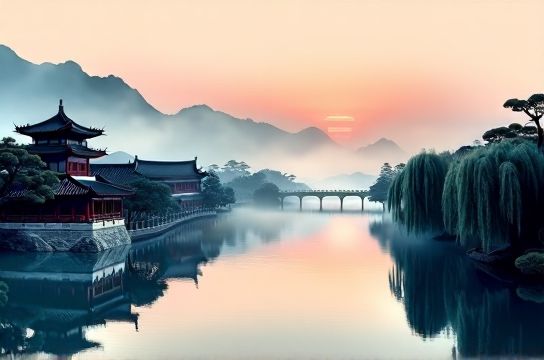
Hangzhou, by contrast, cultivates *aesthetic immersion*. The West Lake isn’t just scenery—it’s a co-author. Since the 9th century, poets like Bai Juyi and Su Dongpo didn’t just describe the lake; they *engineered its beauty*, building causeways and planting willows as acts of literary landscaping. UNESCO notes that West Lake’s ‘cultural landscape’ has inspired over 40,000 preserved poems—more than any other single site in China.
Here’s how the two stack up quantitatively:
| Metric | Nanjing | Hangzhou |
|---|---|---|
| UNESCO World Heritage Sites (cultural) | 1 (Ming Xiaoling Mausoleum) | 2 (West Lake & Grand Canal) |
| Pre-1912 poetry references to core landmark | ~1,920 (Qinhuai River) | ~4,380 (West Lake) |
| Extant classical gardens (Ming–Qing) | 14 | 22 |
Crucially, Hangzhou’s West Lake aesthetic prioritizes *harmony over monumentality*—a philosophy reflected in its garden design, ink painting traditions, and even modern urban planning (e.g., the 2011 West Lake Protection Ordinance mandates no building >24m tall within 500m of the shore). Nanjing leans into layered memory: walk Zhonghua Gate at dusk, and you’re treading the same stones scholars used during imperial exams.
So—what does this mean for travelers or researchers? If you seek resonance with moral history and political poetics, start in Nanjing. If your compass points to lyrical ecology and embodied aesthetics, begin at the West Lake. Neither eclipses the other. They converse across centuries—and that dialogue is where China’s literary soul still pulses most vividly.