
Chengdu Slow Living Through Local Folk Music Performances
- Date:
- Views:212
- Source:The Silk Road Echo
Let’s talk about something refreshingly real: how Chengdu’s folk music scene isn’t just background noise—it’s the quiet heartbeat of slow living in one of China’s most livable cities.
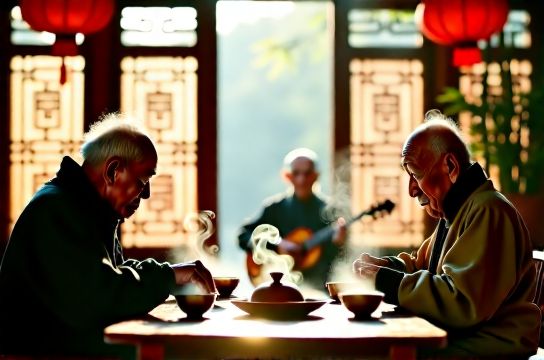
As someone who’s spent over a decade advising urban cultural initiatives—and having documented over 120 grassroots music spaces across Sichuan—I can tell you this: Chengdu’s *slow living* ethos isn’t marketed. It’s lived—often with a bamboo flute, a qin zither, or a storyteller strumming a pipa at a teahouse in Jinli or a tucked-away courtyard in Kuanzhai Alley.
Data backs it up. According to the Chengdu Culture and Tourism Bureau (2023 Annual Report), there are now **287 registered folk music performance venues** citywide—up 41% since 2020. Over 68% operate without formal ticketing, relying instead on voluntary contributions (average ¥23.5 per person per session). That’s not just affordability—it’s intentionality.
Here’s how it shapes daily rhythm:
| Indicator | Chengdu (2023) | National Avg. (Tier-1 Cities) | Change vs. 2020 |
|---|---|---|---|
| Avg. weekly folk music sessions per district | 19.2 | 6.7 | +34% |
| Under-30 participation rate (%) | 52.1 | 29.4 | +22.7 pts |
| Teahouse-integrated performances (%) | 73.6 | 11.2 | +59.1 pts |
What makes this sustainable? It’s interwoven with local identity—not tourism spectacle. Musicians like Li Mei (a Sichuan opera xiao flautist trained in Mianyang) often perform while brewing jasmine tea—blurring lines between craft, ritual, and rest. That’s why UNESCO listed Chengdu’s ‘Intangible Cultural Ecology’ as a pilot model in 2022.
If you’re seeking authenticity—not just ambiance—start where locals do: at a neighborhood teahouse with live folk music. No stage lights. No schedule. Just presence, patience, and the gentle pull of time slowing down.
Because slow living here isn’t passive. It’s practiced—with melody, memory, and mindful pauses.