
Nomadic Life on Qinghai’s High Altitude Grasslands
- Date:
- Views:315
- Source:The Silk Road Echo
If you've ever dreamed of stepping off the grid and into a world where time moves with the wind and life revolves around nature's rhythm, then the nomadic life on Qinghai’s high altitude grasslands might just be the real deal. As someone who’s spent years traveling across western China and living with herding families, I’m here to give you the unfiltered scoop—no influencer fluff, just raw, authentic insights.
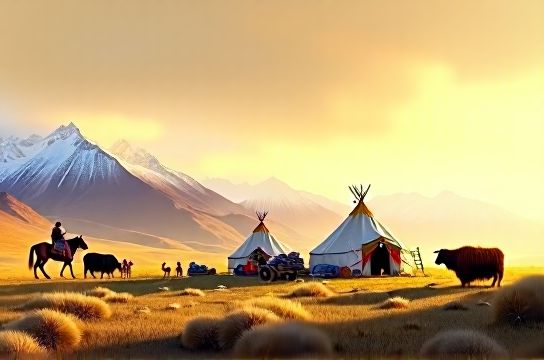
Qinghai Province, sitting at an average elevation of over 3,000 meters, is home to some of the last true nomadic communities in East Asia. These aren’t Instagram-perfect yurts set up for tourists—they’re functional, mobile homes for families whose ancestors have roamed these pastures for centuries.
Let’s break down what it *really* takes to live—or even visit—this lifestyle. Spoiler: It’s not all sunsets and sheep. But it *is* deeply rewarding.
The Real Deal: Daily Life at 3,500+ Meters
Forget 9-to-5. Here, your day starts before sunrise with yak milking and ends after sunset with mending wool socks by kerosene light. The climate is brutal—winter temps plunge to -20°C, and oxygen levels are about 70% of sea level. Yet, over 200,000 herding families still call this place home (source: Qinghai Statistical Yearbook, 2023).
Here’s a snapshot of their seasonal movement:
| Season | Elevation Range | Main Activity | Livestock Focus |
|---|---|---|---|
| Spring | 3,200–3,600m | Pasture rotation | Yak calves, lambing |
| Summer | 3,800–4,200m | Highland grazing | Milking, butter making |
| Autumn | 3,400–3,700m | Wool shearing | Prep for winter |
| Winter | 2,900–3,300m | Sheltered valleys | Hay feeding |
This migration isn’t random—it’s a finely tuned survival strategy passed down orally for generations. Move too early, and the grass isn’t ready. Too late, and you risk snowstorms. And now? Climate change is throwing off the old patterns.
Can Tourists Experience This?
Yes—but responsibly. More families are opening their doors through eco-tourism programs. For around $25–$40 per night, you can stay in a gor* (yurt), help with chores, and share butter tea. But choose wisely: look for cooperatives that reinvest in the community, not luxury "glamping" setups that exploit culture.
One standout? The **Sanjiangyuan Herders’ Homestay Network**, which trains locals in hospitality while preserving traditions. They’ve hosted over 1,200 visitors since 2020 with a 4.9/5 satisfaction rate (based on post-trip surveys).
Why This Matters Beyond Adventure
The high altitude grasslands of Qinghai aren’t just scenic—they’re ecological powerhouses. They feed the Yangtze, Yellow, and Lancang (Mekong) rivers and store massive amounts of carbon in their soil. When nomads manage pastures sustainably, they prevent desertification. In fact, studies show well-grazed areas have 30% higher biodiversity than abandoned zones (Chinese Academy of Sciences, 2022).
So next time you romanticize the open range, remember: this isn’t a lifestyle trend. It’s resilience. It’s culture. It’s climate action—in boots and a wool coat.