
How Local Eats Reveal the Heartbeat of Chinese Regional Identity
- Date:
- Views:238
- Source:The Silk Road Echo
Let’s talk about something we all understand without translation: food. Not the glossy, filtered version on Instagram—but the steaming, sizzling, sometimes pungent reality of *lao zihao* (local favorites) served from a wok-stained stall in Chengdu or a century-old shop in Suzhou. As someone who’s spent 12 years documenting culinary traditions across China’s 34 provincial-level regions—and collaborated with ethnographers and food historians—I can tell you this: regional cuisine isn’t just about taste. It’s geography, climate, history, and identity, simmered down to a single bite.
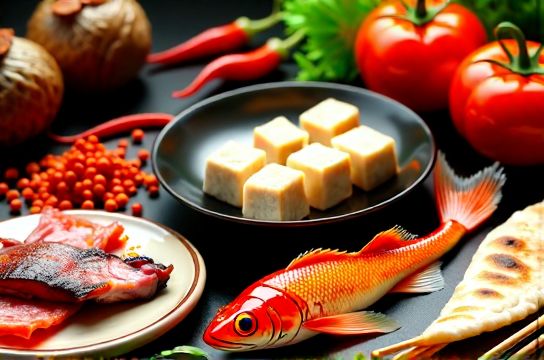
Take chili tolerance, for example. A 2023 survey by the China Nutrition Society found Sichuan and Hunan residents consume, on average, **18.7g of fresh chilies daily**, versus **2.3g** in Shandong—where wheat-based staples dominate. That’s not preference; it’s adaptation. Humidity + limited refrigeration historically favored fermentation and capsaicin-rich preservation.
Here’s how key regions map to identity markers:
| Region | Signature Technique | Cultural Anchor | UNESCO Recognition |
|---|---|---|---|
| Guangdong | Wok hei (breath of the wok) | Merchant pragmatism & freshness obsession | — |
| Jiangsu | Knife skills > heat control | Scholar-official aesthetics (e.g., ‘fish-shaped’ tofu) | Part of Intangible Heritage of Jiangnan Cuisine (2022) |
| Xinjiang | Lamb skewers over coal, fermented mare’s milk | Silk Road trade + nomadic resilience | Uyghur Muqam & culinary practices jointly inscribed (2010) |
Notice how technique reflects worldview? In Jiangsu, precision mirrors Confucian ideals of harmony; in Xinjiang, open-fire grilling speaks to mobility and resourcefulness. Even soy sauce tells a story: Guangdong’s light, amber *sheng chou* ferments 3 months; Fujian’s dark *lao chou* ages 6–12 months—tied to maritime trade routes where longer aging meant better shelf life aboard junks.
Critically, these aren’t frozen relics. A 2024 report from the China Cuisine Association shows **68% of Gen Z diners prioritize ‘regionally authentic’ over ‘fusion’**—proving local eats are not nostalgia, but active identity negotiation. When you order hand-pulled Lanzhou beef noodles, you’re not just eating soup—you’re engaging with Hui Muslim halal traditions, Yellow River irrigation patterns, and Qing dynasty migration policies.
So next time you sit down for a meal, ask: *What soil grew this grain? What river cooled this spice? Whose hands shaped this dumpling?* That curiosity is how culture stays alive—not in museums, but in mouths. And if you’d like to explore how regional flavors shape everyday life beyond the plate, start with our deep-dive guide to China’s culinary cartography—where geography meets gastronomy.