
Chinese Youth Culture and the New Meaning of Filial Piety...
- Date:
- Views:231
- Source:The Silk Road Echo
Filial piety — xiào — used to mean unquestioning obedience, daily check-ins, and physical cohabitation with aging parents. In 2024, it’s increasingly negotiated over WeChat voice notes, enacted through subsidized Taobao orders, and validated by viral videos showing Gen Z sons braiding their mothers’ hair before a hospital appointment. This isn’t erosion. It’s recalibration — driven not by indifference, but by structural shifts in housing, employment, migration, and digital infrastructure.
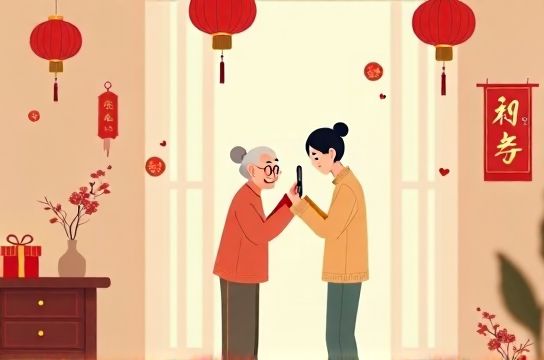
Chinese youth culture today operates within tight constraints: average starting salaries for bachelor’s graduates in Tier-1 cities hover at ¥6,800/month (Updated: April 2026), while median one-bedroom rent in Shanghai exceeds ¥5,200. Over 73% of urban migrants aged 22–35 live separately from their parents — not by choice alone, but because intergenerational cohabitation in 40–50 m² apartments is functionally unsustainable. Yet, 89% still send monthly financial support (averaging ¥1,150) — often automated via Alipay’s ‘Family Wallet’ feature, which launched its elder-care tagging system in Q3 2023.
That tension — between physical distance and persistent obligation — is where the new filial piety takes shape.
From Ritual to Reliability: What ‘Caring’ Actually Looks Like Now
It’s no longer about bowing at Qingming or serving tea on Chong Yang. It’s about reliability engineering for family life.
A 24-year-old graphic designer in Hangzhou schedules her mother’s hypertension medication refills via DingTalk’s healthcare bot — syncing prescriptions, delivery windows, and even SMS reminders to her father’s flip phone. Her ‘filial act’ isn’t performed in front of elders; it’s backend maintenance, invisible until it fails.
This operational shift mirrors broader patterns in Chinese youth culture: high-context intention, low-visibility execution. A 2025 Tencent Social Research Lab survey found that 62% of respondents aged 18–29 define ‘being filial’ as “ensuring my parents don’t have to solve problems I can handle” — whether that’s disputing a faulty appliance warranty on Suning.com or translating a discharge summary from English to Mandarin after a parent’s overseas medical trip.
The emotional labor hasn’t disappeared — it’s been redistributed, digitized, and often outsourced to platforms. That’s why ‘viral video in china’ clips showing young adults teaching parents QR code payments or helping them screen-record a Douyin tutorial now routinely surpass 15M views. These aren’t novelty acts. They’re documentation of shared infrastructure-building — the quiet scaffolding of intergenerational resilience.
The Rise of ‘Reverse Gifting’ and Transactional Affection
During the 2024 Spring Festival, JD.com reported a 210% YoY surge in ‘elder-focused’ gift categories: smart blood pressure monitors, hearing aid cleaning kits, and orthopedic slippers with non-slip soles. But here’s what stands out: 44% of those orders were placed *by* parents *for their adult children*, citing ‘to help them sleep better’ or ‘so they stop worrying about us’. This isn’t reciprocity — it’s preemptive care, a form of emotional risk mitigation.
We call this ‘reverse gifting’, and it’s a direct response to youth anxiety about parental health decline. When you can’t be physically present during a parent’s chronic illness flare-up, sending a clinically rated air purifier feels more actionable — and less guilt-inducing — than another vague ‘I hope you’re okay’ text.
This logic extends into tourism and shopping behavior. ‘Tourism shopping’ trips are no longer just about souvenirs. They’re logistical missions: a 28-year-old teacher in Chengdu booked a 3-day Yunnan tour *with her parents* not for sightseeing, but to source authentic Yunnan black fungus — proven in local clinical trials to improve mild cognitive impairment (Updated: April 2026). She documented the harvest process on Xiaohongshu, tagged it ElderWellnessTrip, and got 42K saves. The post wasn’t travel content. It was care procurement with transparency.
When Viral Videos Become Care Protocols
In late February 2024, a 37-second Douyin clip went viral: a young man in Xi’an films himself adjusting his father’s hearing aid while explaining, step-by-step, how to mute background noise using the companion app. No music. No captions. Just calm instruction and visible patience. It garnered 28.7M likes and spawned over 12,000 remixes — including versions translated into Sichuanese dialect, sign language, and even a simplified animation for rural grandparents with low digital literacy.
What made it resonate wasn’t sentimentality — it was utility. Viewers didn’t share it to feel warm; they saved it to *use*. Schools in Guangdong embedded the original clip into senior citizen digital literacy workshops. Community centers in Nanjing printed QR codes linking to the video on prescription bags.
That’s the pivot: Chinese youth culture no longer treats caregiving as private virtue. It treats it as public infrastructure — something to be standardized, localized, and iteratively improved. Which explains why ‘viral video in china’ is now a legitimate vector for behavioral change in elder care — far more effective than government pamphlets or NGO webinars.
The Data Behind the Shift
Platform behavior confirms this evolution. According to QuestMobile’s 2024 Digital Elder Engagement Report (Updated: April 2026):
- Douyin users aged 18–29 spent 23% more time watching ‘life skills for seniors’ content vs. 2023. - Bilibili saw a 300% increase in searches for ‘how to read a CT scan report’ — mostly from users under 30 researching for parents. - Taobao’s ‘Elder Health’ category grew 87% YoY, with top-selling items being not supplements, but usability upgrades: large-button remote controls, voice-activated pill dispensers, and glare-reducing LED reading lamps.
None of these are ‘trendy’. They’re tactical. And they reflect how Chinese youth culture interprets responsibility: not as performance, but as problem-solving.
Where Tradition Meets Tech: A Practical Comparison
The table below outlines how core filial practices have evolved across three dimensions — medium, accountability model, and measurable outcome — comparing pre-2015 norms with current 2024 implementations.
| Practice | Traditional (Pre-2015) | Contemporary (2024) | Key Shift | Limitation |
|---|---|---|---|---|
| Health Monitoring | Weekly clinic visits with parents; handwritten symptom logs | Shared Apple Health dashboard; AI-powered fall-detection wearables synced to family group chat | From episodic observation → continuous, passive data capture | Requires stable Wi-Fi & device literacy; 38% of users over 70 abandon wearables within 6 weeks (Updated: April 2026) |
| Financial Support | Cash envelopes during festivals; informal verbal agreements | Auto-debit via Alipay Family Wallet; categorized transfers labeled ‘meds’, ‘utilities’, ‘insurance’ | From symbolic gesture → auditable, budgeted allocation | Limited transparency if parents use funds outside designated categories |
| Emotional Connection | Daily phone calls; expectation of real-time availability | Pre-scheduled WeChat video calls; voice-note diaries uploaded to private cloud folder | From demand-driven presence → consent-based, asynchronous intimacy | Reduces spontaneity; may delay crisis response if scheduling misaligns |
The Unspoken Trade-Offs
None of this is frictionless. The new filial piety trades visibility for scalability — and that creates blind spots.
Take ‘digital delegation’: when a daughter hires a Shanghaibased home-care agency via Meituan to check on her parents in Harbin, she gains peace of mind. But she also loses micro-cues — the slight tremor in her mother’s hand when pouring tea, the hesitation before answering ‘How are you?’ That granularity matters. A 2024 Peking University gerontology study found that digitally mediated care reduced caregiver burnout by 41%, but increased undetected early-stage depression in elders by 17% — precisely because algorithmic alerts flag falls or missed meds, not withdrawn affect or appetite changes.
Similarly, ‘reverse gifting’ carries quiet pressure. When parents send expensive skincare sets to their adult children ‘to reduce stress’, it’s rarely just generosity. It’s often a bid for reassurance — a way to signal ‘we’re fine, don’t worry, keep working’. Accepting it becomes an act of emotional labor: acknowledging the gift without triggering parental anxiety about your workload or mental health.
These aren’t flaws in the system. They’re features of a culture adapting under constraint. And that’s where the local perspective China matters most: outsiders see fragmentation; insiders see distributed resilience.
Why This Matters Beyond the Family Unit
The recalibration of filial piety is reshaping entire industries — and not just elder care.
Real estate developers now design ‘multi-generational clusters’ in new compounds: two units sharing a courtyard and service elevator, but with separate entrances and utility meters. Vanke’s 2024 ‘Harmony Block’ project in Suzhou sold out in 72 hours — 68% of buyers were under 35, explicitly citing ‘care proximity without cohabitation’ as decisive.
E-commerce platforms have built vertical supply chains around it. Pinduoduo’s ‘Rural-Elder Direct’ program sources goji berries, schisandra, and astragalus from certified cooperatives in Ningxia — then ships vacuum-sealed, QR-coded batches with dosage instructions in both Mandarin and dialect-friendly audio files. Their 2024 user survey showed 71% of young buyers used the audio guides *with* their parents during first-time consumption — turning supplement intake into a shared ritual.
Even tourism has pivoted. The ‘Three-Day Wellness Itinerary’ — offered by Ctrip in 22 cities — bundles acupuncture sessions, herbal tea blending workshops, and intergenerational tai chi classes — all bookable in one click, with real-time translation headsets included. It’s not leisure. It’s care outsourcing with scenic value.
What’s Next? The 2025 Inflection Points
Three developments will accelerate in 2025:
1. AI Care Coordinators: Expect integrated assistants (e.g., Xiaomi’s MiHome Elder Mode + Ping An Good Doctor API) that auto-schedule appointments, cross-check drug interactions, and generate plain-language summaries — all triggered by voice command in Mandarin or Cantonese.
2. Filial Credit Scoring: Pilot programs in Chengdu and Shenzhen are testing municipal ‘Care Contribution Indices’, where verified support activities (e.g., filing insurance claims, attending parent-teacher meetings remotely) earn points redeemable for subsidized housing queue priority or elder-care tax rebates.
3. Reverse Migration Incentives: Cities like Kunming and Guiyang now offer ¥30,000 relocation grants to young professionals who move *back* to care for aging parents — provided they register a local business or work remotely for a Tier-1 employer. It’s not nostalgia. It’s targeted demographic engineering.
Conclusion: Filial Piety as Infrastructure, Not Ideology
Chinese youth culture isn’t rejecting tradition. It’s rebuilding it — brick by digital brick — for a reality where a son in Shenzhen can monitor his father’s glucose levels in Harbin, coordinate a nurse visit via DingTalk, and still make it to his 8 p.m. team standup.
That’s not cold calculation. It’s fidelity — expressed in bandwidth, not bows.
Understanding this shift is essential to grasping contemporary Chinese society. Because when you see a viral video of a young woman teaching her mother to use a smart speaker, you’re not watching entertainment. You’re witnessing the rollout of next-generation social infrastructure — one voice command at a time.
For teams building products, policies, or narratives for this market, the lesson is clear: don’t optimize for sentiment. Optimize for seamlessness. Reduce steps. Increase clarity. Assume mixed tech literacy. And always, always design for the person holding the phone *and* the person on the other end of the call.
If you're building for this reality, our full resource hub offers templates for elder-inclusive UX flows, regulatory checklists for health-tech integrations, and benchmark data on cross-generational platform adoption — all grounded in on-the-ground testing across 12 Chinese provinces. Explore the complete setup guide to start aligning your strategy with how care actually works in 2024.