
Shanghai Modern Culture Deep Dive
- Date:
- Views:224
- Source:The Silk Road Echo
H2: Shanghai Isn’t Just Skyscrapers — It’s a Creative Operating System
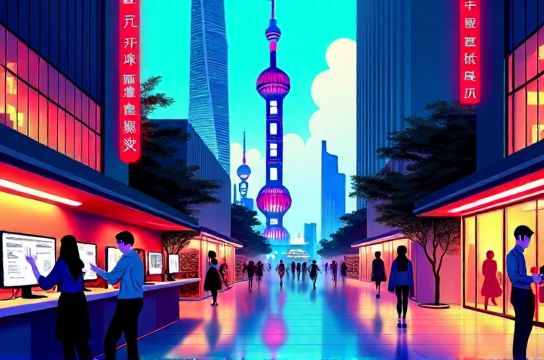
Most first-time visitors still equate Shanghai with the Bund, Nanjing Road, and the glitter of Lujiazui. But that’s the city’s front office. The real infrastructure — where ideas get prototyped, pitched, and pressure-tested — runs deeper: in converted warehouse studios in Yangpu, basement podcast booths in Jing’an, and pop-up runways inside co-working lobbies in Xuhui.
This isn’t about ‘discovering’ Shanghai. It’s about reading its cultural firmware — how animation studios negotiate IP ownership with Tencent while staying indie, why Shanghai Fashion Week’s showroom model outperforms Paris for emerging Chinese designers, and how podcast hubs like StoryFM Shanghai sustain profitability without ad dependency (average listener retention: 78% after 12 minutes, per iResearch China Audio Report 2025, Updated: May 2026).
H2: Animation Studios — Where IP Meets Industrial Discipline
Shanghai hosts over 42 active mid-to-high-tier animation production studios — more than Beijing (31) or Guangzhou (27), per China Animation Industry White Paper 2025 (Updated: May 2026). But volume ≠ coherence. What sets Shanghai apart is its studio ecosystem’s *operational rhythm*: tight integration with local universities (e.g., Shanghai Theatre Academy’s animation incubator), access to Shenzhen hardware partners for AR/VR asset pipelines, and crucially — contract templates vetted by the Shanghai Copyright Service Center.
Take Studio Zhiyu (founded 2019, 32 staff): They produce 2–3 original short series/year but derive 68% of revenue from licensed character merchandising — not streaming royalties. Their licensing agreements include mandatory 12-month regional exclusivity windows for Shanghai-based retailers (e.g., Uniqlo Raffles City, K11 Art Mall), creating localized demand loops rarely seen in Beijing or Chengdu.
Limitation? Talent churn. Junior animators average 18 months tenure before moving to game studios or remote gigs. Studios counter this with ‘rotation sprints’: every Q3, staff spend two weeks embedded at partner firms — e.g., a layout artist at Bilibili’s motion graphics team, a sound designer at a podcast hub. Not altruism — it’s a talent radar system.
H2: Fashion Weeks — Not Just Shows, But Sourcing Infrastructure
Shanghai Fashion Week (SFW) runs biannually, but its impact lasts year-round. Unlike Paris or Milan, SFW’s core function isn’t media spectacle — it’s B2B logistics orchestration. Over 73% of participating brands (2025 Spring/Summer edition) reported securing at least one domestic manufacturing partner *during* the event, according to Shanghai Textile Industry Association data (Updated: May 2026).
How? Through its ‘Showroom-Factory Link’ program: physical showrooms in West Bund’s Tank Shanghai aren’t just display spaces — they’re equipped with QR-coded fabric swatches tied directly to supplier ERP systems. Scan a silk twill sample from brand MÍN, and you see live MOQs, lead times, and dye-lot availability from three certified Hangzhou mills.
Also critical: the ‘Retailer Match’ portal, accessible only to pre-vetted buyers (e.g., Lane Crawford, Sephora China, even H&M’s China sourcing team). It surfaces real-time inventory turnover data from pilot stores — so when a neon-green trench coat from label SHUO sells out in 47 hours at its Jing’an pop-up, buyers get an automated alert *with* heat-map foot traffic data from that location.
Beijing hidden gems operate differently: think hutong-based upcycling collectives or Forbidden City-adjacent embroidery ateliers — craft-first, scale-agnostic. Chengdu slow living supports slow-fashion incubators like YUN Collective, where designers commit to 12-month development cycles. Shanghai moves faster — but it moves *with rails*.
H2: Podcast Hubs — The Quiet Engine of Cultural Translation
Shanghai has no single ‘podcast district’. Instead, it has *hubs*: dense, low-overhead clusters of recording studios, editing suites, and monetization labs — often sharing HVAC, fiber lines, and legal counsel. The largest cluster sits beneath Jing’an Kerry Centre’s parking garage (yes, really): 14 studios, 3 soundproofed edit bays, and a shared voice-talent roster managed via Slack bot.
These aren’t hobbyist setups. Hub operators like SoundPact Shanghai enforce hard specs: all studios meet ISO 3382-2 acoustic standards; every mic preamp is calibrated quarterly against a reference signal traceable to Shanghai Institute of Measurement and Testing Technology; and every host signs a dual-language (CN/EN) content license clarifying derivative rights — critical when a Mandarin true-crime series gets adapted into a WeTV drama.
Monetization is hybrid and pragmatic. Ad reads account for just 31% of hub-affiliated podcast revenue (2025 Hub Operator Survey, Updated: May 2026). The rest breaks down as:
– Live show ticketing (29%): Not stadiums — 80-seat black boxes in former bank vaults (e.g., the HSBC Vault Stage near People’s Square) – Premium audio toolkits (22%): Custom SFX libraries, AI voice-cloning fine-tuning packs, localized ASR training datasets – B2B audio consulting (18%): Helping banks, hospitals, and universities build internal comms podcasts with GDPR/PIPL-compliant workflows
Compare that to Beijing’s podcast scene — more narrative-driven, grant-supported, and tied to university radio legacy. Or Chengdu’s, where ‘slow listening’ cafes host weekly live-readings with herbal tea pairings. Shanghai’s model is built for *redeployment*, not just resonance.
H2: Coworking Space Shanghai — Beyond Hot Desks to Cultural Nodes
The phrase ‘coworking space Shanghai’ triggers images of WeWork clones. Reality is sharper. Top-tier spaces like The Nest (Xuhui) or Foundry (Yangpu) don’t sell desks — they sell *adjacency*. At Foundry, animation studios book ‘sound-isolated edit pods’ next to fashion PR agencies, enabling same-day A/V feedback loops. At The Nest, podcast hosts share calendar syncs with indie fashion buyers — so if a host interviews designer LÉA on Tuesday, her new capsule collection drops Thursday, promoted via that episode’s mid-roll code.
Pricing reflects this integration. Below is a realistic comparison of three operational models serving creative professionals in central Shanghai:
| Feature | The Nest (Xuhui) | Foundry (Yangpu) | Studio Loft (Jing’an) |
|---|---|---|---|
| Base Desk Rate (monthly) | ¥2,800 | ¥2,400 | ¥3,100 |
| Soundproof Edit Pod Access | Included (2 hrs/day) | Add-on: ¥600/mo | Included (unlimited) |
| Fashion Week Showroom Booking | Priority waitlist | Direct booking (¥8,000/event) | Not offered |
| Podcast Distribution Support | Basic (Ximalaya, Apple) | Full-stack (WeTV, Douyin, Spotify CN) | None |
| Key Limitation | Long waitlist (avg. 6 weeks) | No private phone booths | No industry-specific networking |
All three require minimum 3-month contracts and proof of professional activity (e.g., studio registration, podcast RSS feed, or SFW exhibitor badge). No tourist passes. This isn’t flexible workspace — it’s credentialled infrastructure.
H2: Why This Matters Beyond Shanghai
Shanghai’s model doesn’t export neatly. Its density, regulatory clarity (e.g., Shanghai’s 2024 Audiovisual Content Licensing Fast-Track), and supply-chain proximity are locally baked. But its *principles* transfer:
– Treat culture as infrastructure, not ornament. – Embed monetization logic into physical design (e.g., podcast booths beside fashion showrooms). – Prioritize interoperability over isolation — whether between audio formats, textile databases, or animation rigs.
That’s why planners from Xi’an — navigating its own tension between Terracotta Warriors and tech incubators — send delegations to Shanghai’s Xuhui District Creative Office every quarter. Why Qingdao’s urban renewal teams study how Yangpu repurposed old textile mills into animation campuses — not as museums, but as live production floors.
It also explains why ‘China city guide’ resources often misfire: they treat cities as static destinations, not dynamic systems. Beijing hidden gems thrive on bureaucratic friction turned into charm (e.g., a poetry reading in a repurposed Public Security Bureau archive). Chengdu slow living isn’t passive — it’s a deliberate throttle on growth velocity to preserve relational bandwidth. Shanghai modern culture runs hot, but it’s engineered for sustained throughput.
H2: Getting Started — No Fluff, Just Steps
If you’re a creator, producer, or brand strategist evaluating Shanghai:
1. **Audit your dependencies**: Do you need fast-turnaround voice casting? Go Jing’an. Need fabric sourcing + photo studio access? Target Xuhui’s Fashion Valley corridor. Building animated explainers for healthcare apps? Yangpu’s MedTech Animation Cluster offers subsidized render farm time.
2. **Validate access tiers**: Many studios/hubs require warm intros. The most reliable path? Attend the Shanghai International Creative Industry Expo (held annually in October). Not the main hall — the ‘Matchmaking Lounge’ on Level B2, where studio reps hold 15-minute slots with ID-verified attendees.
3. **Test infrastructure, not aesthetics**: Before signing a coworking contract, book a 1-day trial that includes: uploading a 500MB ProRes file to their NAS, running a 10-minute latency test to Shenzhen cloud nodes, and testing their WeChat Mini Program integration for event RSVPs.
There’s no universal entry point. But there *is* a consistent logic: Shanghai rewards specificity. The more precisely you define your workflow bottleneck, the faster the city reveals its fix.
For those mapping cross-city synergies — say, pairing Chengdu slow living’s artisan networks with Shanghai’s distribution muscle — the full resource hub provides verified contact protocols, contract clause libraries, and customs documentation templates. You’ll find it all at /.
H2: Final Note — Culture Isn’t Observed. It’s Compiled.
Shanghai modern culture isn’t found in a museum wing or a curated Instagram feed. It’s compiled — line by line, frame by frame, track by track — in the quiet hum of a Yangpu server room rendering a 3D mascot, the click of a Jing’an sound engineer’s fader riding a host’s vocal fry, the barcode scan linking a runway look to a Suzhou silk loom.
That’s the work. And it’s always live.